I began this blog in March 2012 to share my perspectives on public health issues and to integrate multiple disciplines and perspectives that the traditional public health field either is not doing or does not want to do–such as speaking with moral clarity on the public health threat posed by firearms in the United States.
I took this screen snapshot of my dashboard on Nov. 29, 2014.
My blog has had nearly 38,000 page views as of late November 2014. This means this web site is getting more visibility and traffic than many published papers by academic researchers. Many of their peer-reviewed articles will never be seen because they are behind a firewall run by for-profit companies that prevents publicly-financed research from reaching policy-makers, the popular media, and the public who pays for the research.
To celebrate the eventual “fall of the wall,” meaning the for-profit firewall that is stifling innovation and blocking research from having greater value to the public, I am going to highlight a few of my more popular public-health articles based on visitors and page views.
I think it is time to start dismantling the firewall and to start telling public health’s story with more traditional storytelling techniques, with more creativity that bridges disciplines, and with an eye on upstream advocacy.
The articles I shared above do not follow the traditional model of public health writing or practice, and some challenge the current U.S. models as broken and even morally bankrupt, particularly regarding the historic deathly silence by public health leaders at the local and national level and at universities in the face of firearms-related violence in the United States.
So if you landed on this page and find yourself within the claustrophobic walls of academia as a student, grad student, or faculty member, and you have not been exposed by your peers or the faculty to the value of blogging, here 38 reasons why you need to get off your freaking butt right now and get to work. If you work in a public health office and your office is not actively using social media because of out touch managers and your office is not advocating with lawmakers, you need to show leadership and become the change you want to see and not wait for others to do it for you.
Yes, it is time to think creatively and innovate and challenge the old guard whose ways are failing to make a greater impact.
My list of blogs/articles may be updated as I continue to publish more of them. I am now using this blog to discuss organizational behavior, multi-disciplinary research, and stories based on personal and professional experiences as the starting point for discussing larger issues. I hope you come back from time to time to check out my articles. Thanks.
(Note, I am publishing this blog post as both a page and post on my blog.)
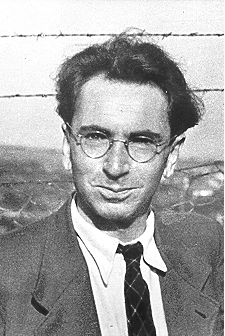
This photo of Viktor Frankl was taken shortly after his liberation from the Nazis in 1945.
Renowned psychiatrist, philosopher, and writer Viktor Frankl stands as a giant among 20th century thinkers. The Austrian-born Frankl (b. 1905, d. 1997) was a psychiatrist whose life was transformed by his experiences as a Jewish prisoner who survived the Holocaust and internment at the Auschwitz death camp and three other German concentration camps.
With the exception of a sister, all of his immediate and extended family and his beloved wife were murdered by the Nazis. From the aftermath of this horrific experience, he embarked on a life’s work that provided deceptively simple but remarkably clear ideas that literally provide a framework on how all people can live meaningful lives.
Frankl survived his brutal internment, which should have killed him, by seeing a purpose in his ugly reality and by taking control of his responses to that experience with positive actions and a mental attitude that ensured his survival and also his outlook on life and his fellow man and woman. His simple ideas offer no shortcuts, and they uncomfortably place each person in control of how they choose to respond to life’s challenges, even ones as unforgiving as genocide and mass murder.
Frankl proposes all of us are motivated to seek a higher purpose, even when our circumstances are as cruel as a death camp surrounded by barbed wire and vicious men armed with machine guns. Frankl writes: “Man’s search for meaning is the primary motivation in his life not a ‘secondary rationalization’ of instinctual drives. This meaning is unique and specific in that it must and can be fulfilled by him alone… .” More than pleasure, more than material things, meaning motivates us all. It is our purpose for being.
Man’s Search for Meaning, a book that changed modern thinking
Viktor Frank’s seminal 1946 Holocaust memoir, Man’s Search for Meaning, has been translated into more than 20 languages, has sold more than 10 million copies, and is considered one of the most influential books among American book readers.
Frankl published those principles in his highly acclaimed and influential 1946 memoir, Man’s Search from Meaning, which today has been translated in more than 20 languages and has sold more than 10 million copies. It is considered among the most influential books in the United States, according to a Library of Congress survey.
He originally developed the framework for his sparse set of powerful ideas when he was practicing psychiatry in Vienna before the Nazi occupation and saw how he could help patients overcome their suffering by making them aware of their life’s calling. His treatise, stashed in his coat, was literally lost when he was imprisoned.
Later in his life, when he had achieved global recognition because of the widespread popularity of his bestseller, he was asked by a university student: “…so this is your meaning in life… to help others find meaning in theirs.” His reply was as clear and direct as the theory behind his therapy, “That was it, exactly. Those are the very words I had written.”
As one writer influenced by Frankl, Genrich Krasko, points out, Frankl’s ideas are more prescient today, given millions have no meaning in their lives, particularly in affluent societies: “Viktor Frankl did not consider himself a prophet. But how else but prophetic would one call Frankl’s greatest accomplishment: over 50 years ago he identified the societal sickness that already then was haunting the world, and now has become pandemic? This ‘sickness’ is the loss of meaning in people’s lives.”
Logotherapy, Frankl’s foundational theory
Frankl called his system logotherapy, derived from the Greek word “logos,” or “meaning.” It has been called existential analysis, which may over-simplify its scope. The philosophy and medical practice boils down to providing treatment through the search for meaning in one’s life. Its utterly basic but ultimately powerful foundational ideas are easily summarized:
Life has meaning in all circumstances, even terrible ones.
Our primary motivation in living is finding our meaning in life.
We find our meaning in what we do, what we experience, and in our actions we choose to take when faced with a situation of unchangeable suffering.
Frankl notes, “Most important is the third avenue to meaning in life: even the helpless victim of a hopeless situation facing a fate he cannot change, may rise above himself, may grow beyond himself, and by so doing change himself. He may turn a personal tragedy into triumph.” This latter point is particularly poignant, as it calls out the role that adversity can have in shaping us and our destinies and improving our character and our life’s narrative.
In short, no matter what circumstances we find ourselves, so long as we have a purpose, we can find fulfillment. What’s more, we are fulfilled by right action and by “doing,” not through short-term pleasure or narcissistic pursuits.
Frankl argues that meaning can be found in meaningful, loving relationships, in addition to finding it through purposeful work or deeds. In fact, it was the strong love of his first wife that kept him alive amid the unspeakable horrors of Auschwitz. He felt her presence in his heart and it literally let him live when others around him perished.
Frankl’s core ideas at odds with more ‘accepted’ health and mental health paradigms
Frankl’s ideas collide with behaviorist models, which show that conditioning will determine one’s responses—the proverbial Pavlovian dog or Skinnerian lab rat. By contrast, through his own experiences and those he observed treating depressed and suicidal patients before and after the war in Vienna, Frankl claims that “everything can be taken from a man but one thing: the last of the human freedoms—to choose one’s attitude in any given set of circumstances.”
When faced with a situation, we all chose. But our power is defined by our actions. “Between stimulus and response, there is a space,” he claims. “In that space is our power to choose our response. In our response lies our growth and our freedom.”
The concept of personal choice conflicts with extensive research that clearly documents how one’s environment, race, socioeconomic status, and more—the so-called social determinants of health (SDOHs)—shape one’s life more than one’s individualistic decisions.
A model explaining the social determinants of health.This photo of Viktor Frankl was taken two years after his liberation from the Nazis, when he returned to psychiatric practice to help people through his principles called logotherapy.
For two years, while earning my MPH at the University of Washington School of Public Health from 2010 to 2012, I found myself frequently and painfully at odds with current research and literally thousands of studies that proved to me that SDOHs will impact our lives in the most profound ways.
Yet I found the field and its most ardent practitioners lacking an explanation that showed the real power people have in controlling their personal outcomes. This is something that the public health field and my faculty sharply criticized by showing the medical model, which tells persons to control their health, has largely failed to promote wider population health metrics.
While I do embrace a “policy and systems” approach, I even more strongly believe that every person has the ability to make life-changing choices, every minute of every day—from the food they put in their mouth, to devices they watch daily, to the people they associate with, to the jobs they take or do not take (however awful often), to the way they manage their personal emotions. They have choices, and often they are cruel and brutally unfair choices, which often favor the privileged.
Frankl was famous for meeting with some patients, asking them to reflect on finding meaning in their lives over their entire life span, and providing the mental treatment they needed to take control of their lives without future interventions or drugs, which predominates the American model of mental health treatment. Some of his patients only required one session, and they could resolve to deal with life’s circumstances without any further intervention.
This is a radically and in fact dangerous model that challenges how the United States is grappling with mental illness nationally, though many practitioners use Frankl in their work. One psychiatrist I tweeted with wrote me back saying, “I’m far from the only one [using Frankl]! There’s a large humanistic community in the counselling/psychotherapy world.”
Frankl’s ideas continue to be studied, refuted, debated, and argued by learned and well-intentioned academics, which I think would amuse Frankl. He was more interested in the practical work of day-to-day living and less with becoming the subject of a cult following.
As one commentator I saw in a documentary who knew Frankl noted, Frankl was not interested in fame, otherwise he would be more famous today.
Paul Wong is one of many academics who have analyzed the ideas of logotherapy and mapped them in published work.
Here is just one example showing how theorists explain logotheraphy; see the table by Paul Wong on life fulfillment and having an ideal life.
Why Frankl’s thinking profoundly inspired me and thousands of others
For more than three decades, I have been wrestling with the concept of personal responsibility and the influence of our environment and systems that impact our destinies. Such factors include one’s family, country, religion, income, the ecosystem, our diet, and political and economic forces, among others.
I also have been fascinated by examples of people choosing hard paths in dire circumstances as the metaphor that defines successful individuals’ life narratives. In Frankl’s death camp reality, this ultimately boiled down to choosing to be good, and helping fellow prisoners, or choosing to partake in evil, which many prisoners did as brutal prisoner guards called kapos.
No one gets a free pass in this model, and all people in all groups can be one or the other, Frankl says. “In the concentration camps, for example, in this living laboratory and on this testing ground, we watched and witnessed some of our comrades behave like swine while others behaved like saints,” writes Frankl. “Man has both potentialities within himself; which one is actualized depends on decisions but not on conditions.”
I had not been able to order these two lines of thinking into a coherent set of principles, as Frankl so perfectly did. When I stumbled on him quite by accident or maybe design this summer, while reading books by Robert Greene and even management guru Stephen Covey, I had that most rewarding and delicious feeling of “aha.” It was more like, “Wow, what the hell was that!”
It felt like a thunderclap. I almost reeled from the sensation. I then began to tell every single person I know about Frankl, and I learned many of my colleagues had already read him. I felt robbed not one teacher or academic, at three respected universities I attended, had covered or even mentioned Frankl, when his ideas are foundational to our understanding of the fields of psychology, public health, business, organizational behavior, religion, and the humanities in the 21st century.
Frankl deserves vastly more attention then he is given by health, mental health, and social activist thinkers. That is a shame too, because as a speaker, Frankl brimmed with enthusiasm and could convey complex ideas in the simplest ways to reach his audience. Watch his presentation at the University of Toronto–a brilliant performance.
Frankl’s ideas matter to each of us, in everyday life
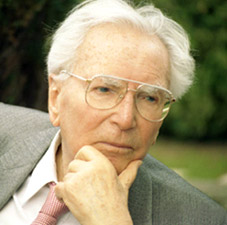
Photo courtesy of PBS, showing a pensive and thoughtful Viktor Frankl. Click on the photo for a link to the web site.
One my most satisfying feelings is discovering that one’s personal life experiences and ideas on issues as big as the meaning of life also resonate profoundly with millions of others—those who have read his work. Even more gratifying is discovering that the core principles to living life amid hard choices can be grounded in principles that can help everyone, even in the most dire of personal experiences.
My own travels in the developing world stand out for me. I met countless people facing vastly more painful, difficult, challenging lives than I have faced. Yet, the wonderful people I met had nothing but smiles and treated me with genuine sincerity. I had to ask myself, why is it that so many people are clearly content when their surroundings indicate they should be experiencing utter despair and even violent rage. Why is there kindness in their hearts and peace with their reality.
These young men, all Copts, a persecuted minority, highlight for me the depth of goodness one finds in the world, even when many have no material foundation that suggests they should be happy.
I understood at all levels what I was experiencing. But Frankl’s framework ties this rich set of personal experiences to all of us, and to larger existential ideas of what we are meant to do with our time.
For Frankl, the answer is just doing what life needs us to do. As Frankl wrote nearly 70 years ago, “Life ultimately means taking responsibility to find the right answer to its problems and to fulfill the task which it constantly sets for each individual.”
With that point, I now must ask you, the reader, What are you doing with your life, and are you doing what you are being asked to do? You cannot escape this question, and if you avoid it, you will always have the pain and emptiness of not listening to your own calling. The choice of course is your own.
I recently saw the Brad Pitt zombie action vehicle, World War Z.
Brad Pitt goes toe-to-toe with the zombies and saves humanity in his public health swashbuckler, World War Z. Way to go, Brad!
It is actually not a bad zombie apocalypse movie, as zombie apocalypse movies go. Brad saves earth, and a lot chattering, undead humans get shot and blown up. It also is a fairly straightforward public health film, which foretells horrific calamity to humans because of some possible viral outbreak that could kill much of humanity. (If you are not worried about this, then perhaps read up on the recent Ebola virus outbreak that is causing legitimate fear and even panic in West Africa.)
Though I have no data to back up this claim, I am guessing more people around the world have learned about viruses and the threats they can pose to population and human health from such films than anything ever produced by a national or government health agency.
I also believe that public health advocates need to fully embrace the “Brad Pitt saves the world from zombies” approach and copy it, and also use such storytelling techniques to mobilize public understanding of public health issues, from the importance of vaccinations to the woeful underfunding of public health in the United States.
Can the 10th man save public health and humanity?
What I most liked about WWZ was its exploration of the concept of the 10th man, which is used by Israel’s security apparatus.
In the film, Israel had prepared for a zombie apocalypse because it had institutionalized a non-consensus decision-making safeguard. A Mossad security official character, Jurgen Warmbrunn, explains to Pitt’s hero that because of Israel’s pre-nationhood and post-nationhood catastrophes, including the Holocaust and the Yom Kippur War, one person in a decision-making group has to take the contrarian view if all nine of the others reach consensus. In Israel’s experience, failure to do so could lead to extinction. Then that person, the 10th man, must put the alternative view forward, with the larger goal of promoting the interests of the organization, country, or collective. That is why Israel in the film was ready for the zombie horde. (Click on the video snapshot below to see the clip on YouTube.)
In science, this happens all the time. Scientists and statisticians do this by attacking the null hypothesis that seeks to disprove their theory they believe to be true.
But I am more interested these days in how this may work in organizations outside of intelligence circles and defense, where mistakes can cost many lives and national security, and how organizations can incorporate 10th man decision-making. Can the contrarian view be protected and even respected in organizations that do not allow for rigorous debate about choices that have implications for the public’s well-being?
Kill the messenger and avoid demonstrating leadership?
We know the popular legend of the archetypal messenger who loses his head when he brings bad news to the king. I was a newspaper reporter, and I have lived this in a mild way, having been threatened with a lawsuit by a corrupt community leader and vilified by autocratic public officials who wanted to have their malfeasance remain hidden. A new movie called Kill the Messenger, focusing on drug running by the Nicaraguan Contras during the Reagan presidency, explores this issue in-depth.
Italian physicist and mathematician Galileo was deemed a heretic and tried for his promotion of the Copnernican or heliocentric view that the earth orbits the sun and that the earth is not the center of the universe.
In fact, the phrase “kill the messenger” is known and understood globally, and for good reason. Many people know that organizations and human nature prevent good people from offering alternative views that challenge authority and orthodoxy. Some like Galileo, who offered a view the earth was not the center of the universe, turned human understanding of man and God on its head, and he was ex-communicated and not forgiven for more than four centuries by the Catholic Church.
So how can organizations, like public agencies such as health departments, create safe environments to allow for alternative views to flourish, for the purpose of improving decision-making internally. This is no easy fit, as these are hierarchical by design, and I have yet to hear how alternative decision-making works in them in a real-word basis.
In organizational theory, Peter Senge’s so-called “learning organizations” may be a model, but that is not really the built-in acceptance of a 10th man contrarian. Of course CEOs, companies, and consultants aplenty try to allow contrarian views because the endgame for them is profit maximization and success of the firm. In the world of intelligence gathering and organizational behavior. failure has been dubbed “group think.”
Getting back to our popular public health film trope, the zombies
Personally, I would love to see public health agencies, top to bottom, hire and fund the bright and brilliant artists who are creating manga comics and who are making manga comic-styled videos. And it is no surprise some manga comic artists have been hired and there are positive results. I have seen one video already, produced by the outfit called the Global Health Media Project. The group published a gritty portrayal of how lethal cholera can be, as a means to promote global education against its spread. You can watch the video below by clicking on the image.
What would a campaign that promoted immunizations and targeted the promoters of anti-vaccination deniers look like if it were entrusted to artists who can tell riveting stories linked to movies, like the three clips below that accompany Will Smith’s I Am Legend zombie apocalypse thriller?
Check them out and see what you think–click on each screen snapshot to see clips on YouTube. Would there need to be a 10th man pitching these ideas inside the proverbial boardroom saying this would be a better investment of prevention dollars than methods that may have yielded no measurable results, ever?
About two years ago, I was tasked with doing a summary of the essential differences between management and leadership. This is one of the great topics in all of management and organizational behavior literature. Walls of books line bookshelves by experts from every field, from sports to defense to business.
This difference impacts all of us, because the effects of good or bad leadership filter down to all of us, either as government policy or work environments, or in extreme cases, life and death outcomes as seen in conflicts raging in Syria, South Sudan, and other troubled areas.
As someone working in public health, I am acutely aware how this woefully underfunded field needs inspirational leaders to tackle the challenges posed by public health threats, but also to inspire and steer public thinking and win support for greater public health funding.
Without strong leaders, from small agencies to leading scientists to figureheads like the U.S. Surgeon General (see my post that touches on how Dr. C. Everett Koop set the standard), the profession may continue to be relegated to third-tier funding status in federal budget priorities and not gain greater acceptance by a wider majority of Americans. (Note to my international readers, I am writing this post with an American context.)
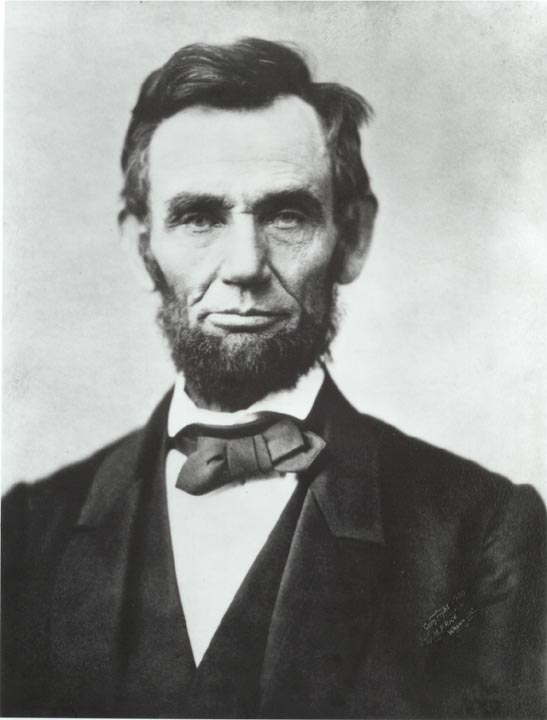
With management and leadership issues very much on mind this past week because of some interesting developments I have observed, I have decided to publish a short summary document I did on this topic two years ago focussing on Abraham Lincoln as an example. He continues to inspire me, even when I hit roadblocks and get discouraged. And isn’t that what good leaders do, inspire?
“Towering genius distains a beaten path. It seeks regions hitherto unexplored.” Abraham Lincoln
Abraham Lincoln is the most written-about American and also considered the greatest citizen this country has ever produced. He exemplified many of the traits that today’s theorists consider to be those of a highly inspirational and effective leader.
What Is Management and Who Are Managers:
Management has been defined as “the art of using all available resources to accomplish a given set of tasks in a timely and economical manner.” Management provides the basis for the system of control needed to maintain and operate an organization. It is also about getting things done through others and delegating work. Managers motivate employees to accomplish tasks with a variety of tools (intrinsic or extrinsic awards).
Typical Management Activities:
– Planning, decision-making, organizing, staffing, directing/actuating (the process of leading through teaching), directing, and controlling (determining what the organization does in relation to its mission).
Management Theories:
– “Classic” management theory, dating back to the 1950s and 1960s, suggests managers have to rely less on technical skills and more on conceptual skills the more senior rank they hold. However, in the down economy as our class’s manager interviews found, managers at higher levels in lean organizations still have a lot of technical skills because they are doing a lot of frontline/skills-related activities.
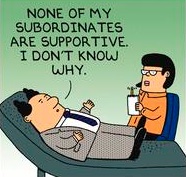
Scott Adams’ extremely insightful comic strip Dilbert captures an essence of management that likely resonates with millions of workers who find themselves led by those who fall short, actually very short, of what is well-documented as being a good leader. Go to Adams’ web site for more of his great work: http://www.dilbert.com.
Management vs. Leadership:
Managers marshal resources to achieve the vision of others, and if they are good, help each person cultivate their talents and grow. Leaders are “visionaries, strategic thinkers, activators.” A talented few may excel at both.
Managers: rely on analysis and rationality, stress conformity, more like scientists, project power over people, seek obedience, emulate other successful managers/leaders.
Leaders: envision, rely on intuition, have self-confidence and take risks, project power with people, are creative and spontaneous, emphasize team building, explore new possibilities, inspire people to follow their vision.
Key Characteristic of Great Leaders: Emotional Intelligence (the principal theorist of this theory is Daniel Goleman):
Self-Awareness: Ability to recognize one’s emotions and their effects.
Self-Regulation: Ability to think before acting and suppress disruptive moods.
Motivation: A passion for the work beyond salary or status. Optimism, commitment, drive to do better.
Empathy: Ability to understand people’s emotions and treat them accordingly.
Social Skill: Good at building relationships and networks, finding common ground.
Leadership: Innate Ability Helpful, Practice Is Essential
Management experts debate if leadership is innate or learned; research suggests the latter. But innate traits such as drive, desire to lead, integrity, intelligence, and skill make it more likely that an individual will become a leader but are not the only factors in play. Research has shown that individuals can develop their leadership skills if they are given the right opportunities and mentored. – Leadership as Innate: Intelligence and technical skill are key, and both are at least partially determined by genetics. Emotional intelligence—main predictor—tends to run in families and be greatly influenced by personality and childhood experience. – Leadership as Learned: Businesses believe leaders can be created and invest a lot of time and money to identify and train individuals to assume leadership positions. – Transactional Leaders, focus on meeting organizational goals. Make adjustments as needed to complete tasks for group. – Transformational Leaders use personality/relations with followers to inspire the team to go above and beyond expectations. They are defined by charisma, vision, integrity, symbolism.
Abraham Lincoln, the Embodiment of Strong Leadership:
Lincoln Model, Emotional Intelligence: By the time he had become President, Lincoln had mastered his emotions and exercised great control by not sending “hot letters.” When the time came for action, he acted decisively, but only after deep analysis of the full situation. His greatest asset was his astounding empathy to understand his rivals, allies, and especially his opponents, including the slaveholding South. He was also a beloved storyteller and well-liked and admired by his peers. Lincoln also learned from missteps and made amends with opponents when victorious, and he did not carry personal grudges. He was driven to have a life that fulfilled a higher purpose and to preserve the Union—a nation he believed that had great future promise.
Lincoln Model, Learned Leadership: With just one year of schooling, Lincoln embodied personal drive and self-learning, as well as integrity. Lincoln spent years practicing his craft, in Whig party politics and then in the Illinois Legislature. He lost to his then-more renown rival Stephen Douglas in a U.S. Senate bid in 1856. He then won a brokered convention of the Republican Party in 1860, held in Chicago, after becoming the foremost speaker on the greatest issue of his day, the expansion of slavery. He credited the assistance of many benefactors and friends for believing in him and helping him rise to political prominence.
Lincoln Model, Not One Style of Leadership: Lincoln mixed authoritarianism (suspending the writ of habeas corpus, etc.) as a wartime president, but had a democratic style with his cabinet (his “Team of Rivals,” the most capable politicians of his day he personally recruited). He was transformational; his peers recognized his greatness, inspiring them to work harder.
One thing I have never shaken since my days as a rookie reporter is my penchant for calling out the obvious. This is one of the sacred duties of the press: to speak truth to power. This also means calling a spade a spade, and bullshit for what it is, and what it smells like.
Anyone who has ever worked in the business of reporting news and telling facts knows this is one of the press’s sacred trusts—and myths—and the clearer we are in doing that, the better our society is from having that unbiased information.
I captured these various images on Google when I typed in a few keywords, and clearly this concept has a lot of widespread acceptance by people who know a cow patty when they smell one.
Today, I stumbled on Marcy Wheeler’s blog, the Empty Wheel, which tackles many hot-button policy issues. Last year she blogged about climate change in a piece called “The Cost of Bullshit: Climate Change, National Security, and Inaction.” She pointed out that the cost for maintaining the status quo was too high, even when major government agencies from the Department of Defense and the Department of State concluded that the issue was a critical concern to U.S. national interests. Yet, no actions were being taken by the government, and all of the reports on the emerging crisis were “mere bullshit—more wasted government employees’ time and taxpayer money.”
Sure easy for a blogger not on the payroll to diss hard-working public workers and policy-makers, right? Or, is Ms. Wheeler simply calling out the obvious, like reporters have always done, or thought they were doing.
Will a public health fad meaningfully address the main killers of Americans?
The cost of bullshit has been on my mind late, particularly regarding public health jargon that inflates busy-looking arm-waving, but does not change reality.
For me, one of the most frustrating aspects of working in the public health is the field’s faddish way it labels its collective actions to address chronic disease issues, such as obesity, using fancy sounding concepts like “policy, systems, and environmental change.” Mon dieu, what big words, what big ideas.
This is an expression coming from the top, from the venerable U.S. Centers and Disease Control (CDC), to explain national efforts to tackle the monster that is chronic disease—the leading causes of death in our ever-fattening and ever growing income-unequal country.
These diseases kill seven in 10 Americans, and of the CDC’s meager budget of under $7 billion for our national public health effort is a mere drop in the bucket compared to other priorities of the $1.2 trillion national budget that is so-called “non-discretionary spending.”
The Congressional Budget Office released this infographic on government spending and revenues for 2013. Go here for original: http://www.cbo.gov/publication/45278.
The CDC still estimates 18% of U.S. GDP spending is on healthcare, and a third of it at the place where the most outrageously overpriced and at the same time least effective primary care interventions can take place—hospitals.
So what do public health officials do, when faced with a handful of breadcrumbs thrown to them from Congress? They invent concepts that make it appear that public health is doing something, when there is little or no clear evidence population benefits are accruing based on investments at this level in the large ocean. Yes, I am talking about the catchy and jargon-laden ideas like “policy, systems, and environmental change.”
This is a hodge-podge of activities that encompass everything from starting farmers markets to promoting smoke-free buildings. Here are a couple of definitions I randomly found from some online sources:
State of Mississippi: “Our environment and the policies and systems in it shape the pattern of our everyday lives and have a profound influence on our health. The design and walkability of communities, the availability of low-cost fruits and vegetables, and the smoking policies in our workplaces have a direct impact on our physical activity, diet and health.”
State of Maryland: “Policy, systems, and environmental change (PSE change) refers to public health interventions that modify environments to provide healthy options and make healthy choices easy for everyone.”
Fairfax County Virginia: “Policy, systems and environmental change is a way of modifying the environment to make healthy choices practical and available to all community members. By changing laws and shaping physical landscapes, a big impact can be made with little time and resources. By changing policies, systems and/or environments, communities can help tackle health issues like obesity, diabetes, cancer and other chronic diseases.”
Budgets for this kind of intervention exist in most public health jurisdictions, and public health leaders are doing to the talk, because they have so few funds to do the walk. But public health experts end up playing in a small sandbox when these investments are measured against other spending, and then we spend a lot of time trying to convince ourselves through published papers, webinars, conferences, and the like that this is working. The illusion is powerful, like the illusory power of the Iron Throne in the Game of Thrones, except the shadow from a fad still does not make meaningful change when the numbers are crunched and the costs are calculated regarding chronic disease.
From the Game of Thrones, a lecture on power and illusion, for Westeros and beyond.
Public health departments who get funding through competitive grants from the CDC spearhead these efforts and then spend extensive amounts of time documenting their work trying to prove the bread crumbs made a difference to the overall health crisis facing Americans.
About $200 million was doled out from 2011 and 2012 through an effort called Communities Putting Prevention to Work (the amount initially announced in 2010 was about $380 million). In one case, Public Health-Seattle & King County published findings that show its CPPW-grant-funded efforts in schools cut youth obesity in specific schools by 17 points. Great job, except the funding was not permanent and it was not renewed when the grant ran out. The program is now in the past tense.
In 2014, public health professionals learned another funding source, the Community Transformation Grants, which also promote the policy, systems, and environmental work, is being cut too. Some can argue the money is being allocated to other programs that tackle chronic disease, focusing on heart disease and diabetes.
More musical chairs without really changing the big picture again?
I do not mean to belittle the work of public health people doing this work. They are my colleagues. I respect them. And the work being done, like promoting activities to reduce tobacco use and get more people eating healthy food, should be continued.
But as a field, I am convinced this type of work is self-delusional because it hides the nasty realities of how much larger issues shape the public’s health, such as how transportation budgets are allocated, how cheap petro-based energy is spurring obesity in measurable ways, how legislation is crafted by special interests at the state and federal level, and how the principle of health care is considered a privilege not a right in the United States. (In Denmark, by contrast, the public funds about 85% of all health care through taxes, and the system is rooted in both law and a social contract that is premised on system where all citizens are provided free and equal access to quality health care.)
Emilia Clark, mother of dragons in the smash HBO TV series Game of Thrones, is a good visual metaphor of what public health is not in the bruising world of budget appropriations at the state and federal levels of government.
The nasty realities we do not want to think about, using a contemporary TV metaphor, would be what happens when the violent kings of Westeros cut deals and cut heads, to maintain order in that mythical, lovable place with White Walkers, a giant ice wall, and fire-breathing critters. Mother of Dragons, public health is not, that is for sure!
I imagine a new fad will emerge in public health in the next three years, like it does in management. We might change the concept, but we likely may even have a smaller piece of the government pies.
No, public health jurisdictions cannot stop working until we see changes on these fronts. But the more we in public health delude ourselves that we are making a difference with scraps from the table, the more easily we are duped into accepting that the larger model is as it should be, and how it shall always be.
We will continue kvetching about farmers markets and soda machines, but not moving in a rigorous way upstream, where budget deals are made with transportation dollars, for starters. And I think we have to start being honest with ourselves about what we are accomplishing in the sandbox and whether this is the best use of our meager and diminishing resources.
The Rainforest Alliance‘s Follow the Frog viral video now boats more than 3.8 million views. If you have not seen it, the now-viral video is a made-for-YouTube brand promotion for the organization’s efforts to save the rainforest through preservation and collaboration with corporate partners, who put a cute little frog logo on their products. (The organization’s actual mission statement is here; and wow, they publish slick annual reports too.)
The video itself mocks what I could only presume to be do-good, liberal-guilt-drenched, white, middle-class YouTube users that direct action, person-to-person contact with other cultures, and global-minded activism are failed and meaningless strategies for dupes like the star of this video. The moral? Why quit your job? Why learn about things first hand and be involved in meaningful efforts overseas? Most importantly, why stop shopping? Instead, sit back, relax, and buy more stuff with a little frog. And, by doing that, you can save the forest ecosystems and those charismatic critters and natives you care so passionately about.
That, in a nutshell, is the storyline. Oh, and if you do participate in failed efforts abroad, your wife might leave you for another man who is, yes, not white. (No, I am not making this up. This race element is integral to the “follow the Kermit” story. Please tell me this was not intentional, please, OK?)
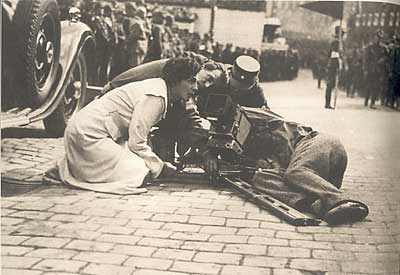
Nazi filmmaker Leni Riefenstahl at work with the Nazis during the making of Triumph of the WIll.
Clearly, the Rainforest Alliance’s brand managers and media team hit pay dirt with this one. Be one of us, sport tattoos, be cool, and be a froggy consumer. (These brand managers need to consult in public health, which lacks a hip frog right now.)
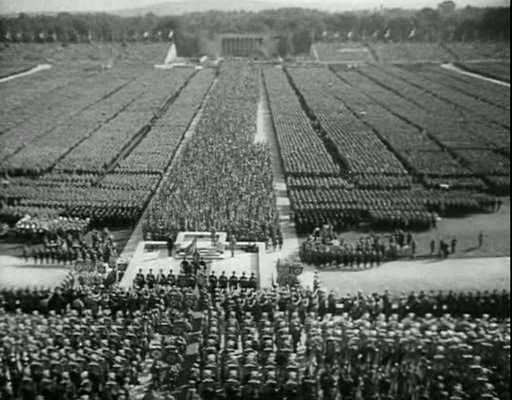
Does that mean they are not just, as some critics claim, “greenwashing” consumerism? This creepily somewhat reminds me of the wildly successful Kony 2012 phenomenon, itself the artistic step-child of Nazi propagandist Leni Riefenstahl’s seductive 1934 film Triumph of the Will. That acclaimed masterpiece of filmmaking, by nearly all metrics, ultimately celebrates the virtues of the National Socialist Party led by dictator Adolf Hitler, a year after he peacefully seized control of the German state.
A scene of the Nazis during a rally filmed by Leni Riefenstahl for Triumph of the Will, one the most successful propaganda films ever.
Do not get me wrong. I buy certified organic coffee. I love cat videos and Jimmy Kimmel’s infamous twerking video as much as the next YouTube user. But, ouh la la, there really is nothing more powerful than a good story, a clever media product, and the right artist to sell just about anything, from armchair activism to strong-arm fascism.
Sadly, I do not think you can teach this stuff. The best and the brightest will inevitably also work with the nastiest, wealthiest, and the worst, sometimes more than with the “virtuous.”
So, what do you think about following the frog? Good for forests? Or, something completely different?
Amazon, despite its critics, has been an innovator in the private sector.
The business press and the communications teams in the private sector work hard to show that innovation mingles in the air like oxygen at successful businesses. The theory goes, innovation breeds success, which creates profits, which spurs new products and services and wealth, which of course is good for the economy and thus all of us.
Forbes, for instance, showcases business innovators, like Starbucks and Amazon, by highlighting metrics that the magazine considers to be markers of innovation. According to the Forbes’ Sept. 2, 2013, piece on innovation, Amazon’s CEO Jeff Bezos says he looks for traits in innovators in his company and allows for innovation to occur three ways:
Rewarding innovators who are relentless in their on their vision but flexible on the details of how to get there.
Fostering a decentralized work culture for new products or services, so that the majority of employees feel like it is expected of them (Amazon’s now famous “two-pizza teams”).
Third, teaching teams how to experiment their way to innovations.
But once we start talking about government, talk of innovation gets tossed out the door. In fact, the prevailing wisdom among many in the private sector, and likely in the public sector too, is that government is the ultimate death machine to innovation.
Not only does innovation die still-borne in public agencies, government regulations themselves kill innovation in the private sector, many writers and politicians claim ad infinitum.
Do any public agencies have capacity to innovate?
Government still funds innovation and research and development, particularly in defense and health care. But as a culture, government is not the incubator, goes prevailing wisdom. One global survey completed this year puts trust in government around the world below 50%, behind trust in business at about 58%, for its ability to demonstrate change and new leadership.
Public health, as a public endeavor in the United States, is by definition a public undertaking. Thus it remains government-funded, government-run, and thus, be default, the inheritor of government’s best and worst traits.
As someone who has now worked at the international, state, and local levels of government, including in public health, I can attest to government bureaucracies’ failure in many instances to embrace change, inability to stimulate ideas, and poor track record in adopting new ideas to improve how government does business.
One recent research paper by British researchers Geoff Mulgan and David Albury on the lack of innovation in the public sector noted: “Most service managers and professionals spend the overwhelming proportion of their time dealing with the day-to-day pressures of delivering services, running their organisations [sic] and reporting to senior managers, political leaders, agencies and inspectorates [sic]. They have very little space to think about doing things differently or delivering services in ways which would alleviate the pressures and burdens.” In short, government culture lacks innovation.
The pair argue that innovation should be a core activity of the public sector. They claim this helps public services improve performance and public value, respond better to the public’s needs, boost efficiency, and cut costs.
Geoff Mulgan and David Albury ‘s diagram how public bodies do not innovate.
What are people saying about innovation in public health and health care
Developing more coherence between policies in the fields of education, research and innovation.
Measures to develop an innovation culture in universities.
Back on this side of the pond, the Harvard Business School held a conference on innovation in the massive health care sector in October 2012, and then published a study in February 2013 on how innovation was seen as critical to health care and health education, which includes public health.
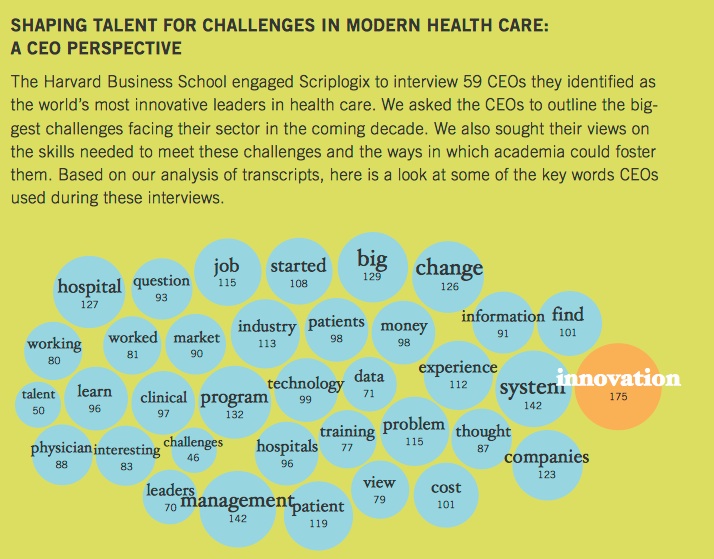
The report found that 59 of the CEOs of the world’s largest and most innovative health-sector organizations most frequently used the word “innovation.” According to the discussion of the attendees, innovation in its broadest sense was even seen as the “only way that change will happen and that creative solutions will be found for our current problems in health care.”
The most important characteristic for a company according to leading health care CEOs is innovation.
Recent evidence shows that innovation can lead to better outcomes. A 2013 study published in the Journal of Multidisciplinary Healthcare, on technological innovation and its effect on public health in the United States, found a correlation regionally in parts of the country where it was perceived that technological innovation was occurring. The study reported that “relationships between the technological innovation indicators and public health indicators were quantified,” and it was found “that technological innovation and public health share a fairly strong relationship.”
Will innovation remain a dirty word in public health departments at all levels of government?
But does anyone working in a local health jurisdiction, hard-strapped for cash in the post-Great Recession era of downsizing, see innovation taking place in their work environments? As hierarchical bodies, modeled originally after the military since their original inception in the United States, public health bodies are seldom discussed in organizational behavior literature as “innovative.” They are organized hierarchically and often divided by departments with no interchange, and their managers may be unable to allow for information sharing and promote collaboration seen in many for-profit firms.
Yes public health jurisdictions, to win much-coveted accreditation by the national Public Health Accreditation Board, must prove they are committed to quality improvement and a competent workforce. But this by no means is the same as encouraging a culture of innovation to adapt to tremendous change, particularly financial downturns and the challenges posed by chronic disease and the increasing wealth disparity among the top wage earners and the majority at the bottom, which is leading to great health disparities.
One local health jurisdiction that is trying to innovate, the Spokane Regional Health District, developed a strategic plan that calls out as its top two strategic priorities: increasing awareness about the role of public health and securing more stable funding. I think these are spot on and demonstrate how this agency has moved its focus upstream and is adapting itself to succeed in that bruising political arena.
But my own sense of public health jurisdictions, small and large in the Pacific Northwest at least, is that other jurisdictions may not wish to emulate Spokane because of agency rivalries and personal jealousies among upper management. I would love for one day to learn that some of the traits of private sector organizational behavior practices, such as rewarding innovators, promoting a culture of innovation, and teaching workers how to innovate take root. Right now, I’m not seeing that within the sector, and the talk is not matching the walk.
Public health, as a profession and system to improve population health, continues to fall short in the United States.
Since the start of the Great Recession, nearly a quarter of all employees working for local health jurisdictions have been downsized or laid off because of funding cuts to already meager budgets. The National Association of County and City Health Officials pegs the attrition at nearly 44,000 workers–a fact reported on this blog before.
Proportional changes in inflation adjusted spending for public health (CDC) versus health care spending in the United States.
Today, most Americans have little idea what public health does, why it matters, and why its funding is critical to improving health outcomes at the population level. For that matter, half of all Americans cannot even identify what the core elements of health insurance plans are.
From its start as a profession in the United States in the early 1900s, public health was deemed to have a political-activist function. In fact, noted public health pioneer C.E.A. Winslow, Yale’s first chair of public health, promoted universal medical care in the 1920s as a principle of sound public health policy, backed later by other public health practitioners in the next two decades who unsuccessfully called for a form of universal health care.
Winslow’s often-quoted definition of public health called for the “development of the social machinery which will insure to every individual in the community a standard of living adequate for the maintenance of health.” Such efforts were overt and unashamed calls for political action and advocacy, the likes of which are mostly not heard today from the profession.
10 essential public health services: a recipe for political impotence?
Since 1994, the U.S. Centers of Disease Control has pushed the “10 essential public health services” model as the gold standard for defining public health’s realm of practice. As far back as 1999, the CDC claimed, “The overall goal for public health’s infrastructure is to have every health department fully prepared with capacity to fulfill the Ten Essential Public Health Services and every community better protected by an efficacious public health system.”
The 10 essential public health services is the U.S. model, not a global model, for defining the public health profession’s realm of practice.
This model has rippled outward to every public health agency, every school of public health, and all professionals in the field as the benchmark to measure quality and effectiveness. Logic models have been developed to see how well health departments were doing according to this standard. Anyone who works in the field is told that these services define who we are and what we do.
All the while, public health budgets have been slashed nationally, and at the state and local level, workers have fled or were pushed out of the profession. Still the field of public health continues to push its competent but still toothless model for what is considered a best practice—the 10 essential services.
While evidence-based and certainly valid, this 10-step model is also a self-defeating set of quasi-religious commandments that fails to address the harsh political realities related to developing legislation and orchestrating fights over budget appropriations. It also fails to call for advocacy and political activity, which can and have pushed public health efforts far greater than these prescribed activities.
Politics, money, and real power
For-profit entities working in the health sector thrive because advocacy and political engagement are fundamental to their business models and bottom lines, unlike the model of inefficacy promoted for the public health profession.
For instance, pharmaceutical powerhouse Pfizer unabashedly states, “We believe that public policy engagement is an important and appropriate role for companies in open societies, when conducted in a legal and transparent manner. … The Pfizer Political Action Committee makes contributions to candidates for federal office, and fully discloses its contributions on a regular basis to the Federal Election Commission.”
Pfizer, the multinational pharmaceutical firm, published its political spending activities in the United States for the first half of 2013.
While for-profit health interests march forward, with ever more dollars and clout, public health continues to retreat. The President’s budget request in 2014 for the CDC, the agency charged with protecting America’s health, is a measly $6.6 billion (for its program level expenditures)—a drop of $270 million over 2012.
This dip likely reflects pushback by GOP lawmakers in the current Congress, who view CDC’s public health activities as synonymous with overt advocacy. Language in funding measures, in the current session of Congress, has attempted to limit federal dollars for grassroots efforts by public health practitioners to lobby on behalf of specific legislation, particularly on efforts to address chronic disease and obesity.
Generally, public health advocacy is not lobbying, which is prohibited when it involves federal or earmarked funds. Exceptions include study or research and discussions of broad social problems.
So it is not surprising that government-funded public health bodies have been generally shy, and in the case of firearms legislation, nearly totally muzzled, from discussing firearms deaths since congressional language banned funding of firearms research starting in 1996. (In my opinion there has been a failure of leadership in public health when such leadership was needed on the issue of firearms violence, which is a legitimate public health concern.)
But should bans on using public funds for lobbying mute the profession from pushing for advocacy approaches and political engagement?
Daniel Callahan and Bruce Jennings’ 2002 article in the American Journal of Public Health examined the ethics of public health advocacy. They noted, “Politics is a necessary component of public health, moreover, precisely in order to achieve public health policies and practices consistent with American traditions and values. Politics is the messy arena in which ultimate questions of the public good are worked out.”
Public health’s failures in the political mosh pit
A perfect example of what happens when public health was not fighting tooth and nail was President Obama’s Affordable Care Act of 2009, which ultimately squashed efforts for a single payer system—the long-held dream of public health advocates from the 20th century—and advanced a health insurance industry, market-based model for “health care” reform.
All told, advocacy groups in 2009 spent $3.47 billion for D.C.-based lobbyists to parse out issues, according to left-leaning Center for Responsive Politics. Not surprisingly, the lion’s share of that spending went to fight the health reform battle. Businesses and organizations that lobbied on “health reform” spent more than $1.2 billion on their overall advocacy efforts.
The good news is that this marked a jump of more than 300 percent from what APHA spent in 2012. It would appear that some in the field are waking up to the realities of fighting for public health where the most meaningful impacts can be achieved – through policy and legislation.
By comparison, just one big pharma company, Pfizer, spent more than $800,000 in the first six months of 2013, from local to congressional candidates and political parties nationwide (see chart above).
What is most discouraging is that future leaders entering the profession continue to be shortchanged by graduate programs that do not know how to prepare practitioners to win in the bruising political environment known as “upstream.” This is my general assessment of not just my graduate MPH program, but of the field that I still see through its obsessive and yet parochial obsession with the 10 essential public health services.
The CDC’s 10 essential public health services.
A very smart resource guide developed by the California Endowment sharply noted: “… many public health faculty do not possess the skills or experience to teach advocacy effectively. Faculty surveys show, for example, that despite advocacy for health being recognized as an ethical responsibility and required competency of health educators, many health education faculty do not see themselves as competent for teaching advocacy and lack instructional materials to do so. Degree-granting programs in public health need to provide systematic training in social advocacy. In the absence of formal training in social change, public health graduates must learn this information and develop these skills on a catch-as-catch-can basis. Working in this way means that some will be less effective than they otherwise could be in advancing the health of the public.”
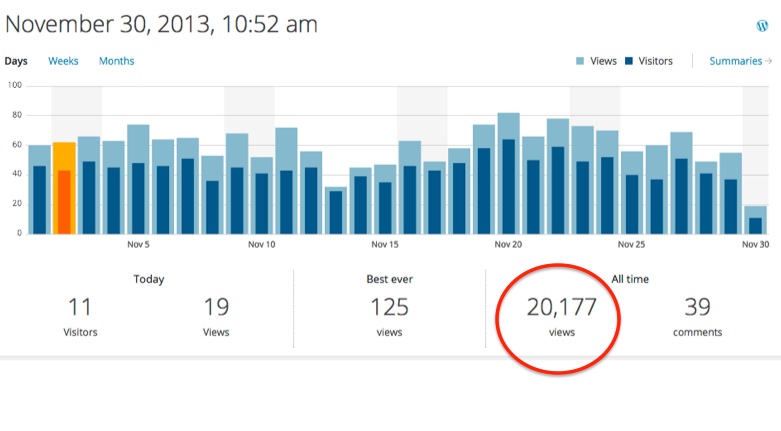
Thanks to everyone who has taken time to visit my blog focussing, mostly, on public health and health. I continue examining issues with the additional perspectives of history, culture, personal experience, and enterprise journalism. This month I crossed the 20,000-views threshold. See the screen snapshot below, taken today.
WordPress’s outstanding analytics tools provide a snapshot how many visitors and views have been recorded, in November 2013, and since I launched this blog in late March 2012.
WordPress’s analytics also report the following categories and tags attracted the most eyeballs:
Tags & Commentaries: Most popular topics you’ve written about
Topic & Views
Public Health 81
Health 77
Travel 57
Obesity, Sweden, Sweden, most beautiful women, Sweden has the world’s most beautiful women, infant mortality, life expectancy, Norway, Nordic Countries, public health systems, national public health investments, beauty stereotypes, national stereotypes, national obesity rankings, fat countries, obesity health threats 51
Photography 18
Native American 12
Africa 11
Human Rights 10
History 10
The most popular post on my blog looks at why Swedes have a reputation for being attractive, and whether that is related to the country’s strong public health system and universal health care. No doubt a fair number of visitors came looking for pictures of blonde Swedes in bikinis, but hopefully came away with some knowledge of how investing in health upstream can pay dividends that are linked to, yes, physical appearance and overall health.
The data are great validation for the idea that first launched this enterprise. It began during a spirited discussion at the University of Washington School of Public Health about the value and validity of training future public health leaders to specialize in publishing in peer-reviewed journals as opposed to open-source communications like WordPress-enabled blogs or social media or non-scientific publications. This is a topic that is being debated by many seeking to improve public health’s relevance for the year 2013 and beyond.
Having public relevancy in the face of funding cuts remains a critical issue in the field of public health, which has seen its workforce at the local level shrink by 44,000 jobs, or nearly a quarter of all workers, since the start of the Great Recession. Budgets in local health jurisdictions have been slashed to the bone according to a national survey of those organizations by the National Association of County & City Health Officials (NACCHO).
In fact, I would recommend to anyone contemplating a career in public health, outside of epidemiology or biostatistics, to consider advanced degrees in law, business, or applied health like nursing rather than this field, based on the national employment data. Or future public health leaders can learn through other means how to integrate new tools of communications to engage the public with research, to build support for funding health.
In fact, those who now manage the nation’s graduate public health programs need to use the tools of program evaluation, which they teach in the nation’s finest universities, and engage in a serious discussion if their education model is still working and achieving longer-term goals and ultimately leading to a better public health system and healthier country.
How many MPH graduates in 2013 found jobs within six months? Is that number acceptable? Why train a workforce for many jobs that may not be in high demand or nonexistent, with skills that are not reaching a wide audience, thus preventing the public from knowing what public health is and why it matters?
This will remain a fundamental issue at the heart of the crisis facing the field today and for years to come. Meanwhile, I think there will continue to be a bottoms-up response to how the profession adapts to change in the new era of diminished resources. I hope that this blog will continue to be involved in that larger discussion, and the numbers show that at least some online readers are hungry for information in easier-to-access ways.
Dr. Roger Gollub and his beloved golden retriever, Sophie, at the famous Balto statue in downtown Anchorage.
Five years ago today, on a cold Alaska night, I was awoken by a strange phone call left on my answering machine saying something had happened to my Anchorage friend, Dr. Roger Gollub. Confused, I called the emergency room at the Maniilaq Health Center in Kotzebue, a remote bush city in the Northwest Arctic Borough, 26 miles north of the Arctic Circle on the Chukchi Sea. Roger had flown there a day earlier on assignment—I was with him the night before. I could not believe what I heard. The medical personnel told me, with great difficulty, that one of county’s finest pediatricians and public health caregivers had died from injuries sustained on a trail just outside of town that night.
Dr. Roger Gollub, a career pediatrician with the U.S. Public Health Service’s Indian Health Service, never returned home from his short visit to care for patients in this mostly Native community. He, along with a coworker, were mushing on a shared-use trail in subzero weather, under Alaska’s majestic starry skies, when they were run over by a snowmachine. The driver had a criminal background and was under the influence of drugs and booze. It was about a senseless a crime as I could have ever imagined, and more brutal because of the injuries Roger and his coworker sustained. (Note, Roger’s colleague survived, but only after heroic procedures and months of recovery, all costing more than any non-wealthy person can afford.)
After a bitter scream of disbelief upon hearing the news, I caught myself and thought, what would Roger do. I then spring into action for the next 24 turbulent hours, and the years beyond. In fact, my response to Roger’s tragic passing continues to this day. I would never have gone back to graduate school and earned my MPH in 2012 had I not been inspired by Roger’s amazing life’s work. He remains the finest man I have ever known.
Roger Gollub’s good friend and champion in so many uncountable ways, Gunnar Knapp, stands by the spot where Roger was taken on Nov. 19, 2008. Thanks, Gunnar, for sharing this with all of us who cared about Roger.
Roger had just retired from a distinguished career, which included an epidemiological residence with the U.S. Centers for Disease Control and path-breaking work with Native American and Alaskan Native communities (details here). He was still working under contract serving his many patients, and thinking about an active life ahead, including research, time with his wife and two daughters, projects with the Anchorage Amateur Radio Club, and travels he long delayed. Roger’s death forever changed my life, but also in a good way. From that time on I vowed to work even harder at showing the type of leadership that Roger demonstrated throughout his life.
Though he was only 5’6”, Roger towered above his peers as a professional, and particularly as an exemplary caregiver who understood his young Native American and Alaskan Native patients and their families. He was named physician of the year by the national health agency he dedicated his life too. He had legions of fans across the U.S. Public Health Service who held him in the highest of regards.
At Roger Gollub’s “Celebration of Life,” hundreds of well-wishers offered condolences and happy memories of one of Alaska’s finest doctors ever (December 2008).
I saw hardened, even stoic and cantankerous men who knew him through his ham radio activities openly weep when trying to make sense of his death. (Roger was an advanced ham, who knew Morse code, and who brought amazing life into the local club.) I saw more than 500 mostly Alaskan Natives give him the highest honors normally bestowed only to revered elders. I heard dozens of stories describing how Roger helped and even saved their very sick children, all while preventing costly medical waste within a sometimes-inefficient bureaucratic health delivery system. That alone is amazing, and Roger never expressed cynicism about that system that often thwarted him and his seasoned colleagues.
This letter, published in the Anchorage Daily News shortly after his death, captured a sentiment that lit up the blog coverage of his passing, with comments pouring in nationwide: “I am sure I’m not the only one who feels a great loss with the recent passing of Dr. Roger Gollub. He was truly a man with a servant’s heart and had a tremendous impact on my family. As a pediatrician at the Alaska Native Medical Center, he has shown pure dedication to the Native community and loved each and every patient. He had a place in my heart and my children’s. Once, my daughter had to see another doctor while he was on vacation, and cried for her doctor to come back. The world will never see another with the same compassion, dedication, intellect, integrity and valor as he. I was privileged to know this man for six years and he will never be forgotten in my children’s heart and mine. Linda Tomaganuk Anchorage.”
On the darkest of days, Roger still managed to smile. He always took phone calls from worried parents–at home, in his car, on his walks, wherever. How many doctors take house calls, or personal calls, ever? That was Roger. That was the kind of leader he was. He breathed it. He lived it.
Roger demonstrated to me examples of the leadership that I admire most:
Emotional Intelligence: Roger demonstrated this trait that most researchers say is the best predictor of leadership. He never appeared flustered. His coworkers described his ability to bring chaotic situations under control, in hospital wards or during infectious disease outbreaks, with a calm, deliberative, thorough, and positive manner. It proved contagious, and he earned trust and credibility among his peers.
Understanding of and Respect from his Peers: Abraham Lincoln, America’s greatest politician, was infamous for his empathy and his ability to understand his friends and opponents, which helped him articulate decisions and policy choices that always seemed perfectly suited for the difficult challenges ahead. He knew where the audience was, and where he needed them to go. Roger was celebrated in the Indian Health Service for his true commitment to community based participatory research, for which he earned the deepest respect from his Native American medical professionals. Mention Roger to anyone who has worked in this community, and you will quickly learn of Roger’s deep and genuine appreciation for the community he served during his lifetime. I met a former career pediatrician in the Indian Health Service last spring and mentioned Roger’s name, and was greeted by the most contagious grin I had seen in months. One University of Washington School of Public Health faculty member, who specializes in the field of community based participatory research and who knew Roger in New Mexico, said unequivocally, “Roger was the real deal.”
Leading by Example: Dorris Kearns Goodwin’s portrayal of Lincoln’s wartime cabinet, his famous “team of rivals,” highlights Lincoln’s eventual winning over of Democrat Edward Stanton. Before the Civil War, the former Ohio attorney had ridiculed and mocked the then lesser-known Illinois lawyer as a “long-armed ape” during a legal case during which Stanton shunned Lincoln’s work. Lincoln did not hold a grudge, and he then sought out Stanton to run the War Department during the Civil War, because he had the right qualities to master a complex organization. Stanton later become Lincoln’s strongest ally. Lincoln’s ability to put aside personal grudges and genuinely collaborate even with his political rivals was not an act. It was genuine.
Roger treated everyone he interacted with, even those who did not return the courtesy, with respect. I never once heard him utter a bitter word or even cynical comments, even when I expected them. I have met few people who have demonstrated this trait. Roger had a work ethic paralleled by few. He put in 12-hour days and longer, never compromised his duties as a father or husband, and excelled at nearly anything he tried to do—medicine, engineering, ham radio communications, running, parenting, research, epidemiology, research. Roger adopted practices seeing patients that saved taxpayers tens of thousands of dollars, which his peers steadfastly noted at his funeral. He never sought glory, though during his life he was gaining a national reputation he could never even imagine.
The small guy in the front row, in the middle, is team captain Roger Gollub (University City Senior High School Track Team, 1973).
Roger particularly demonstrated this talent at University City High School, where he ran track and cross country. I attended the same high school, though ten years after Roger. Roger was the smallest man on an interracial track team, which was comprised of very large young men who towered over Roger. Racial tensions were real here, but so were the strong bonds. I know this school, and I can assure you this is a serious alpha dog environment and not for the faint of heart, particularly among young, competitive men. Roger’s peers voted him captain of the track team, because he pushed the bar farther and competed harder and ran faster than all of them. In short, he inspired them to do better. He never asked for that title. He earned it. He made his team a genuine competitor at the state level. Roger carried that excellence to Yale where he competed for the Yale track team as well. (Roger’s own running hero was Olympian Edwin Moses.)
Moral Vision and Visionary: Roger’s values were nurtured in his Jewish, middle-class upbringing in a diverse community, University City, Mo., which we both called home. (I lived next door to Roger, but only briefly overlapped when I was younger, as he was 10 years older.) It was an often-hard place to learn about racial differences, but also a great place to dream big about pursing a path that made a difference. Roger knew exactly who he was and what he wanted. He graduated class valedictorian in 1973, and never forgot his roots. His vision was, as his friends said, a mix of Mighty Mouse heroism mixed with the Star Trek prime directive to do no harm–and yes, these describe his actions and values as a doctor working cross-culturally.
At Roger Gollub’s celebration of life, his family assembled assorted “tools of the trade” he used to care for sick kids, and of course the famous lobster hat.
I never once saw Roger lose faith in others or in the inherent goodness of people. His service to patients, the core mission of the U.S. Public Health Service, and purposes far bigger than himself can be seen in every personal and professional choice he ever made. He demonstrated and articulated a clear, humane vision for health care, community, family, race relations, and society that he blazed intensely everyday, inspiring dozens if not hundreds by his example.
Don’t be fooled by that doctor you see in this picture with a goofy grin, and a lobster hat and Elmo toys. That was a master professional’s slight of hand to get nervous kids comfortable and the most conniving of change agent’s subversive and effective strategy to reform a health care system that has long forgotten how to put compassion ahead of egos and profits.
I have yet to meet anyone in the field of public health and public service who embodied all of the leadership traits Roger seemed to have in spades. Sometimes we just get dealt the right hand and can say, damn, I was lucky I had a chance to work with or know such a gifted, natural leader. Thanks, Roger!














 Rudy Owens' Blog