Research paid by public money is often inaccessible to the public

Before I am cut off from the University of Washington’s online library services as a former tuition-paying student (very expensive), I am researching and downloading articles on public health and health issues that I will no longer be able to access without paying exorbitant fees to companies like Netherlands-based Elsevier. Such companies are making a killing selling peer-reviewed articles at high prices, so only fee-paying institutions can access the research that is funded by public dollars.
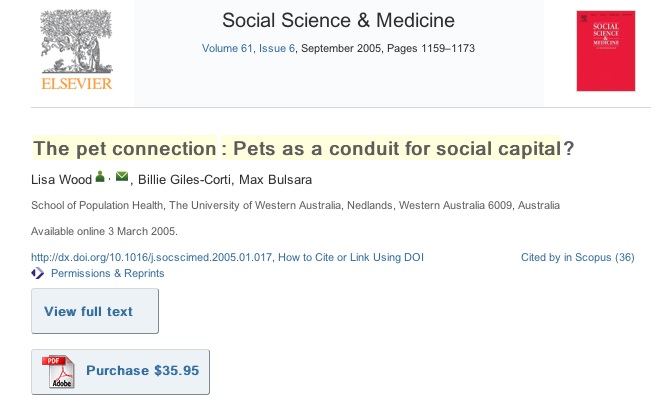
Elsevier sets a not-too-cheap price for the public to “buy” peer-reviewed articles, often funded by public money and taxpayers.

According to an April 24 article in The Guardian, more than 10,000 academics are already boycotting Elsevier, to protest its business model that sets high prices for peer-reviewed journal articles and access to them. This protest has been dubbed the “cost of knowledge.” The Guardian reports that many university libraries pay more than half of their journal budgets to the big boys of academic publishing, which also includes Springer and Wiley.

One optimistic comment from the editor-in-chief of the prestigious scientific journal Nature notes open access to scientific research articles will “happen in the long run.” Well, I sure hope that happens, but I may not bet on it.

In fact there is a display about this debate in the UW Health Sciences Library (my home away from home for the last two years) on the economics and ethics of charging for scientific articles that publish research funded by taxpayers. Right now, only those who pay fees can download many of these journal articles at such university research libraries like this one. And it is through peer-reviewed articles that academics get tenure, validation, and grant funding and that research enters into the realm greater scientific discourse, and eventually the realm of policy-making and responses by the private sector.

The Guardian reports that prestigious Harvard University prepared a memo to its 2,100 teaching and research staff calling for action, claiming the institution could no longer afford price hikes imposed by the aforementioned publishers. These fees, in effect, are paid by students like me.

I paid nearly $45,000 in tuition and fees to the University of Washington for two years of study, and during that time, tuition was hiked 10% each year in my school, the School of Public Health (the last hike just being approved by the UW Board of Regents the first week of June). So the business model of these publishers is definitely one driver in uncontrolled tuition inflation that is putting an entire generation of graduate students into unsustainable debt. Even the very conservative UW Board of Regents, in their announcement of another round of tuition hikes for undergraduate students, issued a formal declaration expressing “concern for the sustainability of Washington public higher education.”

In my last week of classes at the University of Washington, I partook in a discussion on this topic and shared my concern with a UW School of Public Health faculty member that public health students are being trained to write and publish scholarly articles, many of which may never be published in open sources outside of subscription services like Elsevier. One suggestion I offered was to help prepare the next generations of graduates to help communicate the science and research findings of their field for open-access sources. The Centers for Disease Control and Prevention already does this in its publications (the Morbidity and Mortality Weekly Report), and does this well, but more needs to be done by future public health practitioners if a sustainable model can be developed to pay for the research to reach the public via open source platforms.

My bet is the next generation of public health influencers, like my colleague Valerie Pacino, will be blogging as much as they are writing peer-reviewed articles, and having an impact doing it.

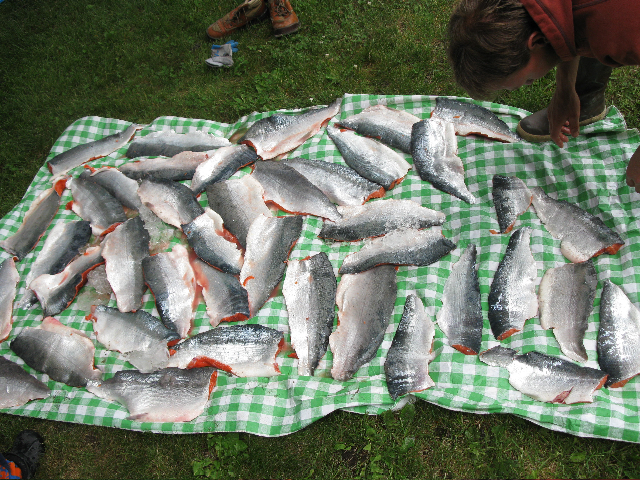
I would eat salmon every day if I could afford it

To celebrate the completion of my public health studies at the University of Washington School of Public Health, I celebrated on June 2, the way I always do at the end of long journeys or the start of new chapters—I had a salmon barbecue with good friends. This time I added Alaskan ling cod to the menu.

Copper River sockeye and Alaska ling cod — oh yeah, very very good!

I love salmon. The fish I bought, Copper River sockeye, was very fresh, and the ling cod was amazingly delicious (have to eat more of this). In the past, I have always marked major milestones of my life with salmon. This includes moving, changing my name, celebrations with friends, and other good reasons to cheer. My last night in Alaska, in August 2010, also involved salmon. Times I have left Seattle for journeys abroad have included salmon. In many ways I am following historic traditions of the tribes of coastal British Columbia and their potlatch celebrations.

Salmon has long held a special place in the traditions of West Coast Native peoples, from the Salish all the way up to the Alaska among nearly all Native groups in the Great Land (what Alaskans call their home state). Salmon provided food to support both the health and culture of many tribal bands.

Dipnet caught Kenai River sockeye, July 2010.

Rich in vitamins A and D and omega-3 fatty acids, which reduce the risk of heart disease and stroke, wild salmon is extremely healthy food. Its intake has traditionally been much higher among many Natives because of their subsistence lifestyle. In Alaska, the Yup’ik people, of the Yukon-Kuskokwin region (including the Yukon River), often eat 20 times more fish oil than other people, and they appear to be protected from ill health effects of junk food and obesity with such a diet. However, epidemiologists still assess risk with salmon intake because of potential mercury contamination.

In Alaska, epidemiologists recommend people eat fish at least twice a week, and they say wild Alaska salmon of any species can be eaten in unlimited amounts by women and children, but other species should be eaten less, because of mercury and other toxic contaminants that could be found in fish.

As a former Alaskan, I was spoiled by an abundance of fresh fish.

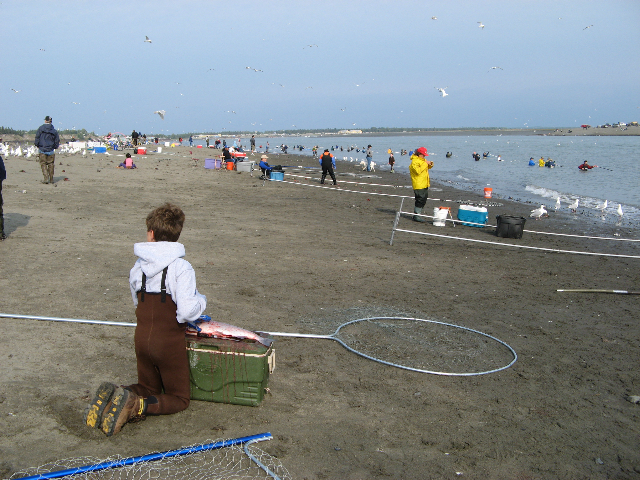
Alaskan residents are still allowed to dipnet and catch fish as subsistence users in the Kenai River and other areas depending on the runs. During my years there, I would dipnet on the Kenai River for sockeye.

Dipnetting on the Kenai River, 2008.
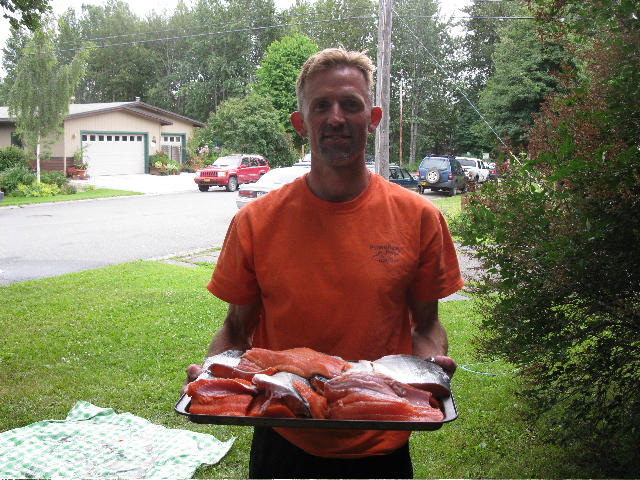
Rudy Owens and fresh caught Kenai River sockeye, 2010.

The fish I caught would last me through the spring. Here in Seattle, I spent $18 a pound for Copper River salmon. As a just graduated MPH student, that is beyond my budget. My classmate and I once joked when a nutrition professor asked if students ate fish twice a week. Maybe the professor forgot to check what the tuition price was as the University of Washington. Lentils and rice still keep me going. I forever dream of salmon now.

So what the heck is public health?

I have spent two years studying public health at one of the United States’ most respected schools of public health. I have read hundreds of articles, countless books, and more data than I can possibly quantify. Perhaps it is a good time to ask, just what the heck is public health, and how is it communicated. Do people understand what public health experts say, and how well do public health people communicate what we do?

An oft-repeated definition of public health by C.E.A. Winslow (1920) describes it as “the science and art of preventing disease, prolonging life, and promoting physical health and efficiency through organized community efforts for the sanitation of the environment, the control of community infections, the education of the individual in principles of personal hygiene, the organization of medical and nursing services for the early diagnosis and preventive treatment of disease, and the development of the social machinery which will ensure to every individual in the community a standard of living adequate for the maintenance of health.”

Well, phew. That was exhausting.

Here’s another, this time from an Institute of Medicine report, from 1988. In the IOM’s words, public health is “fulfilling society’s interest in assuring conditions in which people can be healthy.” This implies a population focus, namely interventions that aim to prevent disease and promote health that affect everyone.

However, the world of public health, when it attempts to explain itself to the wider public, often resorts to graphs that, despite being conceptually rich and research based, appear downright confusing and at times bizarre, at least to outsiders I fear. I remember one lecturer I heard in January 2012 say, “Public health people love boxes and arrows.” To that add circles, diagrams, squiggly lines, and a range of other symbols. Does this help public health, or simply make the general public confused about what public health is? Or, should we continue to stick with what we, in the field, have come to believe are best communications practices?

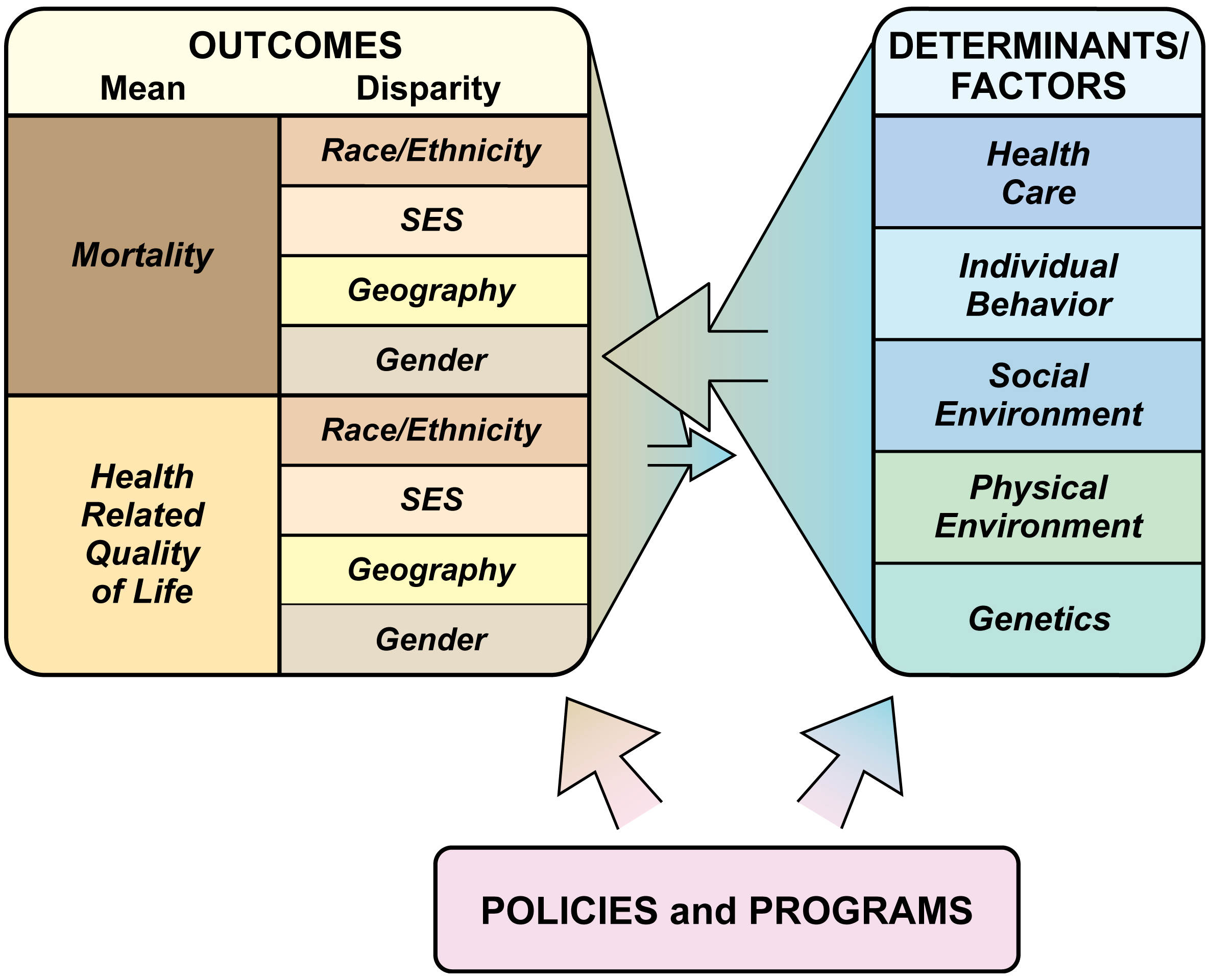
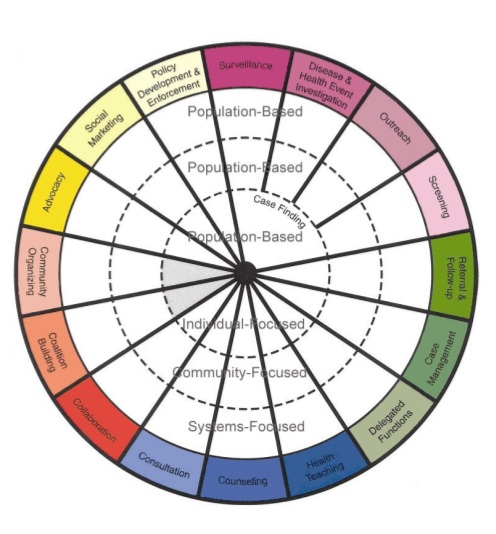
To those who have very little experience with public health, I present three images of population health, public health interventions, and the social determinants of health. The first diagram is of factors influencing population health.

Population health model
Public health wheel of interventions
A model explaining the social determinants of health

World Health Assembly to consider polio emergency declaration

Polio, once one of the world’s most feared infectious diseases, still stubbornly persists, notably in countries with high poverty rates, structural issues that create poor sanitation, and unrest. For decades, global health leaders have waged a campaign to eliminate the virus, and have largely contained it, but the final push has stalled. It is considered endemic in Afghanistan, Pakistan, and Nigeria — having previously been considered endemic in India — but it continues to jump borders, such as to Chad this year. As a result of the resurgence of Polio in 2011, the World Health Assembly as of mid-May was considering adopting a resolution declaring polio eradication a programmatic emergency for global public health.

The Global Polio Eradication Initiative drew up an ambitious plan to revitalize the stalled campaign in 2010.

Last week, the United Nations Secretary-General Ban Ki-moon said the time was now to wipe out polio, asking for another $2 billion in commitments, to save up to $40 billion by 2035. Remember, this is money that if not going to polio, could be going to other pressing global health issues, like malnutrition, which the United Nations, as of 2010, claimed accounted for more than one-third of the nearly 9 million deaths worldwide of kids five and under. The tragic part is, low-cost prevention and treatment measures, according to the UN, could have saved most of these lost lives.

The global campaign to eliminate polio was first launched in 1988. It has been the single-most expensive medical campaign focussed on a single human illness in the history of humanity.

A major funder of polio eradication efforts, the Bill and Melinda Gates Foundation, as of 2009 had pumped nearly $1 billion of their foundation’s money into what is known as a “vertical” intervention strategy, targeting a single disease, not a “horizontal” strategy, which goes after root causes of health issues like social inequality, poverty, and poor primary care infrastructure.

This debate is particularly sensitive with polio, given Bill Gates’ personal trips to Nigeria to convince the country’s leaders to spend their meager health resources on polio eradication, when they face many daunting challenges with a very poor basic health care system. About 800,000 Nigerian children under five die annually, the second highest rate of any nation in the world, according to UNICEFʼs 2009 count.

The campaign that eradicated smallpox in 1979 also offers telling lessons for the polio eradication effort. International aid was $100 million. Recipient nations spent $200 million of their own funds—a scenario many say will repeat with the current polio strategy. The World Health Organization (WHO) reports that in many African nations like Nigeria, government spending on health is less than 5 percent of all outlays. It is unlikely countries like Nigeria can pay for polio eradication and other efforts like reducing child mortality from malnutrition.

Having travelled widely in India in 1989, I vividly recall seeing the victims of polio in many communities. No one wants to see polio’s return. But are the resources this effort demands, particularly for meeting Millennium Development Goals, worth the concerted effort?

Every day can be bike to (fill in the blank) day

Here in the United States, promoters of biking and various groups attempt to rally public awareness around the health, environmental, cost, and multiple other benefits of biking by having “bike to work month” and “bike to work day.” This is important, because these activities can turn the attention of a chaotic media landscape for a brief moment on the incredible versatility and value of biking.

The down side is, once the day, week, or month passes, the next worthwhile cause takes the spotlight, and the public’s attention quickly turns away from biking, and without sustained interest, meaningful policy work and political momentum fizzles. Luckily, I live in a Seattle that at least has a critical mass of cyclists and some more “advanced” infrastructure to help keep cyclists somewhat safe from the perils of sharing roads with vehicles. To Seattle’s credit, it is getting ready to update its bicycle master plan. (For anyone who is from Seattle and who has not taken the survey, please do so.) And nationally, many advocates are working hard to sustain a national movement one community at a time.

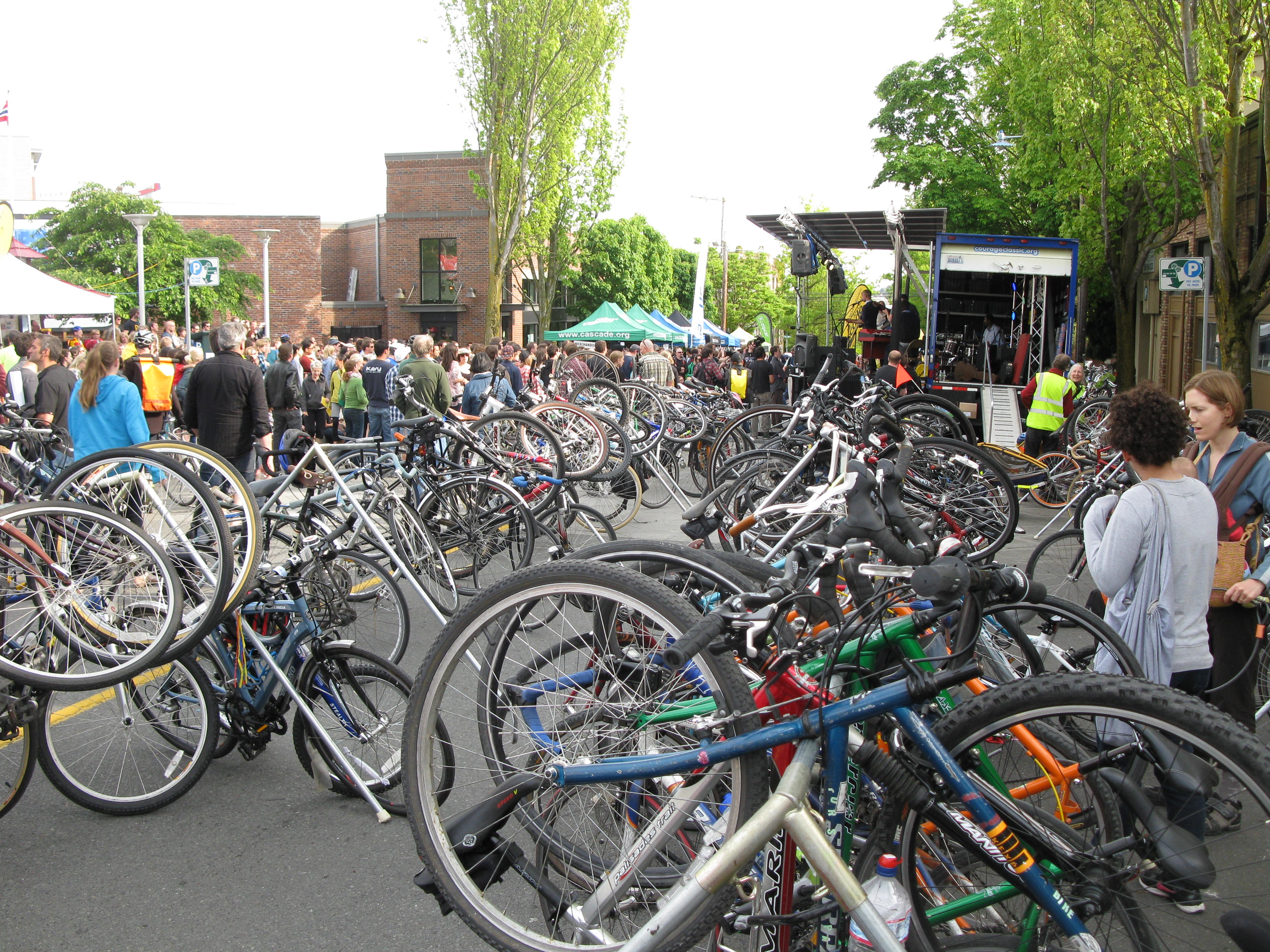
As a highlight of “bike to work day” on May 18 in Seattle, a portion of the Ballard neighborhood was closed to vehicle traffic. Bikers were able to lock their bikes to makeshift bike locks. This is a scene we seldom see in this country because too few businesses and governments support and pay for basic infrastructure to make cycling more doable — such as having secure areas to lock bikes and accommodate them. (This is not the case in every community, and cycling advocates throughout the country are working to ensure new developments accommodate bikes with the right bike racks.)

Celebrating Bike to Work Day in Seattle’s Ballard neighborhood, May 18, 2012.

I remembered my travels to Germany. Even back in the 1980s, I found hundreds of bikes locked outside, in large bike parking areas, that were used during every month of the year, including winter months. I long for the day when bike racks are common in front of every building, and every rack is occupied by a locked bike.

A sea of bikes in in Heidelberg, Germany, December 1985 — winter did not scare these cyclists, and they had a place to park their bikes.

The journey ends at the UW School of Public Health

On May 11, 2012, faculty and students gathered at the Center for Urban Horticulture to celebrate accomplishments achieved during the academic year. Such events are important, I think, particularly when those honored truly deserve the accolades of their peers. To my delight, three graduate students who I know and respect greatly won top honors from their respective departments and programs, and even the entire school: Valerie Pacino, Bridget Igoe, and Mateo Banegas. It was awesome to see this kind of recognition of people who I am confident will be leaders in whatever place in health care, policy, science, or research they find themselves. It is so fun to get to meet people who you know will be making their mark in the world.

As for me, I am just delighted to be at the end of the long, expensive, and interesting journey. At times exhausting, and at times fascinating, graduate programs no matter what the field or the school have their ebbs and flows. The best part of course is when you reach the end and look back on all you have done. To celebrate the final class of my program (Community Oriented Public Health Practice), one of my classmates surprised us all by preparing mimosas before noon, while we did a very thorough review of management and organizational behavior theory (and I really enjoyed this block, taught by Professor William Dowling). I still have a couple of presentations to make, and of course get that all elusive great job doing what I love to do, but all in due time.

Rudy Owens, final day of coursework at the UW School of Public Health, turning to the heavens in thanks at Seattle’s Discovery Park (May 17, 2012).

Walking and why it is the secret to longevity and happiness

This week, a physical education columnist with the New York Times named Gretchen Reynolds was all over the radio. In 48 hours I heard her interviewed by Terry Gross of Fresh Air  and then interviewed by the BBC World Service. She has published a book with a catchy title called The First Twenty Minutes. It appears to be catching fire.

I liked a lot of the things she was saying, and how she communicated. Reynolds is a communicator attempting to take peer-reviewed journal articles, which to nonscientists are impenetrable with graphs and meaningless numbers and confusing P values and unconnected to their lives, and make them fit into the larger problems this country faces with the obesity and overweight epidemic. I applaud her for calling attention to this problem that is bankrupting our medical system and leaving tens of millions of Americans unable to live more productive, happier lives.

I caught most of her interview with Gross, and while upbeat, I found some of the discussion on the health benefits of activities like standing up often while sitting to be out of touch with larger systemic issues causing the health crisis that led to two-thirds of this country to become obese or overweight.  Encouraging people to do minor things is not asking anything resembling sacrifice or commitment, which is what is required both in a personal sense and a larger policy sense. It is as if we have completely dumbed down all of our messaging to the lowest denominator. But then again, Reynolds is someone making a living as a writer and health expert — and selling a popular message as a product is critical to success.

Instead of the media talking to experts about whether 30 minutes of exercise is  good enough to keep us healthy, media should be talking about the primary reasons why people aren’t exercising—the overconsumption of TV and screen use, the built environment that promotes the utter dominance of the internal combustion engine, and the failure of each individual to take ownership for their health from the food they eat to how much they move their bodies. (And, yes, I know it is more complicated than this, especially for many minorities and lower-income Americans, but these factors matter a lot).

I was delighted, however, that Reynolds praised the health benefits of walking. She rightly called walking the single best exercise that exists on the planet and what humans are built for. She is right. It reduces your risk for heart disease and diabetes, and it apparently increases memory capacity in mammals (makes sense, blood flow stimulates oxygen and chemicals produced by the body to be delivered to the brain). As for me, there is no better exercise in the world than walking. A walk anywhere, anytime, in any weather, beats sitting on my butt and not walking at all. I feel healthy, happy, and more level-headed after a walk. I just wish more Americans could embrace walking and voted to support measures that promote walking – sidewalks in neighborhoods, parks and trails – and support politicians who want to change how we deal with public transportation funding in this country. Even one of the biggest promoters of lopsided transportation priorities, the car- and petroleum-friendly federal government, notes that a tiny sliver (0.7%) of federal transportation funds are spent on improving pedestrian facilities.

Maybe we need what Scotland has, the right to roam about in a responsible way (yeah Scotland).

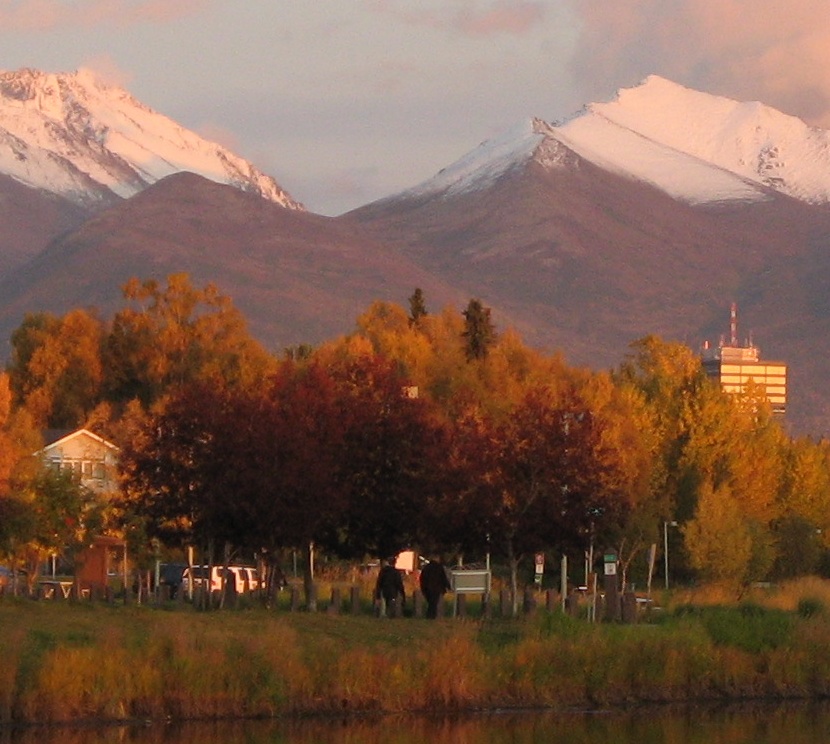
Walking the Coastal Trail in Anchorage on a lovely summer night.
My favorite place to walk in Anchorage Alaska, along Westchester Lagoon.

Cats behind bars — more proof of how pets bring out our best

For years, corrections officials have been incorporating animal training programs into the various penal facilities that exist around the country. Many animals have been used, especially dogs.

The Seattle Times, in its May 3, 2012, edition is running a story called “Cats bringing out the soft side of inmates,”on the success of a program in a Vancouver, WA-area prison that is teaming cats with prisoners, in order to teach the incarcerated prisoners greater compassion, as well as modify their behavior and thus reduce risks, violence, and costs.

It appears to be working since its launch in January 2012.  The story describes how two inmates are paid 35 cents an hour to care for a 6-year-old cat with “a testy disposition.” The project is taking place at the Larch Corrections Center, which is described as a minimum-custody prison. In the words of one of the prisoners working with the cats: “This gives you a softer side; it makes you feel like you have a kid at home. When I’ve been out during the day I remember I’ve got my daughter at home waiting for me.”

The story notes that prisoners at the Washington Corrections Center for Women, in Gig Harbor, WA, have trained dogs for owners with special needs for three decades, and since the 1980s, dog-training programs have spread to much of the state prisons.

Mrs. Chippy, the cat on the ill-fated Antarctic expedition of the Endurance, and one of the most beloved members of the entire crew by the extremely hardened men who loved her.

So, once again, there is evidence of the mutually beneficial relationship that humans have with pets, and how human health and behavior can be positively impacted by the interaction with animals.

This does not involve costly technology, or coercive techniques, or anything that is radically new or not even known to researchers and people with good judgment and basic common sense. It does involve leadership and the willingness of those who run such institutions to try out something new.

Here is to the cats in at the Larch Corrections Center. Good work, and keep on purring.

What Denmark can teach Snohomish County and other Puget Sound areas

For my current class on management in my public health program at the University of Washington, we are examining the Snohomish County Health District’s strategic plan. Snohomish, just north of Seattle, has nearly 720,000 people. The two top killers in the county are chronic diseases (cancer and heart disease).  The county’s health profile largely mirrors the rest of the nation’s—residents are suffering from obesity and being overweight, they rely heavily on personal vehicle use to travel, and their built environment has been created mostly to facilitate personal vehicle use. (There were 449 vehicular deaths in the county from 2002-08; deaths from unintentional injuries rank as 4th leading killer in the county.)

In short, the county is premised on sprawl development, which encouraged real-estate speculation, all collapsing with a bang when the housing bubble burst in 2008. Such sprawl, subsidized by taxpayer funded infrastructure (i.e., roads to serve the automobile) and extremely cheaply priced energy (gasoline), of course is one of the major factors leading to this nation’s ever-worsening health indicators, such as a rise in type 2 diabetes and bulging waist lines.

By comparison, Denmark, where I visited for more than a month in 2000, has a robust public health system and a healthier population than the United States’, and it spends about half per capita on health care than the extremely inefficient U.S. system. The country has strict land use and planning regulations, and nationally and locally they have a heavily subsidized public transportation system that enables residents to commute to work and their homes by bike, bus, and light rail.

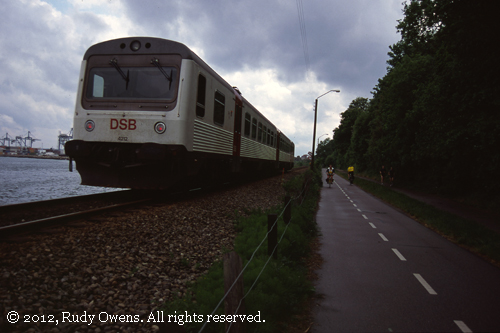
I lived in Riis Skov, just north of Aarhus, the country’s second largest city. Aarhus, even back in 2000, had an incredibly well-designed multi-modal transportation system that encouraged “active transportation” (biking, walking). Today, one can find free bikes in the city.  The downtown area, site of the historic cathedral and main square, by the port, was pedestrian only. Bike paths in all directions from the city were designated in blue painted paths on the streets and with bike charettes or with clear white lines. People rode their low-tech, three-speed bikes everywhere, even in the rain (many did not use bike helmets, interestingly).

Multimodal planning in Aarhus, Denmark--making it safe for bikes in the city center

Here in Seattle, where I live, we have nowhere near as safe or robust a multi-modal transportation system. There are no blue-painted bike lanes. We have bike lanes painted onto dangerous busy streets, and we lack the sophistication in planning that Aarhus had achieved years before Seattle could build a light rail. We have a lot to learn from our Danish friends. Go Aarhus, go Denmark!

Rails and trails--how residents commute to and from Aarhus, Denmark

My $85 used bike — best investment I have made in years

Here she is, my  $85, Chinese-manufactured, used mountain bike. OK, I have replaced the rear wheel, chain, and rear derailleur, but that happens with all bikes. I bought it before I began my MPH program in 2010, so I would not have to worry about my wheels being stolen (who wants an $85 bike?) while I was in class or in my apartment, where I had to lock it outside. Since its purchase, I guess we have cycled more than 4,200 miles (mainly to and from the University of Washington campus, and around Seattle). She is my testimony to the marriage of health, policy, convenience, and common sense (all very American ideas in my book). In public health, I think it is critical practitioners practice what they preach, and this is testimony to that.

More than 4,000 miles for less than the price of an iPhone

We are passed all the time on the Burke Gilman bike trail, but that is OK. I am still getting the benefits of a ride, 10 miles every weekday, when class is in session. There are simply few things in life that produce so many positive effects for such little money and with practically no environmental impacts. Here is why biking makes great sense, particularly in cities in the USA, and a few reasons why we have to do better, particularly with infrastructure and investments to make it safer.

Safety: We know that there are fewer accidents to pedestrians and bicyclists when there are safe areas for them to travel. Studies have shown that changes to our cities that make it safer to bike and walk help improve our health.

But in Seattle and elsewhere in the U.S., walking and cycling are much more dangerous, on a per-trip and per-mile basis. Compared to other countries such as Germany and Netherlands, where biking and walking are encouraged by changes in transportation designs, travel by biking and walking were six and eight times greater than the U.S., mainly because of real dangers. What’s more, in the U.S. a pedestrian is 23 times more likely to be killed than car occupants, and bikers 12 times more likely. On a per-kilometer/per-trip basis, U.S. walkers were three times more likely to get killed than German walkers, and six times more likely than Dutch pedestrians. Biking is healthy, but without infrastructure and numbers, we are greatly exposed. One reason German and Dutch cities are safer for walkers and bikers is because they provide safe and attractive corridors and crossings for them. We fail to do that in this country, even in “bike friendly” United States. We must do better, at the local and national policy levels.

Health: Biking literally makes you skinnier and it is great for your health. The U.S. Surgeon General recommends that adults engage in 30 or more minutes of physical activity a day – and barely half of all Americans engage in more than 30 minutes of exercise 5 days a week. Currently, more than a two-thirds of all Americans, according to the Centers for Disease Control and Prevention, are obese or overweight. Medical expenses associated with health issues related to obesity , according to the CDC, accounted for nearly 10 percent of total U.S. medical expenditures, totaling over $80 billion dollars annually. By contrast, in European countries, those with the highest rates of walking and cycling have much lower rates of obesity, diabetes, and hypertension. Type 2 diabetes alone is estimated to cost the U.S. $180 billion annually. In short, making it easier to bike makes health sense and fiscal sense. Including here in Seattle.

Car Trips Can Be Reduced: In the United States, more than 40 percent of all car trips were less than 2 miles, and 28 percent were less than 1 mile – and we know that biking can easily cover such distances. Americans need to get on their bikes for short trips, even in winter cities. It’s doable. Winter cities in Europe are filled with bikers. Addressing the safety barrier is a hurdle we have to overcome with designated bike corridors, to help encourage exercise levels needed to help reduce prevalence of some chronic diseases.

Two Great Reasons: New bicycle commuters can expect to lose 13 pounds their first year of bicycle commuting. [Bicycling Magazine]. If that wasn’t enough, we know that biking is cheaper than driving, a fact that make sense as we are seeing a spike in oil prices because of instability in the Mideast and North Africa.

Good Ideas: The Centers for Disease Control and Prevention has developed transportation policy proposals that could improve health. The CDC’s recommendations call for “healthy community design elements”—transportation networks, street designs, land use policies—that can mitigate adverse impacts from air and noise pollution and reduce injuries.  The proposals also call for policies that protect pedestrians and bicyclists, which in turn can have a profound positive impact on health. These include designing streets to reduce vehicle speeds and pedestrian and bike injuries and correcting hazards in infrastructure to make it safer for walkers and bicyclists.

I do not know if I will reach 5,000 miles with my cheapo bike, but think of the low-cost impact this kind of tool could have if just 1 percent of all Americans who did not own a bike found one on Craigslist, purchased it, and started to transform themselves and their neighborhoods. It is practically revolutionary as an idea, and good for the economy too.

Suggested Sources:

Pucher J, Dijkstra L. Promoting safe walking and cycling to improve public health: lessons from the Netherlands and Germany. American Journal of Public Health. 2003; 93:1509 –1516.

Making Healthy Places: Designing and Building for Health, Well-Being, and Sustainability. Eds.  Dannenberg, A., Frumkin, H., Jackson, R. Washington, DC: Island Press, 2011.

Centers for Disease Prevention and Control. CDC recommendations for improving health through transportation policy. 2010; http://www.cdc.gov/transportation/.