Musings on slavery, abolitionist John Brown, and Hollywood’s clumsy embrace of human bondage

News stories continue to highlight the growth of human trafficking in the United StatesEurope, and especially Asia. One estimate puts the number of persons in captivity, either for forced bondage or sex trafficking and prostitution, at 12 million to 27 million. An increasing number of victims are young girls 18 and younger, who become infected with sexually transmitted diseases such as HIV/AIDs.

Slavery seems to bring out the worst of humanity, and perhaps is a manifestation of our inglorious inhumanity. Sadly it is, well, about as American as the U.S. Constitution that not only enshrined it, but gave Southern states extra voting power–the notorious 3/5ths clause–for its slaves in the census allotment of Congressional seats.

I still remember when I visited the Philippines in 2003. Male and female pimps repeatedly accosted me within seconds of exiting taxis in front of my hotels in Cebu City and Manila, where I was working on a photo-documentary project. I was sure their workers were sex slaves. When I told them to go away, they mocked me and even offered me young children. It was sobering to realize that I represented a market, a lucrative market, that eagerly comes to countries like the Philippines, Thailand, Cambodia, and Laos to exploit women, even young boys and girls. Though aware of the problem, and having seen evidence of its freewheeling nature in Asia, the unrelenting media coverage of sex slavery has become overwhelming.

Time Magazine reported on slavery in Embassy Row in the nation's capital three years ago, but it can happen anywhere in the United States.
Time Magazine reported on slavery in Embassy Row in the nation’s capital three years ago, but it can happen anywhere in the United States.

In April 2013, European Union Home Affairs Commissioner Cecilia Malmström lamented: “It is difficult to imagine that in our free and democratic EU countries tens of thousands of human beings can be deprived of their liberty and exploited, traded as commodities for profit.” The United Nations estimates human trafficking nets $32 billion annually—a major transnational business. The United States fares no better. There are slaves being trafficked and sold in my home city of Seattle right now. A local KIRO News story recently reported: “Child sex trafficking – as easy in Seattle as ordering a pizza.”

Visiting Osawatomie, and its place in U.S. history

So slavery was on my mind when I drove across the country in late May from St. Louis to Seattle. I wanted to take a road less traveled and see some out of the way places, including in Kansas. Most of my friends practically laughed at me when I described sight-seeing there. So, I pulled out my atlas and found Osawatomie on the map, about an hour southwest of Kansas City, along state Highway 169

Osawatomie is home to one of the most important battles of the violent pre-Civil War era known as Bleeding Kansas, which claimed 56 lives.

Specifically, it is where America’s most famous abolitionist and violent revolutionary, John Brown (1800-1859), fought pro-slavery forces to prevent the then Kansas Territory from becoming a slave state.  All told 30-45 free state defenders, known as Jayhawkers (the University of Kansas’ namesake) fought nearly 250 proslavery militia along the banks of the Marais de Cygnes River on Aug. 30, 1856. Brown’s son Frederick and others died. Many say the war actually began in this small Kansas town that pro-slavers burnt to the ground during the attack.

Entrance to John Brown Memorial Park in Ossawatomie, Kan.
Entrance to John Brown Memorial Park in Osawatomie, Kan.

In May of that year,  Missouri ruffians, numbering 800, had sacked Lawrence, Kan., and burned a hotel, killing one abolitionist. Their strategic goal was to keep an entire race of persons in human bondage and treated as nothing more than property, and expand the inhumane practice and trade into territories recently “ethnically cleansed” of its Indian population by the U.S. Army, based at Ft. Leavenworth.

On May 24 and 25, 1856, at the so-called Pottawatomie Massacre, Brown responded in kind, by murdering five pro-slavery settlers with a sword. The mass murder by Brown and his sons was inspired by Brown’s deep Christian faith that he had been called to undertake a divine mission to end slavery and contest its brutality and those of its violent supporters with force.

The repeated and well-publicized examples of slavery’s inhumanity in the United States enraged Brown to the point where he dedicated his life to crushing it and freeing the slaves. (Unlike most of his day, Brown also believed in the equality of races, including Indians, and of the sexes.)

Just two years earlier in 1854, a divided Congress passed the Kansas-Nebraska Act, ending the fragile 24-year-old Missouri Compromise allowing a balance of pro-slave and free states to join the Union. With the 1854 act, settlers themselves would determine if that “peculiar institution” of slavery, which held in bondage an estimated 4 million persons, or 13% of all residents in the young country, would be allowed. Pro-slavery voters won, but the constitution was disavowed, the bogus legislature tossed out, and Kansas entered a free state in 1861.

One historic political outcome from the four years of fighting in the territory was the rise of a young Illinois politician of the nascent Republican Party, who noted in his political speeches, “Look at the magnitude of this subject! … about one-sixth of the whole population of the United States are slaves!” Abraham Lincoln emerged from the turbulence of the era as the standard bearer of his party in the divisive 1860 election that set in motion the war to address what Lincoln accurately noted was the “the all absorbing topic of the day.”

As for Brown after Osawatomie, he travelled in and out of Kansas the next two years of violence before returning East to plan his failed Oct. 16, 1859, raid on the federal armory in Harper’s Ferry, Va.  The raid, with 21 men to trigger a Southern slave uprising, failed miserably.

A statue of the abolitionist and revolutionary John Brown stands guard at a park with his namesake in Osawatomie, Kan.

Brown was captured, tried in Charlestown, Va., and sentenced to hang to death on Dec. 2, 1859. During his trial he told the court, “Now, if it be deemed necessary that I should forfeit my life for the furtherance of the ends of justice, and mingle my blood further with the blood of my children, and with the blood of millions in this slave country whose rights are disregarded by wicked, cruel, and unjust enactments, I submit: so let it be done.”

Southern politicians were terrified by Brown’s decisive and violent insurrection against the U.S. government and their “cherished traditions.” Their paranoia of either a slave uprising or further such “meddling”  precipitated their rebellion against the union.

All of that history seemed overblown and forgotten in modern-day Osawatomie (pop. 4,447). The memorial to Brown and the battle is the John Brown Museum State Historical site. It includes a cabin of a local minister and his wife used as an Underground Railroad station. The cabin survived the battle. The park features a bronze statue of Brown and historic battle markers. It looked a little shabby and unappreciated, like any small-town park without money for upkeep, except it has happened to have two presidential visitors who delivered policy speeches, by Teddy Roosevelt in 1910 and Barack Obama in 2011.

Hollywood, Slavery, and the Battle for Kansas

For many of us, however, our perception of slavery is shaped by popular culture. One of two most recent Hollywood treatments of the subject was the scholarly costume epic Lincoln, by Stephen Spielberg. The film did not hide the brutality of slavery; in fact, the film opens with a vicious hand-to-hand battle pitting likely former slave Union soldiers locked in deadly embrace with their white Confederate adversaries. The film is basically a procedural drama how Lincoln’s administration passed the 13th Amendment to the Constitution, to end slavery “forever” in United States, while the nation’s most violent war rages outside of Washington.

The more controversial rendering of slavery is the 2012 Quentin Tarantino blood and gore pre-Civil War spectacle, Django Unchained.  This shoot-‘em up racks up a huge body count in a gratuitously violent revenge fantasy that follows the actions of a former slave, Django, played by Jamie Foxx. He kills perhaps nearly two dozen Southerners, blows up plantation mansions, and frees his true love. Unlike Lincoln, this film was heatedly debated. One review noted, “No single Hollywood film in the last decade has sparked the kind of controversy and wide-ranging response as Quentin Tarantino’s latest.”

The film triggered unrest not because of its brutal violence (nothing new for Hollywood splatter fests), but because of its rival view of history. “The most important thing about Django Unchained is that it’s a reaction against, or corrective of, movies like Birth of a Nation and Gone with the Wind. At every turn, it subverts or inverts the racist tropes that have defined Hollywood’s–and our culture’s–treatment of slavery, the Civil War, and Reconstruction,” according to Jamelle Bouie.

I have black friends who had a distinctly more positive personal reaction to the violent tale than did my white counterparts. While the film’s violence seems designed only thrill audiences, the violence of slavery and of efforts to expand it by pro-slavery bushwhackers in Kansas before and during the Civil War was every bit if not more cruel, if historical records are accurate. Reality actually trumps anything Tarantino could dream up.

The magazine Harper's printed an illustration of the 1863 raid by Southern bushwhackers of Lawrence, Kan, which killed 180 people.
The magazine Harper’s printed an illustration of the 1863 raid by Southern bushwhackers of Lawrence, Kan, which killed 180 people.

According to one account, a bushwhackers’ raid during the Civil War on Lawrence, Kan., is considered one of the worst cases of mass murder by the pro-Slavery forces.

On Aug. 21, 1863, 450 pro-Confederates Led by Bill Quantrill staged an early-warning raid and mostly showed no mercy, slaughtering about 180 men and boys as young as 14. Most of the victims were unarmed and still in their beds when the killing began. Another famous bushwhacker in the region, a psychopath named “Bloody” Bill Anderson, reportedly scalped victims before he was tracked and killed, and then beheaded as an example.

The official Hollywood rendering of “bleeding Kansas” and John Brown’s efforts to end slavery remains Michael Curtiz’s unsavory pro-slavery 1940 Western called the Sante Fe Trail (you can see the whole film here). The movie stars Errol Flynn as future Confederate General Jeb Stuart, then-actor Ronald Reagan as future Indian-killing General George Custer, and Olivia de Havilland as their mutual romantic interest. The film  renders a staggering historic whitewash of not only slavery and pre-Civil War America, but of John Brown’s actions in Kansas to contest the bushwhackers during the mid- to late 1850s.

Brown is portrayed by Raymond Massey as a bug-eyed, villainous psychopath bent on murder and revolution to end slavery, while Southern gentlemen like Flynn’s Stuart are true Americans who claim the South can work out slavery on their own terms.  There is no portrayal of slavery’s base cruelty, only abolitionist violence in Kansas and at Harper’s Ferry.

Raymond Massey portraying John Brown on his hanging day on Dec. 2, 1859--an event that sped the nation faster to Civil War.
Raymond Massey portraying John Brown on his hanging day on Dec. 2, 1859–an event that sped the nation faster to Civil War.

In an even more bizarre twist, future Confederate President Jefferson Davis is rendered as moral voice of wisdom, telling the graduating cadets: “”You men have but one duty alone, America.” This was the same Davis who owned slaves and dedicated himself to ensuring slavery’s survival as head of the pro-slave states doing everything they could to break away from that country.

The pro-slavery 1940 film Sante Fel Trail featured escaped slaves as subservient, pro-slavery fools who desired to return to plantation life rather than chase freedom with John Brown.
The pro-slavery 1940 film Sante Fe Trail featured escaped slaves as subservient, pro-slavery fools who desired to return to plantation life rather than chase freedom with John Brown.

The only “black folk” seen in this disingenuous Dixie-cratic rendering of reality are powerless, witless slaves who cannot think for themselves. After a firefight that sent Brown fleeing, a husband and wife slave couple from Texas caught up in Brown’s violence reveal themselves to Stuart as misguided lovers of the white slaveholding class: “Well, old John Brown said he gonna give us freedom but, shuckin’, if this here Kansas is freedom then I ain’t got no use for it, no sir,” drawled the wife. Her husband added, “Me neither. I just want to get back home to Texas and set till kingdom come.” I suppose that means he’d get a good whipping if he fessed up for trying to win his freedom.

As one film commentator noted: “In the years before 1960 most portrayals of slavery in cinema were like it was in Gone with the Wind and Jezebel. The slaves were happy and contented and too simple to live on their own. The Civil War was unnecessary and brought on by a handful of fanatics in the North.” The film’s final scenes show Brown before he is hung in 1859, followed by a happy kiss of the newlyweds, Flynn and de Havilland, all two years before the entire country entered its greatest conflagration that claimed more than half a million lives, finally “ending” slavery as a legal institution in the United States.

Former Klansman becomes part of Hollywood whitewash of Southern bushwhacking

The other noteworthy and historically inaccurate portrayal of Kansas-related bushwhacking violence is Clint Eastwood’s disturbing 1976 revisionist film The Outlaw Josey Wales. While supposedly based on a true Southern fighter, the film rewrites the script of historic events. Instead of violent Confederate bushwhackers who murdered indiscriminately, as they did in Lawrence, Southerners are portrayed as victims of murderous Jayhawkers and Union soldiers, who kill innocent women and slaughter surrendering prisoners, and hound Wales to Texas. The film was based on a novel, Gone to Texas, by Asa Carter, also author of a popular kid’s book called the Education of Little Tree.

At the time the film was made in 1976, it was unknown that Carter had reinvented himself. Instead of being a Cherokee Indian as he claimed, Carter was in fact a former Alabama Klansman, avowed racist, and speechwriter for Alabama’s segregationist Governor George Wallace. The books served as a clever reinvention for a man preaching against “government intrusion,” as Carter did for Wallace with racist hate language. Even his supposed Cherokee words were fiction. As for Josey Wales, the film helped to reinforce Southern stereotypes of Northern aggression and Southern innocence (despite its holding 4 million in captivity), while boosting Eastwood’s maverick filmmaking career.

In 2013, in an era when slavery seems to be as thriving an enterprise globally as it was in the antebellum South, perhaps it is time reexamine on the big screen the complex events in Kansas and Virginia and that fanatical revolutionary who committed his life to ending the institution forever. I just do not want the filmmaker to be Eastwood, Tarantino, or even Spielberg, nor a vampire camp production. Time to let someone else tell a tale that still needs to be told. Love or hate him, Brown was right about slavery’s stain on the nation. Brown’s enemies “could kill him,” wrote freed slave and fellow abolitionist Frederick Douglass, “but they could not answer him.”

Coptic Christians under assault, and memories of my Egyptian travels

On April 7, a mob in Cairo attacked a funeral procession of Coptic Christians, a minority in the now Muslim Brotherhood-led nation of Egypt. The attackers became violent during their seige, firing guns and throwing petrol bombs according to press reports. Prior to the fall of former president and practically dictator for life, Hosni Mubarak, state police protected Christian monasteries and churches in Egypt, due to the historic persecution of the minority Christians over decades.

Coptic Egyptians protest the assault that killed two and left nearly 100 injured at St. Mark's Cathedral in Cairo on April 7, 2013.
Coptic Egyptians protest the assault that killed two and left nearly 100 injured at St. Mark’s Cathedral in Cairo on April 7, 2013.

During the violent outburst at St. Mark’s Cathedral, two persons were killed and nearly 100 were injured. Christians inside the walled compound sustained what was called a “frenzied assault” from unknown perpetrators.

I visited in Egypt in 2004 and saw well-armed and manned police garrisons at multiple monasteries, including those in unpopulated areas, as well as at St. Mark’s Cathedral, the seat of the Coptic Christian Church. Amid the disintegration of Egyptian civil society and the ascendancy of the long-banned Muslim Brotherhood, Coptic Christians and their most sacred sanctuaries are now under direct assault. Tensions have escalated since the election of U.S.-educated and Islamist Mohamed Morsi as Egypt’s president in June 2012.

Egypt’s Coptic leaders had grown increasingly wary of worsening conditions over the last five years, particularly since the demise of U.S.-backed Hosni Mubarak. Muslim clerics, the Muslim Brotherhood, and its political wing, the Freedom and Justice Party, are credited by some media observers for inciting views hostile to the nation’s Christian minority.

Inside Bishoi Monastery, one of the oldest Coptic monasteries in Egypt 2004)
Inside Bishoi Monastery, one of the oldest Coptic monasteries in Egypt (2004).
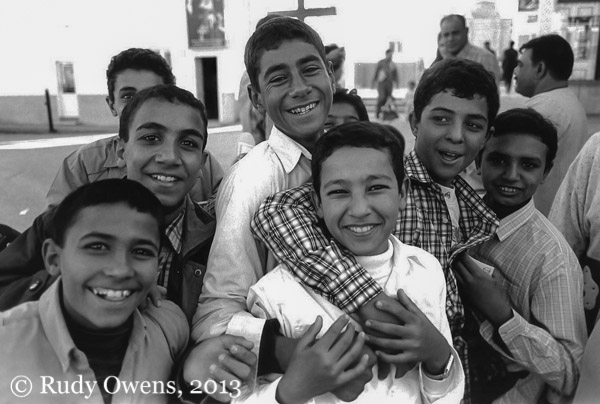
Coptic Christians, like the young men seen here from my 2004 photo, are a persecuted minority in Egypt.

In 2009, amid the swine flu scare, the Mubarak government destroyed more than 300,000 pigs, which was rebuked by the United Nations as unnecessary. Many believed the act was motivated Islam’s prohibition for eating pigs and the fact that Egypt’s pork industry is run almost entirely by Copts, many the urban poor.

One blogger wrote, “It is a national campaign to rid the country of its estimated 300,000 pigs in the name of public health.”
Copts allege the military council in the post-Mubarak era—the military still runs many Egyptian institutions and business sectors—is doing little against perpetrators of the attacks. Copts also have long complained of discrimination, including a law requiring presidential permission for churches to be built.

The Daily Star Newspaper of Lebanon reports that many Copts question their future as Egyptians. The paper notes the latest round of violence is the worse since Morsi was elected in June 2012: “Christians have been worrying about the rise of militant Islamists since the fall of President Hosni Mubarak in 2011. But after days of fighting at the cathedral and a town outside Cairo killing eight – the worst sectarian strife since Islamist President Mohammad Morsi was elected in June [2012]–many Copts now question whether they have a future in Egypt.”
Who are the Copts?

Today, Copts purportedly number about one in every 10 of Egypt’s 85 million residents. However, official statistics placed them at half that figure, or 5 million. The Coptic Church challenges that estimate, pegging their numbers at 15-18 million.

Father Tawdros at St. Anthony's Monastery in Egypt, taken in 2004.
Father Tawdros at St. Anthony’s Monastery in Egypt, taken in 2004.

The original term “Copt” simply meant a native Egyptian with no religious connotation, only later taking on its religious meaning today.

The Coptic Church is among the oldest Christian churches, preceding Islam’s arrival in Egypt by centuries in a land that is central to Judaism and Christianity. Some of the most important places to both faiths are within Egypt’s border, including Mt. Sinai and St. Catherine’s Monastery in the Sinai Peninsula.

The Copts split from the Eastern Orthodox and Roman Catholic Churches in 451 AD over a theological dispute over the nature of Christ. Today Copts are more similar to the Eastern Orthodox Church and perhaps the Armenian Orthodox church. In addition, the Coptic language, which is similar to the ancient Egyptian language, and written with the Greek alphabet, is still used in parts of Coptic services.

Increasing violence targets Christian minorities in the Middle East

Among the worst attacks on Egypt’s Coptic minority in recent years was the 2010-11 New Year’s Eve bombing in Alexandria. It targeted a Coptic church and killed 21. No individual has been arrested or brought to trial for the terrorist attack in one of Egypt’s most cosmopolitan and historic cities. The deed was largely forgotten with the world’s attention focussed on the “Arab Spring.”

Since the U.S.-led overthrow of Saddam Hussein in Iraq in 2003, Christians throughout the Middle East have been feeling increasingly under siege. Terrorist attacks and murders of Christians have occurred widely in many countries. (See map of the dispersion of Christians throughout the region—in all cases Christians had preceded the ascendency of Islam, but today are distinct minority communities.)christians middleeast

In Egypt and to a greater degree civil-war plagued Syria, the “Arab Spring” has brought intense disorder and violence to many minorities and minority faiths (Christians, Chaldeans, Kurds, Alawites, among others). Christians regionally remain fearful of a peaceful future of coexistence in the region that gave birth to contemporary Christianity.

In Egypts, Copts are now claiming life was better under dictator Mubarak, who dealt brutally with Islamists and their radical military wing, who waged a military and political campaign for decades.

Many Copts believe Muslim radicals want to eradicate Christianity, whose roots in Egypt predate the Islamic era.

According to an article published by the Middle East Quarterly, Muslim rulers historically have denied collective minority rights of non-believers. The concept of dhimmitude—itself a controversial term—explains the Islamic practice of denying equality to Jews and Christians, who historically since the Middle Ages have lived within the political realm of Muslim rulers and nations. Islam provided religious autonomy, not national freedom. To be fair, political rights for many groups, women, economic classes, and faiths everywhere in the world have not been fully realized until the last two centuries, and slowly at best and still not even today.

Memories of monasteries and my travels in Egypt

Whenever overseas events occur, it is often impossible to feel a connection to them. For me, in the case of Egypt, the collapse of Egyptian civil society has had great resonance for me. I had a chance to tour many parts of the country in 2004, observing the great poverty experienced by tens of millions of Egyptians on Mubarak’s corrupt rule. I was treated well, and I met many wonderful people, Muslim and Christians alike.

My visit to the St. George Monastery near Luxor required the permission of the local army commander for entire region around the Valley of the Kings (2004).
My visit to the St. Tawdros Monastery near Luxor required the permission of the local army commander for the entire region around the Valley of the Kings (taken in 2004).
CopticEgypt5
Suryani Monastery (2004).

I also visited many remote monasteries throughout the country—St. Catherine’s in the Sinai (run by the Greek Orthodox), St. Anthony’s in a remote inland oasis 30 miles from the Red Sea, Bishoi and Suryani monasteries in the Wadi Natrun oasis about 80 miles northwest of Cairo, and St. George’s and St. Tawdros’s monasteries, in the desert near Luxor.

The monasteries date as far back the 4th century AD, preceding the Islamic Arab conquest of that followed in the seventh century. Today about 50 monasteries remain.

I found the Coptic monasteries to be breathtakingly beautiful and peaceful. These are continuously inhabited facilities, but also significant cultural and historic sites.

The monks who greeted me were generous and gave me tours of their facilities. At St. Tawdros’s Monastery, I required a police escort of no less than the commander of the entire military contingent protecting the Valley of Kings region, one of the most popular tourist destinations in Egypt and the scene of one of Egypt’s more violent terrorist assaults. At all of the compounds, there were armed guards in large numbers.

Those guards have now melted away. In fact, it was the Egyptian military that led a coordinated assault on the Bishoi Monastery in February 2011, shortly after the terrorist bombing in Alexandria.

The video shows nothing less than a full assault of armed men, equipped with armored personnel carriers and bulldozers, demolishing an outer protective wall that I recall seeing built during my 2004 visit. The government denied responsibility despite the glaring video evidence. Today the monastery, one of Egypt’s great historic treasures, is now at risk of increased mob and organized violence by Islamic radicals and political extremists.

Egyptian military were filmed leading an attack on the Bishoi monastery in February 2011, which destroyed a protected outer wall.
Click on the image to see the full video of the Egyptian military leading an attack on the Bishoi monastery in February 2011, which destroyed a protected outer wall.

I’m not sure what will happen in Egypt. It is likely Egypt’s Christians will remain a persecuted minority and some of the world’s greatest historic treasures will be desecrated by extremists and opportunists, as was seen after the U.S.-led invasion of Iraq and as the world is observing in Syria amid its civil war.

America’s cultural zeitgeist and the emerging Don Corleone of public health

This has been one of the wildest weeks exposing the extremes of America’s cultural zeitgeist I can remember. What could be more American than gay marriage moving to the mainstream of American life and semi-automatic weapons readily available at a Walmart  near you, right?

Need a weapon of war to feel safe? Just drive to the nearest Walmart near you and select from their popular product lines.

On one hand, you have the U.S. Supreme Court hearing two landmarks cases, one on the legality of a voter approved ban on same sex marriage and another on the constitutionality of the federal Defense of Marriage Act, which aligns hundreds of federal benefits to promote that only a man can legally marry a woman.

Meanwhile, a full-court press was taking place in Congress to advance legislation that would require criminal background checks on all gun purchases and that would close the so-called gun-show loophole, which allows for up to 40% of all firearms sales to evade any scrutiny at all. However, efforts to include Sen. Dianne Feinstein’s amendment to restrict the sale of semiautomatic, military style assault rifles —the kind used to slaughter 26 civilians at Newtown—were dashed when Sen. Majority Leader Harry Reid (D-Nev.), on March 20, pulled it from the current gun legislation in the U.S. Senate. GOP members of Congress are already promising to filibuster the bill.

Will Ferrell, actor, comedian, and cultural clairvoyant, seemed to sum up the obvious best.

Will Ferrell’s now much repeated tweet seemed to put the pulse of the nation best: “I feel so blessed that the government protects my wife and me from the dangers of gay marriage so we can safely go buy some assault weapons.”

And, as we have so often seen in our country, sometimes tasteless, but also very popular, comedians can best summarize the seemingly craziness of political reality, where serious-minded commentators fall flat. Perhaps only through comedy can we see the absolutely surreality of our current reality.

Bloomberg takes on the NRA: no quarter asked, and none given

This week also saw the launch of Mayor Michael Bloomberg’s $12 million campaign in 10 states to promote federal gun legislation, through his national coalition of big city mayors called Mayors Against Illegal Guns. “I don’t think there’s ever been an issue where the public has spoken so clearly, where Congress hasn’t eventually understood and done the right thing,” said the multi-billionaire leader of a national political movement to restrict the proliferation of weapons that claim more than 31,000 lives annually.

Bloomberg’s newly created super PAC, Independence USA PAC, infused millions in the last federal election cycle, helping elect four of seven candidates who promoted legislation to reduce gun violence in the United States, a major public health threat that only now is getting the attention of public health  officials nationally after years of self-imposed silence.

Wayne LaPierre went head to head with Michael Bloomberg on the talk shows.

Likely fearing the emergence of a national political movement, the National Rifle association (NRA) launched a counter-strike against Bloomberg’s media campaign. NRA head Wayne LaPierre sparred with Bloomberg on Meet the Press on March 24, framing Bloomberg as a plutocratic, public health-minded uber-nanny who threatened America’s freedoms, including the alleged right to own guns and the right to eat unhealthy food:

“And he can’t spend enough of his $27 billion to try to impose his will on the American public,” said LaPierre, the national face for the most powerful gun industry lobby.”They don’t want him in their restaurants, they don’t want him in their homes. They don’t want him telling them what food to eat; they sure don’t want him telling them what self-defense firearms to own. And he can’t buy America.”

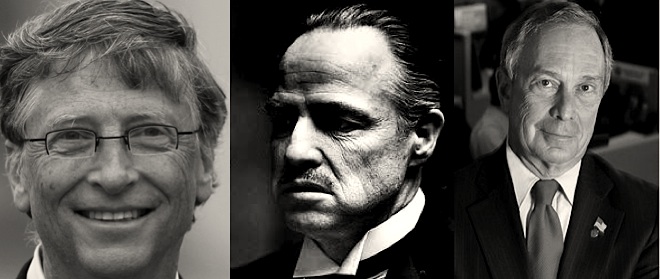
Which multi-billionaire do you want to champion public health, Gates or Bloomberg?

Bloomberg’s efforts to limit the size of sugary drinks in New York City was recently struck down by the courts. But Bloomberg remains determined to preserve his emerging national status as the Don Corleone of public health.

From pushing upstream interventions to tackle obesity to funding multiple efforts to reframe the national dialogue on guns and America, Bloomberg appears to be everywhere at once these days. In many ways, the bolder, tougher, more confrontational face for public health and the national voice for legislative action on clear public health threats is the 71-year-old Boston native.

By force of will and deep pockets, Bloomberg is emerging as a rival brand for plutocratic public health warrior to reigning champion Bill Gates, whose Microsoft-based wealth helped fund the biggest non-governmental player in public health, the Bill and Melinda Gates Foundation. With $34 billion in assets it is the largest openly run private foundation on the planet.

Which Don Corleone do you want to promote public health, Bill Gates or Michael Bloomberg?

Multi-billionaire Gates carefully has chosen non-confrontational public health initiatives that many limited-government and conservative minded leaders can champion, such as poverty reduction programs, education programs, and promoting technological efforts such as genetically modified crops.  Bloomberg’s approach is a much more in-your-face, New York style. He has proven very effective on the bully pulpit by staking out public positions and articulating views that few in the field of public health or even elected office have championed since the assault weapons ban was passed in 1994 as part of a major cops bill under the Clinton White House.

One thing is clear. Leadership, in the wake of repeated gun-fueled tragedies, like the Sandyhook Elementary School mass murders, is making a difference. And for a change, it appears that the NRA’s seeming unshakable momentum to promote the ever-expanding sales of firearms and legislation that allows for the deadly use of force has been called into check.

This also has rippled down to the public health departments, which are now showing greater resolve and passing measures calling firearms-related deaths a threat to public health and totally preventable. Maybe Bloomberg’s moxie is rubbing off. Such symbolic efforts by public health departments clearly are not a true fix, but they are a long-awaited and long-overdue baby step forward.

The politicization of public health (and everything else too)

maherobama
Click on the photo to open a link to the video clip of Maher’s commentary.

Some might say TV host Bill Maher is so political that he cannot be trusted. I disagree.

On March 8, on his TV show, Maher delivered a very provocative commentary that everyone in the field of health promotion, public health, and public policy should watch. Maher rightly asked, “Since when in America did everything have to be so political?” It was a smart piece of punditry, because he correctly showed how efforts to promote public health, nutrition, and healthy eating had become as politicized as the debate over regulating the proliferation of firearms.

Showing pictures of First Lady Michelle Obama, a champion of a national nutrition and exercise campaign called Let’s Move, Maher opined, “If seeing this nice lady on TV saying she likes the movies, or nutrition, or exercise fills you with rage, get help.”

Maher further correctly noted, “Big portions, conservative; knowing where your food came from, liberal.” In short, Maher said what few in the public health profession are saying or have the courage to say—that a deep schism exists in the public space that taints and will continue to taint all efforts to tackle some of this country’s biggest health problems.

These include the obesity epidemic and the threat posed to our healthcare system and our national health by chronic disease.

Ever a political lightning rod who is ready to fan conservative flames, former half-term Alaska Gov. Sarah Palin used her speaking appearance  at the 40th annual Conservative Political Action Committee (CPAC) conference on March 16, to lambaste New York City Mayor Michael Bloomberg’s efforts to tackle obesity by limiting the size of sugary-sweetened beverages. Bloomberg’s New York City law to limit the serving size of such drinks to just 16 ounces was  overturned by a New York State Judge on March 11.

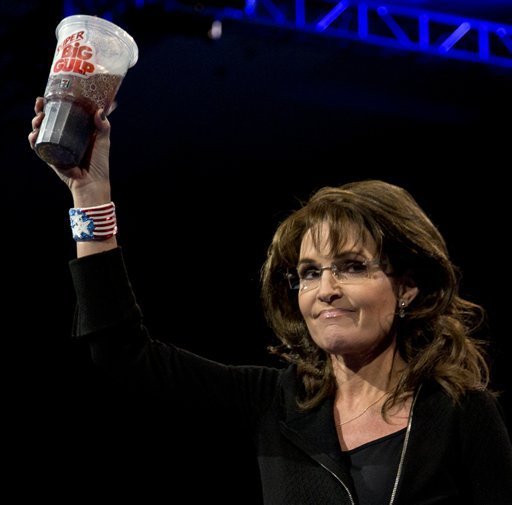
This perfectly framedAP file photo from March 16 shows Palin's eager embrace of red-meat politics that seeks to prevent small measures to address the proliferation of obesity in the United States.
This perfectly framed AP file photo from March 16 shows half-term former Alaska Gov. Sarah Palin’s eager embrace of red-meat politics that seeks to prevent small measures to address the proliferation of obesity in the United States.

Completely ignoring the obesity crisis that is afflicting her own former state and the country, where two-thirds of all residents are obese or overweight, Palin slurped soda from a 7-11 Big Gulp. The theatrics, all perfectly inline with Palin’s anti-government theology, again proved Maher’s point about the politicization of even micro efforts by some local elected officials to address the public health threats facing the country. (Side note, Palin briefly was governor when I lived in Alaska, and I saw her at health promotion events like community runs–an action that she likely would brand as “liberal” today.)

Whenever I would engage Puget Sound area public health officials during my two years of study at the University of Washington School of Public Health (2010-’12), I always asked, how can you prevent the public perception that efforts to promote healthy activity and nutrition are not perceived by conservative voters and Republican elected officials as part of a liberal, activist agenda. I never got a good answer, mainly because I do not believe those officials had an answer. I did not draw any great wisdom from my faculty or UW SPH peers either.

Some wonkish types have tried to investigate this issue in “philosophical terms,” along traditional axes of egalitarianism/choice minded conservatism against regulation-minded “big government” liberalism. One 2005 article on responsibility in health care choices argued, “Holding individuals accountable for their choices in the context of health care is, however, controversial.” There may be some truth to this, but I discount the “core political values” explanation as a way of understanding the politicization of public health initiatives.

Perhaps the biggest fight  in the U.S. political system today is over tax policy and the future of major social/medical programs—Social Security, Medicare, Medicaid—that provide the true underpinning to the public wellness of our country. This is, at its core, is vicious political battle that will shape the public health of the country unlike any action taken by any regulatory or health agency of the U.S. government.

Regulation to promote health has been at the heart of the public health enterprise ever since the field emerged as a profession in the United States in the late 1800s. According to the Centers for Disease Control and Prevention, many of the most successful public health achievements of the 20th century  (food safety, motor vehicle safety, identifying tobacco as a health hazard, etc.) were “upstream” interventions that, by definition, were regulatory in nature and thus purely political.

However, public health, by being a public enterprise, is by definition a creature of the political process, and thus influenced through the power of the purse to curtail its authority and stymie its reach. Public health departments today, for instance, are managed by publicly accountable officials. A local public health department board of health, like King County’s, includes a broad range of elected officials and a few medical professionals.

The nation’s leading de facto public health official, the U.S. Surgeon General (Dr. Regina Benjamin), today remains a mostly toothless position that has little if no sway over the public policy debate concerning the nation’s public health, according to New York Times health blogger Mark Bittman. He writes, “… there is no official and identifiable spokesperson for the nation’s public health, and the obfuscation and confusion sown by Big Food, along with its outright lies and lobbying might, has created a situation in which no one in power will speak the truth: that our diet is making us sick, causing millions of premature deaths each year and driving health care costs through the roof.”

I personally believe that the position of Surgeon General remains that of a paper tiger because those who have power, members of Congress and the Executive Branch, do no wish to allow an advocate for public health to embarrass them with pesky things like facts and science that call for action.

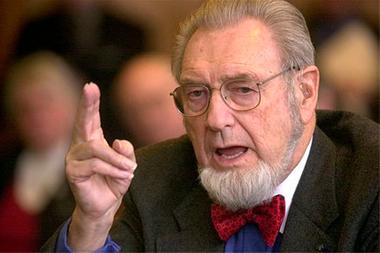
Dr. C. Everett Koop, former U.S. Surgeon General and effective communicator and advocate for public health.

The most effective Surgeon General in living memory who recently passed away in February, the late Dr. C. Everett Koop, proved unpredictable. Though a staunch conservative appointed by President Ronald Reagan, Dr. Koop staked out very controversial political positions on moral and medical grounds, in defiance of his boss, Reagan.

His notable actions still stand out today for their audacity to challenge powerful interests and their embrace of morality as a tactical advocacy tool:

  • Koop’s office produced the plainly worded, 36-page “Surgeon General’s Report on Acquired Immune Deficiency Syndrome,” which clinically detailed HIV transmission, making clear it was not spread by casual contact and affirming that, “We are fighting a disease, not people.” Koop promoted sex education and condom use, enraging conservative critics.
  • Koop also took on the all-powerful tobacco industry and lawmakers who received its many contributions with his pronouncements that smoking killed and should be banned. He famously called purveyors of cigarettes the “merchants of death.” (When is the last time anyone has heard a medical leader embrace such powerful language for a public health cause?)

Though Koop reportedly claimed morality never “clouded his judgment,” he remained an effective advocate on the bully pulpit by literally shaming those in power. “My whole career had been dedicated to prolonging lives,” he said, “especially the lives of people who were weak and powerless, the disenfranchised who needed an advocate: newborns who needed surgery, handicapped children, unborn children . . .people with AIDS.”

I keep waiting for someone, anyone besides billionaire Mayor Bloomberg, to enter the political discourse on behalf of public health and use straight language that cuts through the hype. The problem is, they cannot teach you leadership when you enter the fields of public health or politics. It is something you either are capable of, or simply lack. Right now, it is lacking.

Rally to ban assault weapons lays out strategy for Washington State activists

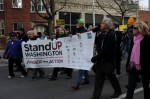
I attended a rally today (Jan. 13, 2013) in Seattle that included a march through downtown to the Seattle Center. The event called for an immediate ban on assault weapons and better laws to require background checks on all weapons sales. The march was organized by the non-profit called Washington Ceasefire, a state-based group founded in 1983 and dedicated to reducing violence from guns in the United States. (See my photo essay below.)

The event attracted somewhat lukewarm media coverage as of this evening, with stories picked up by most of Seattle’s major broadcast media, including the major TV news stations. The event was competing with the story that mattered most to Seattle–the playoff game that saw the Seattle Seahawks fall in a heart-breaker to the Atlanta Falcons. Still, approximately 400-500 participants attended the rally that marched about a half mile from Westlake Center to the Seattle Center.

The event began with a speech by mayoral candidate and current City Councilman Tim Burgess, a former Seattle police officer who called for attendees to focus their advocacy on immediate actions that could be taken by the Washington State Legislature. No specific state-level legislation or bills were identified, and Burgess’ rallying cry noticeably did not call for any specific federal action, perhaps because such proposals are still being formulated by the Obama White House.

Nor were any of the state’s congressional members referenced in public remarks or acknowledged in any event promotional material I am aware of. (Note I left the rally before it ended.) To my knowledge, no member of the state’s congressional delegation officially participated in the speaking activities, nor did their staff. I found that omission intentional and noteworthy. I am sure many attending noticed this also.

Washington Ceasefire President Ralph Fascitelli specifically called on an outright ban on assault weapons and sensible gun legislation. The web site created to promote the event quoted the group’s executive director, Beth Flynn: “We want to send a clear message to our legislators that we want to ban semi-automatic assault weapons.”

It was refreshing to me, as a public health professional, to hear Councilman Burgess make reference to the public health threat posed by firearms in his remarks. I spotted at least one retired University of Washington School of Public Health faculty member in attendance and holding a sign, which was very encouraging. I also met other public health professionals in the audience. Again, nice to see.

A list of the dignitaries who were invited to speak can be found here. I spied Seattle Mayor Mike McGinn, Councilman Nick Lacata, Councilmember Jean GoddenState Rep. Reuven Carlyle (D-Seattle), and other civic and religious leaders on the Mural Amphitheater stage at the Seattle Center, where remarks were made.

Also noteworthy was the presence of gun-rights activists. I saw two men wearing handguns in their holsters at the Westlake Center. So, I took their photographs. No doubt groups opposed to firearms legislation were monitoring the event and were mixing with the crowd. I observed very peaceful exchanges between those for greater legislation and those opposed to it. I included a photograph of the two men who were armed below to highlight how they communicated their views–at least through a visible display of their guns for the TV cameras and for those seeking legislation to control firearms violence.

Photographs of the StandUp Washington rally, January 13, 2013 (click on each thumbnail for a larger image)

The Newtown massacre and musings on guns, morality, and public health

The brutal massacre of 20 young children and six public school employees in Newtown, Conn., on Dec. 14, brought to mind one of the greatest speeches in U.S. history, President Abraham Lincoln’s Second Inaugural Address. On March 4, 1865, well into the fifth year of the bloodiest U.S. conflict, to resolve the criminal institution of slavery, Lincoln evoked unusually strong biblical and moral language that he normally avoided.

This FaceBook Post generated comments that said, this is why this country is so great and also why it is is so “f’d up” (https://www.facebook.com/photo.php?fbid=314047015290064&set=o.113895238664965&type=1&theater)
This facebook post generated comments that said, this is why this country is so great and also why it is so “f’d up” (https://www.facebook.com/photo.php?fbid=314047015290064&set=o.113895238664965&type=1&theater)

He first stated that the continuing expansion of slavery was the goal of the South. “All knew that [slavery] was, somehow, the cause of the war. To strengthen, perpetuate, and extend this interest was the object for which the insurgents would rend the Union … .” Then Lincoln, in language well understood by his countrymen, further noted the sins and injustice of slavery had brought the wrath of an Old Testament God upon the nation: “Fondly do we hope–fervently do we pray–that this mighty scourge of war may speedily pass away. Yet, if God wills that it continue, until all the wealth piled by the bondsman’s two hundred and fifty years of unrequited toil shall be sunk, and until every drop of blood drawn with the lash, shall be paid by another drawn with the sword, as was said three thousand years ago, so still it must be said the judgments of the Lord, are true and righteous altogether.”

A moral issue?

In short, Lincoln held his country morally accountable for that “peculiar institution.” He used moral language, much the way Dr. Martin Luther King, Jr., a century later, used similar language to address the injustices of discrimination and racism in the Jim Crow South and throughout the country. Such language by elected officials, however, has been mostly absent from the national debate over firearms violence that is involved in the death of more than 11,000 U.S. residents annually (homicides alone).

But the debate over the regulation or expansion of guns and automatic weaponry on the open market may have turned a page with Newtown shooter Adam Lanza’s killing spree. He used at least three guns (Glock 10 mm and a Sig Sauer 9 mm handguns and a Bushmaster .223-caliber) that were first obtained legally. He stole all of them from his well-to-do mother after killing her.

This Bushmaster .223, as of Dec. 16, was being advertised for sale on the Internet.

The availability of such lethal weaponry is far from an aberration. The Bushmaster .223 can easily be purchased now. Here’s one ad I found on Dec. 16; the weapon is described as intended for military combat.

In response to this mass murder of mostly kids, Peter Drier, professor of politics and chair of the Urban & Environmental Policy Department at Occidental College, posted a piece on Dec. 15, on the Alternet web site titled “The NRA’s Wayne LaPierre Has Blood on His Hands: The Brady Campaign to Prevent Gun Violence has a 62-page list of mass shootings in America since 2005. It is Wayne LaPierre’s resume.” Drier asserts that “the long list of killings is due in large measure to the political influence of the [National Rifle Association] NRA—and the campaign finance system that allows the gun lobby to exercise so much power.” In short, the NRA, the gun industry it lobbies for,  the NRA’s alleged 4 million members, and officials in elected office are all morally accountable for downstream effects of firearms proliferation.

Who is morally accountable for mass gun shootings like Newtown's? Just the shooter or weapons industry promoters like NRA CEO Wayne LaPierre,
Who is morally accountable for mass gun shootings like Newtown’s? Just the shooter or weapons industry promoters like NRA CEO Wayne LaPierre.

The NRA’s influence

The NRA, of course, alleges that the Second Amendment to the Bill of Rights gives individual Americans the right to possess guns, even combat weapons designed for the mass killing of people. The NRA also, in my opinion, falsely alleges that regulating gun sales and ownership is an attack on our constitutional freedoms–even our “civil rights.” Such language is devoid of both logic and rationality, and absent any moral foundation. I continue to find “literalist” interpretations of the U.S. Constitution, which also legitimized slavery for decades, as irrelevant to the complexities of a public health crisis that weapons-related violence has become in this country.

But, the NRA is more than a gun lobby. Its annual budget exceeds more than $250 million. It donates generously to political campaigns. It runs a non-profit foundation that boasts having raised $160 million. It runs a multimedia operation to promote its extremist views. It is, at the state level, aggressively promoting gun rights such as “stand your ground” laws. In the U.S. Senate, John Thune (R-S.D.) introduced a measure that would force all states that issue concealed carry permits to recognize the permits from other states. More importantly, the NRA promotes both the culture of weapons proliferation and a social media ecosystem that enables extremist views to proliferate, both inside its ecosystem and in the blogosphere, where many NRA talking points pepper the comments section of news stories on gun violence.

Using a public health lens to debate gun violence

In addition to embracing moral language, the national debate should also use a public health lens and the widely available data at all times to bury the completely false NRA propaganda that “guns don’t kill people, people kill people.” For example, the Harvard School of Public Health’s Injury Injury Control Research Center examined peer-reviewed research and reported three main findings that point to the association between gun proliferation and homicides, including in the United States:

1. Where there are more guns there is more homicide.
2. Across high-income nations, more guns = more homicide.
3. Across states, more guns = more homicide.

A public health approach involves looking at the data, having a population focus (rather than focusing on the motives of a mentally disturbed killer), examining the policies and systems that enable guns to continue impacting the public’s health, and focusing on forces that develop dangerous personal behaviors—even the embracing of ideas that promote harmful activities such as owning guns. The conservative-leaning Seattle Times, which has not called for any legislative action to address firearms violence this past week (following two mass killings), pulled together some data from public sources on Dec. 15, regarding mass murders involving firearms (my comments in italics):

  • Shooting sprees are not rare in the United States.
  • Eleven of the 20 worst mass shootings in the past 50 years took place in the United States.
  • Of the 12 deadliest shootings in the United States, six have happened from 2007 onward.
  • America is an unusually violent country. But we’re not as violent as we used to be. (See the graph below.)
  • The South is the most violent region in the United States.
  • Gun ownership in the United States is declining overall. (However, we have more than 300 million guns in the U.S.–a staggering figure.)
  • States with stricter gun-control laws have fewer deaths from gun-related violence.
  • Gun control, in general, has not been politically popular. (This fact  overlooks how campaign funding impacts local and national races.)
  • But particular policies to control guns often are.
  • Shootings don’t tend to substantially affect views on gun control.
Duke University sociology professor Kieran Healy complied OECD data on violence in developed countries (excluding Estonia and Mexico) and concluded “America is a violent country.” Such data points to both a pathology toward violence and how aassults in the U.S. end up with lethal consequences (his data does not distinguish cause of death from say guns to knives.) Go to: http://www.kieranhealy.org/blog/archives/2012/07/20/america-is-a-violent-country/
Duke University sociology professor Kieran Healy compiled OECD data on violence in developed countries (excluding Estonia and Mexico) and concluded “America is a violent country.” Such data points to both a pathology toward violence and how assaults in the U.S. end up with lethal consequences (his data do not distinguish cause of death from say guns to knives). Go to: http://www.kieranhealy.org/blog/archives/2012/07/20/america-is-a-violent-country/

A 2003 study by EG Richardson and D Hemenway  (called “Homicide, suicide, and unintentional firearm fatality: comparing the United States with other high-income countries, 2003”) found that he United States has “far higher rates of firearm deaths-firearm homicides, firearm suicides, and unintentional firearm deaths compared with other high-income countries” and that the “United States is an outlier in terms of our overall homicide rate.”

Referencing this study, the Brady Campaign concludes that “the United States has more firearms per capita than the other countries, more handguns per capita, and has the most permissive gun control laws of all the countries.” The Brady Campaign further notes that “of the 23 countries studied, 80% of all firearm deaths occurred in the United States; 86% of women killed by firearms were U.S. women, and 87% of all children aged 0 to 14 killed by firearms were U.S. children.”

More blood from the sword … for the lash?

What remains to be seen is if the preponderance of data and the moral outrage that may have been generated by the Newtown shootings will create change.

President Obama, the day of the shootings, held a press conference and said, “We’re going to have to come together and take meaningful action to prevent more tragedies like this, regardless of the politics.” Gun control advocate and billionaire New York City Mayor Michael Bloomberg dismissed such talk immediately:  “Not enough,” Bloomberg said. “We have heard all the rhetoric before. What we have not seen is leadership — not from the White House and not from Congress. That must end today.” To date Obama has not used his office to promote any national legislation or even national dialogue on gun policy.

One thing is certain: there will be more mass murders in the United States involving legally obtained and legally sold firearms. And I am left paraphrasing Lincoln and wondering: how much more blood from such gun-related killings will have to be spilled to atone for our nation’s continued shortcomings to control what other developed nations have managed to do, and do for decades?

Bloomberg spends millions on candidates supporting firearms legislation

Democratic U.S. Rep. Joe Baca, of California’s 43rd Congressional District, lost in a race for the redrawn 35th Congressional District to fellow Democrat, state Sen. Gloria Negrete McLeod, thanks mostly to funding by Mayor Michael Bloomberg’s super PAC focussing on gun control issues.

During the November general elections, few candidates running for national office chose to stake out policy positions advocating for legislation attempting to address the proliferation of firearms and the public health risks they pose to the country. But a few did, and their sugar daddy, New York City Mayor Michael Bloomberg, chose to invest some of his small fortune in a handful of political races that put the long-smothered issue into the national spotlight.

One six-term congressional veteran, U.S. Rep. Joe Baca from southern California, lost thanks to campaign spending by the Independence USA PAC, created by Bloomberg late in the fall campaign. According to a Nov. 23, 2012, story on the race by National Public Radio (NPR), Bloomberg’s PAC was looking for “the right race and the right set of circumstances.”

According to the NPR Story, the first thing Bloomberg’s new super PAC wanted was a clear contrast between the candidates on an issue of real concern, such as guns, and Baca, a Blue Dog Democrat, previously had gotten high ratings from the National Rifle Association (NRA). Columnist Dan Bernstein, with The Press-Enterprise newspaper in the “Inland Empire” area east of Los Angeles, said, “There’s probably one man in America, in this campaign, who cared about gun control. And it’s Mayor Bloomberg.”

For reasons still not clear to me, NPR’s report focussed on how super PACs can defeat local candidates, but ignored the bigger issue of why Bloomberg joined the fray–to address the issue of gun violence in the country. NPR continues to be a media outlet that fails to report national statistics on firearms violence, namely easily accessible public health data on murders and suicides linked to guns.

Mayor Michael Bloomberg of New York City is a billionaire who has staked out policy interventions to promote public health, targeting obesity/nutrition and firearms.

Bloomberg’s super PAC made late entry in key races

When Bloomberg made his announcement on Oct. 17, 2012, he stated, “It’s critically important that we have elected officials in Washington, Albany, and around the nation who are willing to work across party lines to achieve real results. I’ve always believed in the need for more independent leadership, and this new effort will support candidates and causes that will help protect Americans from the scourge of gun violence, improve our schools, and advance our freedoms.”

Bloomberg’s decision had an immediate and symbolic impact. The Press Enterprise newspaper noted that Baca lost his re-election bid to a come-from-behind finish by state Sen. Gloria Negrete McLeod, D-Chino, thanks mostly to a last-minute cash infusion from Bloomberg’s PAC. Baca also reportedly blamed Bloomberg’s spending for his loss in the race for the redrawn 35th Congressional District.

Bloomberg’s super PAC came late in the race. The Washington Post only reported the PAC’s existence the day Bloomberg made it public, and all just three weeks before the Nov. 6, general elections. A New York Times blog had initially reported that Bloomberg’s top issues were abortion and gun control before the super PAC was made public.

Bloomberg’s actions were entirely consistent with his statement following the horrific mass murder in Aurora, Colo., on July 20, 2012, when a gunman wounded 59 civilians and killed 12 others at a theater. Bloomberg, after the shooting and the media spectacle that ensued, lambasted Republican presidential candidate Mitt Romney and Democratic President Barack Obama for failing to mention the issue of how unrestricted firearms was a major factor in such mass murders of U.S. citizens.

“Soothing words are nice,” said Bloomberg, “But maybe it’s time the two people who want to be president of the United States stand up and tell us what they’re going to do about it, because this is obviously a problem across the country.” Both candidates failed to discuss any serious policy approach to stemming gun-related violence in the United States, notably during the three presidential debates.

As this blog has reported before, the Centers for Disease Control and Prevention (CDC) reports that the number of firearm homicides in 2010 in the United States was 11,493, while the role of firearms in suicides was nearly twice that rate, or 18,735 persons. All told firearms were linked to 30,228 deaths annually at last count–a fact that Democrats have decided to avoid as they put together their national coalition that includes many center and right of center candidates in the U.S. House of Representatives the U.S. Senate.

Bloomberg’s super PAC picked Pennsylvania race winner

Bloomberg’s PAC also supported Pennsylvania Attorney General Democratic candidate, Kathleen Kane. An ad paid by the super PAC said: “Kathleen Kane: close the [Florida] loophole and keep guns out of the wrong hands. Track stolen guns to choke of supply to criminals. Background checks for all gun sales.” (See the ad here.)

Independence USA, Michael Bloomberg’s new super PAC, ran this issue ad supporting candidate Kathleen Kane prior to the Nov. 6, 2012 election.

Kane, in a rare move for a Democrat running for a state or higher office, publicly came out in favor of legislation favoring firearms control. She said she wanted to close the so-called “Florida loophole,” which lets someone denied a concealed-carry gun permit in Pennsylvania to get one in another state and then transfer that permit to Pennsylvania. Kane went on to win her race handily.

While Kane is a rarity, few if no politicians have the pockets of Bloomberg, an independent who can spend $10 million to $15 million of his own fortune on an issue that has seen no legitimate political discourse at the state or federal level for years, thanks mainly to the work of the NRA, the gun industry lobby.

All told, Bloomberg’s spending was directed at seven races nationally, of which his picks won four races, costing the billionaire roughly $8 million. Public health advocates who champion addressing firearms violence in the country likely will be following how Bloomberg’s super PAC will continue to wade into strategic races and confront the silence over firearms violence, which has become the acceptable new normal in political discourse by both major parties.

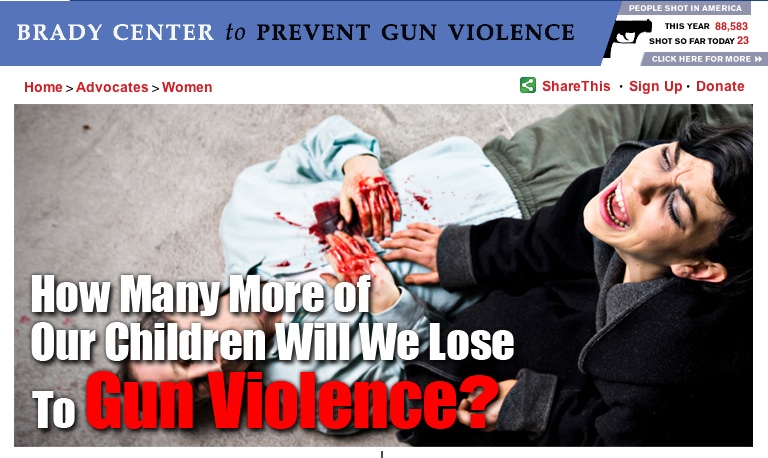
Leadership likely will remain with big city mayors, who as managers overseeing jurisdictions that carry out day to day criminal justice activities, see all facets of firearms violence most closely. The Brady Center also will continue to lobby for legislative changes to address the proliferation of firearms in the United States, as well.

The Brady Center featured this image on its web site to advocate for firearms policy reform here: http://bradycenter.com/advocates/women.

Latino voters’ strong support of healthcare reform overlooked in electoral analysis

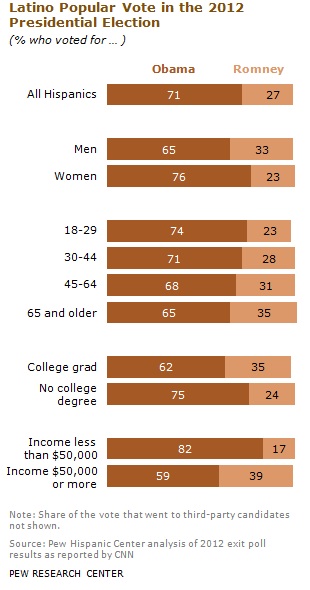
A week has passed since President Barack Obama handily defeated Republican challenger Mitt Romney in the Electoral College count  (332-206) for the office of the presidency. While Obama grabbed approximately 61 million votes compared to Romney’s roughly 58 million, he trounced him among Latino voters. And their decisive backing of the incumbent Democrat by a margin of 71% to 27% can be credited greatly to Latinos’ strong support of the administration’s signature health care/health insurance reform known as the Affordability Care Act (ACA).

Latinos’ support for healthcare reform dates back to the 2008 election, captured so joyously in this pro-Obama video that calls out Obama’s “plan de salud.” (I love this video, and want to hire this band for my first run for office if I ever do that.)

The Pew Center calculated the wide margin by which President Barack Obama defeated challenger Mitt Romney among Latino voters.

In November 2011, exactly a year before the 2012 general election, Univision/Latino Decisions polled 1,000 Latinos (ME +/- 3.1%) and asked them how they viewed the role of government in ensuring that everyone had access to healthcare, or whether people should be responsible for their own health insurance. The question served, in short, as a proxy on how this block of potential voters viewed the national debate on healthcare. At the time, the ACA was vehemently opposed by the GOP, healthcare and business interest groups, nearly half of the country’s GOP governors, the GOP majority of the U.S. House of Representatives, and most importantly future Republican Party standard bearer Mitt Romney.

In that poll, those favoring government-led healthcare numbered 59% compared to those favoring individual insurance at 29%. Half of those polled answered that they believed Democrats were closer to their position on healthcare compared to Republicans, at a paltry 18%.

At that time, 12 months prior to the general election, the top issue among potential Latino voters was the economy, overwhelmingly, at 40%, but the No. 4 issue was healthcare, at 16%.

On election night on Nov. 6, and in the days following the election, the blogosphere and pundits of all stripes prognosticated on how poorly the Republican Party courted the crucial and incredibly diverse Latino electorate. The group includes those self-identifying as whites and non-whites, Mexican and Central Americans, Cubans, South Americans, Dominicans, and others. The group harbors great economic diversity as well.

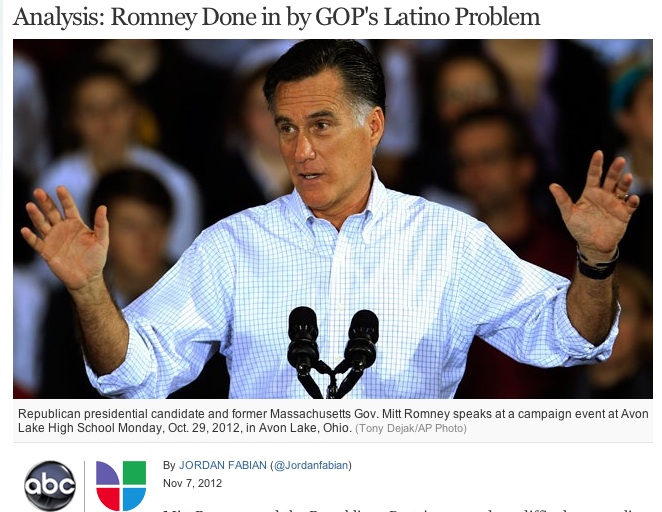
ABC News’ Nov. 7 coverage was typical: “Mitt Romney and the Republican Party’s tremendous difficulty appealing to Latino voters dealt a significant blow to their chances of winning in 2012.” Many of the experts suggested that Romney’s campaign miscalculated during the primary when he swung hard right and said he would support “self-deportation.” Such statements, go the conventional wisdom, explain why most of the Latino’s 10% share of the national voting electorate favored Obama. (Numerous media outlets reported that it was the first time since 1996 that a Democratic challenger had won such a high percentage of the Hispanic vote; President Bill Clinton in 1996 grabbed 72% of the Hispanic vote.)

Healthcare issue ignored in the Latino election narrative

Was Mitt Romney “done in” by Latinos or “done in” by vehemently opposing healthcare reform overwhelmingly supported by Latino voters?

Of course this simplistic analysis doesn’t fully explain why Latinos would trust Obama, when his administration was on record as deporting 1.5 times (yes 1.5 times) more immigrants per month than the previous administration of George W. Bush. As of July 2012, according to the Washington Post, the Obama administration had deported 1.4 million immigrants, allegedly targeting dangerous criminals. While Obama’s team mounted a legal challenge to Arizona’s harsh anti-immigrant law and provided a limited amnesty program to offer limited but not permanent amnesty to nearly 800,000 young immigrant residents in July 2012, his administration’s anti-immigrant actions also clearly alarmed many Latino residents and voters.

So why did they fall so completely and totally for  Obama and Vice President Joe Biden over Romney and his running mate Paul Ryan? Clearly, healthcare mattered, and it mattered more than the media has acknowledged. The election was also a very clear referendum on national healthcare reform that Romney and Ryan pledged to dismantle if they won.

In a September 2012 speech to the U.S. Hispanic Chamber of Commerce, Romney stated his agenda clearly: “Obamacare is the wrong way to go … . I will repeal and replace Obamacare with reforms that increase choice, slow down the runaway growth of insurance costs, and open the door to more new jobs.”

Such messages completely flew in the face of what Latino voters wanted – a government-led, national healthcare plan. On Nov. 6, Latino Decisions’ election eve poll of 5,600 voters reported virtually unchanged numbers among Latino voters from the poll a year earlier.

The respected polling organization again found healthcare to be the No. 4 issue among the diverse Latino electorate, behind the economy, education, and immigration. The poll virtually repeated numbers found a year earlier, showing 61% of respondents favored leaving healthcare reform in place.

Latino Decisions’ Matt Barreto reportedly told USA Today that from the beginning of the Romney campaign “the most obvious miscue” between Romney and Latino voters was his continued attack on the ACA.

What remains puzzling is why so many media organizations completely ignore that Latino voters, like the majority of the voting public, supported the administration in a clear national referendum on healthcare reform that the GOP, GOP surrogates, many parts of the all-powerful healthcare industry, special and business interest groups opposed with nearly obsessive and feral passion.

The matter is settled, both by the highest court in the land and now by the ballot box. The opponents of the ACA — the market-oriented, limited healthcare reform that was passed by Congress — lost, and they lost decisively. Latinos voters, who so clearly supported the legislation, made that clear as a bell on election night in completely rejecting the GOP, its anti-healthcare reform message, and the former Massachusetts governor.

Secret military tests in St. Louis and other communities violated the Nuremberg Code, according to researcher

As a former St. Louis area resident, I first thought my friend was pulling a prank when he shared a story on Sept. 29, which was picked up by the Daily Mail tabloid in the United Kingdom and alleged my old home city was intentionally contaminated by U.S. military researchers during the Cold war. I nearly deleted the email suspecting it was spam.

Professor Lisa Martino-Taylor

It turns out it was not a prank story in the Onion. During the last week of September 2012, St. Louis’ major broadcast news stations (KMOX and KSDK) broke a news story on recently completed research of government documents that showed U.S. military researchers conducted human subjects testing, in violation of the Nuremberg Code, on poor and minority residents in St. Louis during the 1950s and 1960s. The bombshell that was dropped by St. Louis Community College-Meramec sociology professor Lisa Martino-Taylor, in her PhD thesis, was that  U.S. Army’s researchers sprayed an aerosol on human subjects that allegedly was laced with a fluorescent additive, a possible radiological compound, produced by U.S. Radium Corp. The company had been linked to the deaths of workers at a watch factory decades before.

The issue of the U.S. government testing on unwilling and non-consenting persons for military and medical research during the Cold War has long been established, both in St. Louis, and also in the Inner Mountain West and in Washington State. At the Hanford Nuclear Reservation, in southeastern Washington, radioactive iodine (I-131) was intentionally emitted in 1949 ( the Green Run test) to measure the impacts of exposure on human health as part of the U.S. Air Force’s efforts to better understand and track Soviet weapons testing. For its part, St. Louis was one of 33 U.S. and Canadian cities and rural areas intentionally exposed to the spray that was dispersed from airplanes, rooftops, and vehicles. A subsequent National Research Council committee, in 1997, claimed these tests did not expose residents to chemical levels considered harmful. However, promised follow-up studies may not have been conducted. Residents in St. Louis were quoted in press reports claiming planes dropped a white powder that fell on people below, which residents did not view as potentially harmful.

Photograph published in Martino-Taylor’s thesis on the U.S. Army’s aerosol spraying activities in St. Louis and other areas.

According to Martino-Taylor, thousands upon thousands of St. Louis residents likely inhaled the zinc cadmium sulfide spray. In St. Louis, where tests were conducted in 1953-54 and 1963-64 by the U.S. Army Chemical Corps, Martino-Taylor said, ”The powder was milled to a very, very fine particulate level.  This stuff travelled for up to 40 miles.  So really all of the city of St. Louis was ultimately inundated by the stuff.”  The Daily Mail reported one of the compounds sprayed unknowingly on St. Louis residents was FP2266 (radium 226), which according to the U.S. Army was made by U.S. Radium Corp. The compound was the same one that was linked to the death and of former U.S. Radium Corp. workers.

According to press coverage, the U.S. Army has admitted that it added a fluorescent substance to the “harmless” compound, but the issue of whether the additive was radioactive remains classified.

The story was immediately picked up by a number of blogs, which repeated the allegations and news coverage. Almost immediately, Missouri’s two U.S. senators, Claire McCaskill (D) and Roy Blunt (R), wrote to Army Secretary John McHugh demanding answers and to ask if follow-up studies promised in 1997 by the National Research Council were ever completed.  The full text of McCaskill’s letter and press release can be found here.

Pruitt-Igoe housing complex before it was dynamited and cleared.

According to an Oct. 3, 2012, AP story, aides to Sens. McCaskill and Blunt said they have received no response. At the time of the story, the U.S. Army declined to be interviewed by the AP. The AP’s story notes that St. Louis was chosen for reserach because it resembled some Russian cities. However, one of the primary areas that was chosen for testing was the Pruitt-Igoe public housing complex, which was razed in the 1970s as a failed national public housing experiment–and one of St. Louis’ legacies as a decaying city. At the time of the spraying by federal researchers, the complex had 10,000 mostly African-American and low-income residents, 70 percent of whom were 12 and younger.

Martino-Taylor’s thesis (The Manhattan-Rochester Coalition, research on the health effects of radioactive materials, and tests on vulnerable populations without consent in St. Louis, 1945—1970) is worth examining first-hand, as it describes how she was tipped to the improbable and almost unbelievable tales of two women, both sharing stories of having been unwilling human subjects to military spraying and suffering health consequences from that research. Surprisingly, she knew nothing about these then allegations. Thus began her effort to request information under the U.S. Freedom of Information Act from the federal government, often in severely redacted form. A point that much of the media continues to miss is that her research focuses on the researchers as well as their victims. Her thesis statement states her work looks at how a “large number of participants inside an organization will willingly participate in organizational acts that are harmful to others, and how large numbers of outsiders, who may or may not be victims of organizational activities, are unable to determine illegal or harmful activity by an organization.”

The leaders of the studies, which she calls the Manhattan-Rochester Coalition, were the researchers who conducted the human-subjects research on nuclear weapons as part of the country’s efforts to prepare for, and win, a possible nuclear confrontation with the U.S.S.R. During the tests in St. Louis and other areas, according to Martino-Taylor, the U.S. Army violated the 1947 Nuremberg Code, the standard set after trials of Nazi doctors and war criminals, which established that “voluntary consent of the human subject is absolutely essential” for any human-subjects testing. There was no such standard in these tests in St. Louis, Minneapolis, and elsewhere, Martino-Taylor maintains.

Medical experimentation room at the Terezin concentration camp in the Czech Republic.

During the 1940s, the Nazi regime’s corrupt and criminal medical and scientific community committed horrific crimes at dozens of concentration and extermination camps in Nazi-occupied Europe, including live vivisections, gassings, cold water immersion tests, high-pressure testing, lethal injections, and intentional murder for “scientific purposes.” I in fact visited many of the rooms and buildings where these crimes against humanity occurred during my tour of the camps in the summer of 2000, so it was especially painful for me to know that my own government, in my former home city, may have been breaking established international guidelines that were codified following the defeat of the Nazis and their murderous state. (See my photo documentary here.) According to Martino-Taylor, the initial congressional investigation of the spraying program included testimony from experts that claimed the experiment team “chose to ignore Nuremberg.”

In the United States, following the Tuskegee Institute’s syphilis experiments on African-American men, reforms were passed in 1979 through the Belmont Report, which theoretically was supposed to protect human subjects from harm in research. However, even as the media report on this sensational story of testing on humans in two countries (Canada and the United States) in the 1950s and 1960s, researchers at elite universities and laboratories continue to violate the principles first set out at Nuremberg. Slate.com this year reported that “marginalized groups have frequently been coerced into studies that violate their right to consent. A recent review of the bio-ethics of human research in the U.S. offers little prospect for change.”

The Slate.com story, from Jan. 22, 2012, was gloomy in its overall assessment of the failure of safeguards to prevent unethical research on humans, particularly when large corporate interests are involved. The story said the Presidential Bioethics Commission issued a report on protecting human research subjects that trumpeted the United States’s so-called “robust” protections—rules that have repeatedly permitted and legitimized breaches of informed consent. “The failure to elicit consent is not confined to the U.S. One in every three U.S. corporate medical studies is now carried out abroad, usually in places where trials can be conducted more cheaply than in the U.S. Subjects are often unaware that the treatments are experimental.”

I am pretty sure the dust from this recent controversy will settle quickly, and even in St. Louis, the community will focus more on their beloved Cardinals’ bid for another World Series title. It is likely no one involved in these unethical if not possibly illegal studies will ever be held accountable for their actions against the civilians they may have harmed.

Cheap energy poses a threat to Americans’ health

One of the most talked-about initiatives taking place in public health, with funding supports from the Centers for Disease Prevention and Control (CDC), is policy, system, and environmental change to address the rise of chronic disease in the United States, the country’s leading cause of death. According to the CDC, chronic diseases are responsible for seven out of 10 deaths of all Americans annually, and one half of all Americans have at least one chronic illness. Worse, three-quarter of the $2.5 trillion (yes trillion) dollars spent annually on health care in the United States goes to battling chronic diseases. The CDC’s grant funding is being disbursed to health departments to undertake a range of interventions. But none of these interventions is going after what some say is one of major sources for the rise of obesity and chronic disease—the cheap price of energy in the United States.

According to Ian Roberts of the London School of Hygiene and Tropical Medicine, the overall obesity rate is highest in the United States among all other nations because the price of gasoline is very low. “So where gasoline is really cheap, we over-consume it, it’s bad for the environment and actually because we should be using food energy for human movement – if we use gasoline for human movement, then we store the food energy and you know where we store it.” And there are other costs associated with being a fat nation, says Roberts. “So there’s obviously an increased demand on food supplies, but also there is an increased demand on everything. You know, bigger people need more energy to move them. Airplanes take more energy to get off the ground. It takes more of the shares that, you know, of the Earth’s resources to actually support all that extra weight.”

In the United States, the U.S. Energy Information Agency estimates we use 317 million BTUs per person a year. In this country, nearly half of all of our energy comes from petroleum and natural gas, and the country ranks seventh globally in terms of per capita energy use, trailing Canada and some smaller nations like Luxembourg and Trinidad and Tobago. However, the United States is  No. 2 (19% of global demand) in terms of global consumption of energy after China (20.3% of global demand), which just took the No. 1 slot.

Feeder pipelines gather crude oil produced at Prudhoe Bay, which is eventually shipped to the lower 48 for consumption on the West Coast.

A significant negative outcome can be seen in the widening waistlines of Americans. Charles Courtemanche of the Department of Economics at the University of North Carolina at Greensboro published a study in 2009  (A Silver Lining? The Connection Between Gasoline Prices and Obesity) that found increases in gas prices were associated with an uptick in walking or bicycling and public transportation use (and more people walking to bus and subway stops) and a drop in the how often people eat at restaurants, all impacting weight. Courtemanche estimates that:

– A $1 rise in the price of gasoline would reduce overweight and obesity by 7% and 10% in the U.S. The reduction in obesity would save approximately 11,000 lives and $11 billion per year, savings that would offset 10% of the increased expenditures on gasoline.

– An 8% of the recent rise in obesity from 1979 to 2004 can be attributed to the decline in real gasoline prices during the period.

According to Dr. Brian Schwartz, professor at the Johns Hopkins Bloomberg School of Public Health’s Department of Environmental Health Sciences and co-director of the School’s Program on Global Sustainability and Health, cheap energy also is responsible for creating our built environment, which is exacerbating our poor health trends. Schwartz argues that since World War II, the United States and other developed countries “have invested in large tracts of low density, non-compact, single use developments, which are highly reliant on the automobile and often lack public transit options.  This type of housing and transportation system is totally reliant on cheap and plentiful oil.”

The built environment of U.S. suburbs has been shaped by the relatively cheap price of petroleum paid by U.S. consumers at the pump.

Schwartz argues the average foodstuff in the United States requires about 10 units of fossil fuel-based energy input for each unit of food energy derived from the food, and that ratio jumps to 100 to 1 for many meats. Less energy would lead to declines in food calories too, as many kinds of food would become too expensive to produce and too expensive for consumers. What’s more, Schwartz suggest that this unsustainable suburban lifestyle would change dramatically after peak oil, that future and historic moment when global production of both oil and natural gas reaches its historic peak and begins to decline, setting off chain reactions impacting every facet of our life to what we eat, how we work, how goods and people move about, and how nations respond on a massive scale. (Go here for a summary of peak oil and its health impacts, as explained by Schwartz.)

Schwartz also notes that our entire health care delivery system, on top of our suburban-sprawl development pattern, food production systems, and supply chains, also is tied to unsustainably cheap energy in the form of cheap fossil fuel. “Large energy-inefficient health care facilities are staffed by health care workers living in distant suburbs who require large quantities of paper, plastic, and electronics to do their work. Systems for provision of care will need to be completely redesigned to adapt to the new reality of more expensive energy.”

Portland, Ore., that oh-so progressive Northwest city that has become a beacon of contemporary planning that tries to vaguely resemble what they do in Netherlands or Denmark, for instance, already has assembled a Peak Oil Task Force, back in 2006. The group prepared a report and drafted a resolution, passed by the City Council in 2007. That resolution sets out an ambitious goal to “reduce oil and natural gas use in Portland by 50 percent in 25 years and take related actions to implement recommendations of the Peak Oil Task Force.” It may be no surprise Portland was recently ranked the No. 1 biking community in the United States.

What continues to baffle me is how unengaged or willfully silent the United States’ professional public health system is to the connection between cheap energy and health, notably obesity. I just did a keyword search today (Sept. 3, 2012) on the word “obesity” for the upcoming American Public Health Association (APHA) Annual Meeting and Exposition to be held in San Francisco in October 2012. There were 797 hits for the word–many for papers being presented on the topic. When I typed in the word “oil” I yielded 33 hits, some on the Deep Horizon oil spill and its impacts and others on shale gas development, such as a paper being presented by Dr. Roxana Witter of the University of Colorado called “Comprehending health implications of natural gas development through public health research.” But I saw no papers on any linkage between the so-called “obesygenic environment” and energy prices tagged under the word “oil” in the searchable database of presentations and papers. I did a search for the word “energy” and got 82 hits, but most related to topics like high-energy drinks, not on oil, gas, or energy policy issues impacting human health.

Seattle like other cities is entirely dependent on relatively cheap petroleum, and as a consequence suffers from some of the worst traffic congestion of any metro area in the country, as well as a sprawl development in the city and throughout surrounding King County.

I dream of the day when public health professionals will organize their advocacy less around what kids eat at school and talk more about what our state and national lawmakers are doing to create meaningful tax policy that prices energy–making it more expensive while using revenues to promote renewable energy sources–to create larger downstream impacts. To completely cede this issue to supporters of cheap energy and the status quo and to deny that there are serious public health implications by doing so is to turn one’s back on best available evidence and the duties those in the field have to promote healthy outcomes for the U.S. population.  I did try to raise this issue in one of my classes at the University of Washington School of Public Health, and was met with unusual silence. I hope one day perhaps UW faculty in the economics department, school of business, and schools of public health and public affairs get together one day to pursue research examing negative health impacts of national energy policy.