Bloomberg spends millions on candidates supporting firearms legislation

Democratic U.S. Rep. Joe Baca, of California’s 43rd Congressional District, lost in a race for the redrawn 35th Congressional District to fellow Democrat, state Sen. Gloria Negrete McLeod, thanks mostly to funding by Mayor Michael Bloomberg’s super PAC focussing on gun control issues.

During the November general elections, few candidates running for national office chose to stake out policy positions advocating for legislation attempting to address the proliferation of firearms and the public health risks they pose to the country. But a few did, and their sugar daddy, New York City Mayor Michael Bloomberg, chose to invest some of his small fortune in a handful of political races that put the long-smothered issue into the national spotlight.

One six-term congressional veteran, U.S. Rep. Joe Baca from southern California, lost thanks to campaign spending by the Independence USA PAC, created by Bloomberg late in the fall campaign. According to a Nov. 23, 2012, story on the race by National Public Radio (NPR), Bloomberg’s PAC was looking for “the right race and the right set of circumstances.”

According to the NPR Story, the first thing Bloomberg’s new super PAC wanted was a clear contrast between the candidates on an issue of real concern, such as guns, and Baca, a Blue Dog Democrat, previously had gotten high ratings from the National Rifle Association (NRA). Columnist Dan Bernstein, with The Press-Enterprise newspaper in the “Inland Empire” area east of Los Angeles, said, “There’s probably one man in America, in this campaign, who cared about gun control. And it’s Mayor Bloomberg.”

For reasons still not clear to me, NPR’s report focussed on how super PACs can defeat local candidates, but ignored the bigger issue of why Bloomberg joined the fray–to address the issue of gun violence in the country. NPR continues to be a media outlet that fails to report national statistics on firearms violence, namely easily accessible public health data on murders and suicides linked to guns.

Mayor Michael Bloomberg of New York City is a billionaire who has staked out policy interventions to promote public health, targeting obesity/nutrition and firearms.

Bloomberg’s super PAC made late entry in key races

When Bloomberg made his announcement on Oct. 17, 2012, he stated, “It’s critically important that we have elected officials in Washington, Albany, and around the nation who are willing to work across party lines to achieve real results. I’ve always believed in the need for more independent leadership, and this new effort will support candidates and causes that will help protect Americans from the scourge of gun violence, improve our schools, and advance our freedoms.”

Bloomberg’s decision had an immediate and symbolic impact. The Press Enterprise newspaper noted that Baca lost his re-election bid to a come-from-behind finish by state Sen. Gloria Negrete McLeod, D-Chino, thanks mostly to a last-minute cash infusion from Bloomberg’s PAC. Baca also reportedly blamed Bloomberg’s spending for his loss in the race for the redrawn 35th Congressional District.

Bloomberg’s super PAC came late in the race. The Washington Post only reported the PAC’s existence the day Bloomberg made it public, and all just three weeks before the Nov. 6, general elections. A New York Times blog had initially reported that Bloomberg’s top issues were abortion and gun control before the super PAC was made public.

Bloomberg’s actions were entirely consistent with his statement following the horrific mass murder in Aurora, Colo., on July 20, 2012, when a gunman wounded 59 civilians and killed 12 others at a theater. Bloomberg, after the shooting and the media spectacle that ensued, lambasted Republican presidential candidate Mitt Romney and Democratic President Barack Obama for failing to mention the issue of how unrestricted firearms was a major factor in such mass murders of U.S. citizens.

“Soothing words are nice,” said Bloomberg, “But maybe it’s time the two people who want to be president of the United States stand up and tell us what they’re going to do about it, because this is obviously a problem across the country.” Both candidates failed to discuss any serious policy approach to stemming gun-related violence in the United States, notably during the three presidential debates.

As this blog has reported before, the Centers for Disease Control and Prevention (CDC) reports that the number of firearm homicides in 2010 in the United States was 11,493, while the role of firearms in suicides was nearly twice that rate, or 18,735 persons. All told firearms were linked to 30,228 deaths annually at last count–a fact that Democrats have decided to avoid as they put together their national coalition that includes many center and right of center candidates in the U.S. House of Representatives the U.S. Senate.

Bloomberg’s super PAC picked Pennsylvania race winner

Bloomberg’s PAC also supported Pennsylvania Attorney General Democratic candidate, Kathleen Kane. An ad paid by the super PAC said: “Kathleen Kane: close the [Florida] loophole and keep guns out of the wrong hands. Track stolen guns to choke of supply to criminals. Background checks for all gun sales.” (See the ad here.)

Independence USA, Michael Bloomberg’s new super PAC, ran this issue ad supporting candidate Kathleen Kane prior to the Nov. 6, 2012 election.

Kane, in a rare move for a Democrat running for a state or higher office, publicly came out in favor of legislation favoring firearms control. She said she wanted to close the so-called “Florida loophole,” which lets someone denied a concealed-carry gun permit in Pennsylvania to get one in another state and then transfer that permit to Pennsylvania. Kane went on to win her race handily.

While Kane is a rarity, few if no politicians have the pockets of Bloomberg, an independent who can spend $10 million to $15 million of his own fortune on an issue that has seen no legitimate political discourse at the state or federal level for years, thanks mainly to the work of the NRA, the gun industry lobby.

All told, Bloomberg’s spending was directed at seven races nationally, of which his picks won four races, costing the billionaire roughly $8 million. Public health advocates who champion addressing firearms violence in the country likely will be following how Bloomberg’s super PAC will continue to wade into strategic races and confront the silence over firearms violence, which has become the acceptable new normal in political discourse by both major parties.

Leadership likely will remain with big city mayors, who as managers overseeing jurisdictions that carry out day to day criminal justice activities, see all facets of firearms violence most closely. The Brady Center also will continue to lobby for legislative changes to address the proliferation of firearms in the United States, as well.

The Brady Center featured this image on its web site to advocate for firearms policy reform here: http://bradycenter.com/advocates/women.

Latino voters’ strong support of healthcare reform overlooked in electoral analysis

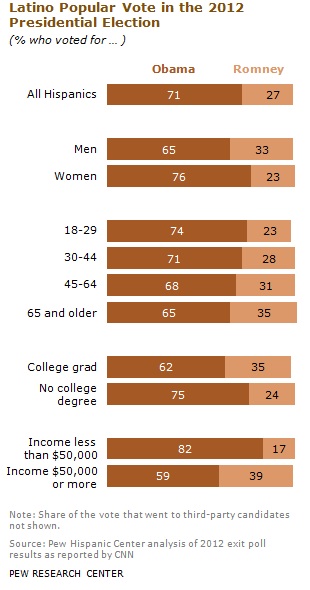
A week has passed since President Barack Obama handily defeated Republican challenger Mitt Romney in the Electoral College count  (332-206) for the office of the presidency. While Obama grabbed approximately 61 million votes compared to Romney’s roughly 58 million, he trounced him among Latino voters. And their decisive backing of the incumbent Democrat by a margin of 71% to 27% can be credited greatly to Latinos’ strong support of the administration’s signature health care/health insurance reform known as the Affordability Care Act (ACA).

Latinos’ support for healthcare reform dates back to the 2008 election, captured so joyously in this pro-Obama video that calls out Obama’s “plan de salud.” (I love this video, and want to hire this band for my first run for office if I ever do that.)

The Pew Center calculated the wide margin by which President Barack Obama defeated challenger Mitt Romney among Latino voters.

In November 2011, exactly a year before the 2012 general election, Univision/Latino Decisions polled 1,000 Latinos (ME +/- 3.1%) and asked them how they viewed the role of government in ensuring that everyone had access to healthcare, or whether people should be responsible for their own health insurance. The question served, in short, as a proxy on how this block of potential voters viewed the national debate on healthcare. At the time, the ACA was vehemently opposed by the GOP, healthcare and business interest groups, nearly half of the country’s GOP governors, the GOP majority of the U.S. House of Representatives, and most importantly future Republican Party standard bearer Mitt Romney.

In that poll, those favoring government-led healthcare numbered 59% compared to those favoring individual insurance at 29%. Half of those polled answered that they believed Democrats were closer to their position on healthcare compared to Republicans, at a paltry 18%.

At that time, 12 months prior to the general election, the top issue among potential Latino voters was the economy, overwhelmingly, at 40%, but the No. 4 issue was healthcare, at 16%.

On election night on Nov. 6, and in the days following the election, the blogosphere and pundits of all stripes prognosticated on how poorly the Republican Party courted the crucial and incredibly diverse Latino electorate. The group includes those self-identifying as whites and non-whites, Mexican and Central Americans, Cubans, South Americans, Dominicans, and others. The group harbors great economic diversity as well.

ABC News’ Nov. 7 coverage was typical: “Mitt Romney and the Republican Party’s tremendous difficulty appealing to Latino voters dealt a significant blow to their chances of winning in 2012.” Many of the experts suggested that Romney’s campaign miscalculated during the primary when he swung hard right and said he would support “self-deportation.” Such statements, go the conventional wisdom, explain why most of the Latino’s 10% share of the national voting electorate favored Obama. (Numerous media outlets reported that it was the first time since 1996 that a Democratic challenger had won such a high percentage of the Hispanic vote; President Bill Clinton in 1996 grabbed 72% of the Hispanic vote.)

Healthcare issue ignored in the Latino election narrative

Was Mitt Romney “done in” by Latinos or “done in” by vehemently opposing healthcare reform overwhelmingly supported by Latino voters?

Of course this simplistic analysis doesn’t fully explain why Latinos would trust Obama, when his administration was on record as deporting 1.5 times (yes 1.5 times) more immigrants per month than the previous administration of George W. Bush. As of July 2012, according to the Washington Post, the Obama administration had deported 1.4 million immigrants, allegedly targeting dangerous criminals. While Obama’s team mounted a legal challenge to Arizona’s harsh anti-immigrant law and provided a limited amnesty program to offer limited but not permanent amnesty to nearly 800,000 young immigrant residents in July 2012, his administration’s anti-immigrant actions also clearly alarmed many Latino residents and voters.

So why did they fall so completely and totally for  Obama and Vice President Joe Biden over Romney and his running mate Paul Ryan? Clearly, healthcare mattered, and it mattered more than the media has acknowledged. The election was also a very clear referendum on national healthcare reform that Romney and Ryan pledged to dismantle if they won.

In a September 2012 speech to the U.S. Hispanic Chamber of Commerce, Romney stated his agenda clearly: “Obamacare is the wrong way to go … . I will repeal and replace Obamacare with reforms that increase choice, slow down the runaway growth of insurance costs, and open the door to more new jobs.”

Such messages completely flew in the face of what Latino voters wanted – a government-led, national healthcare plan. On Nov. 6, Latino Decisions’ election eve poll of 5,600 voters reported virtually unchanged numbers among Latino voters from the poll a year earlier.

The respected polling organization again found healthcare to be the No. 4 issue among the diverse Latino electorate, behind the economy, education, and immigration. The poll virtually repeated numbers found a year earlier, showing 61% of respondents favored leaving healthcare reform in place.

Latino Decisions’ Matt Barreto reportedly told USA Today that from the beginning of the Romney campaign “the most obvious miscue” between Romney and Latino voters was his continued attack on the ACA.

What remains puzzling is why so many media organizations completely ignore that Latino voters, like the majority of the voting public, supported the administration in a clear national referendum on healthcare reform that the GOP, GOP surrogates, many parts of the all-powerful healthcare industry, special and business interest groups opposed with nearly obsessive and feral passion.

The matter is settled, both by the highest court in the land and now by the ballot box. The opponents of the ACA — the market-oriented, limited healthcare reform that was passed by Congress — lost, and they lost decisively. Latinos voters, who so clearly supported the legislation, made that clear as a bell on election night in completely rejecting the GOP, its anti-healthcare reform message, and the former Massachusetts governor.

Two milestones put the Oglala Sioux back on the global stage

This 2002 file photo by the Denver Post shows alcohol being sold in Whiteclay, Neb., adjacent to the Pine Ridge Reservation.

October was a huge month for the Oglala Sioux Tribe of South Dakota. The Lakotan band made the national spotlight, perhaps in ways not seen since the historic and bloody siege at Wounded Knee in 1973.

On Oct. 1, 2012, the tribe lost a $500 million lawsuit it filed against a group of multinational beer manufacturers and four stores in neighboring Nebraska that the tribe claimed were liable for bootlegging and the widespread destruction of alcoholism that has plagued the Pine Ridge Reservation for decades. The 3.5 million-acre reservation, about the size of Connecticut, is officially dry. However, 5 million 12-ounce beers were sold in 2010 at the Nebraskan stores immediately adjacent to Pine Ridge. That means about 13,000 cans a day were purchased for consumption at a reservation with just 45,000 residents—a simply staggering figure.

The litigation represents a legal and public health strategy that seeks to hold the companies and retailers/distributors culpable for downstream effects of the health hazard for a legal drug, in this case, alcohol. It also demonstrates the tribe’s proven ability to use symbolic and media tactics that capture global interest, in order to highlight glaring, historic, and shocking injustices that are not tolerated elsewhere in the United States. I actually first heard about this story not from U.S. news sources, but while listening to the BBC World Service in February this year.

Oglala Sioux tribal attorney Tom White holds a press conference after filing the tribe’s lawsuit in Lincoln, Neb.

The second major but not disconnected story last month was the death on Oct. 22, 2012, of famous Oglala Sioux activist Russell Means, a major figure in the American Indian Movement (AIM). The so-called “radical” group galvanized Native Americans and many tribes in the early 1970s by first occupying Alcatraz Island in 1969. The New York Times, in a fit of what can best be called sanctimonious arrogance and historic ignorance, was dismissive of Means’ lasting significance to Native activism of the 20th and 21st century.

The obituary/editorial referenced Mean’s alleged proclivity to guns and brawls. However, the editorial noted Means galvanized global attention of the plight of Native Americans during the  siege at Wounded Knee, at the height of the Vietnam War and amidst President Nixon’s growing Watergate scandal. The Gray Lady begrudgingly states in its judgmental obituary: “Pine Ridge and other reservations have not escaped plagues of poverty and alcohol. Governmental neglect remains a scandal.” Today, Shannon County, S.D., where the reservation is located, is the nation’s third poorest, where more than half of all residents live in poverty.

Oglala Sioux tribal member Russell Means died on Oct. 22, 2012.

By comparison, the Oglala Sioux Tribe, which itself was divided violently before and after the 71-day siege at Wounded Knee, immediately proclaimed Means’ birthday (June 26) as Russell Means Day on the Pine Ridge Reservation. The tribe acknowledges his contributions to helping improve his impoverished tribe’s status. A web site paying tribute to Means’ lasting role to Native Americans called him the most important Native American since Sitting Bull and Crazy Horse.

Means seemed to capture the Oglala’s Sioux defiance and resilience. National Geographic’s August 2012 profile of that resilience  highlighted 60-year-old activist Alex White Plume.  He summed up the injustices brought upon his people by the federal government and others. The tribe is one of seven Sioux bands whose once far-ranging ancestral lands of the Northern Plains and Inner Mountain West were literally taken by the expanding U.S. nation in the mid- and late 1800s. “They tried extermination, they tried assimilation, they broke every single treaty they ever made with us. They took away our horses. They outlawed our language. Our ceremonies were forbidden.”

The most egregious crime was the U.S. Calvary’s massacre in 1890 at Wounded Knee of 146 Sioux members, of whom 44 were women and 18 children. The mass murder was a fearful reaction to the Ghost Dance that was sweeping the Sioux people, a deeply spiritual religious revival that promised a rebirth and paradise on earth. Another 200 Native Americans were killed in related incidents shortly after.

Nearly a century later, starting in February 1973, the AIM movement again focused the attention of the globe on the impoverished Pine Ridge Reservation in what became known as the siege at Wounded Knee.

About 200 AIM members occupied the site of the Wounded Knee massacre. They protested broken treaties and the corrupt tribal governance of then tribal head Dick Wilson. At the time, the tribal government ran its own private militia called Guardians of the Oglala Nation, or GOONS, who were made infamous in the 1992 film Thunder Heart, which was based loosely on the Pine Ridge incidents. The GOONS, National Guard troops, and FBI agents surrounded the activists.

During the siege, 130,000 rounds were fired, two FBA agents were killed, and 1,200 arrests had been made. Ian Frazier, who writes about the incident in his 2000 travelogue and profile of the Oglala Sioux called On the Rez, interviewed Le War Lance, a participant in the siege. Le claims to have snuck in out of the siege 18 times and to have observed the presence of U.S. military forces (82nd Airborne), armored personnel carriers, and helicopter and reconnaissance flights. (A summary of the FBI’s files is here.)

The problems at Pine Ridge did not end with the siege. AIM activists and their sympathizers note that between March 1, 1973, and March 1, 1976, the murder rate on the Pine Ridge Reservation was more than 17 times the national average. Activists attempting to free Leonard Peltier, who was sentenced to life in prison for the killing of two FBI agents during the siege, have counted 61 unsolved homicides during that time. Some of those killings are now being re-investigated.

While AIM may not have created lasting change on the Pine Ridge Reservation, it did demonstrate what Frazier called a real flair “for the defiant gesture in the face of authority.” Frazier says that, along with AIM’s strong historic self-identity, made it both conservative and radical all at once. That same flair and sense of historic injustice is clearly visible in the unsuccessful lawsuit that was brought in February 2012 by the Oglala Sioux in Nebraska’s U.S. district court.

The suit alleged that one in four children born on the reservation has fetal alcohol syndrome or fetal alcohol spectrum disorder. The tribe’s average life expectancy ranges from 45 and 52 years, shorter than anywhere else in the Northern Hemisphere outside for Haiti. By comparison, the average life expectancy in the United States is 77.5 years. The suit sought rewards to cover cost of health care, social services, law enforcement, and child rehabilitation that it claims are caused by chronic alcoholism on the reservation. “The devastating and horrible effects of alcohol on the (Oglala Sioux Tribe) and the Lakota people cannot be overstated,” the lawsuit stated.

In terms of negative health outcomes, Native Americans and Alaskan Natives (AI/AN) fare much poorer than their fellow countrymen by all standard public health measures. The Centers for Disease Control and Prevention (CDC) notes that “rural and urban AI/AN alike experience greater poverty, lower levels of education, and poorer housing conditions than does the general U.S. population.” And, of course, such conditions lead to a range of health issues, including the alcoholism and the despair prevalent on the Pine Ridge Reservation.

The CDC, while trying to present unfiltered data, bizarrely and disparagingly states, “Geographic isolation, economic factors, and suspicion toward traditional spiritual beliefs are some of the reasons why health among AI/ANs is poorer than other groups.” Remarkably, the CDC summary of health data, at least in this source, does not account for the systemic and historic racism, political persecution, coordinated and clearly documented efforts to destroy Native American cultures and languages, and economic exploitation as potential contributors to current health disparities. While the top two killers of AI/NA are heart disease and cancer (both greatly influenced by the social determinants of health), the No. 3 killer is “unintentional injuries,” which can include car accidents, and the No. 8 killer is suicides. For those not familiar with the social determinants of health, these two types of deaths are easier to link to the deep socioeconomic disparities experienced throughout Indian country.

Today, Pine Ridge is the only reservation in South Dakota that bans alcohol. The booze is supplied by nearby Whiteclay, Neb., population 12. For its part, the state of Nebraska split hairs and postured it could do nothing to ban alcohol sales that tribal leaders alleged were tantamount to genocide. The Denver Post reported that Nebraska’s  Attorney General, Jon Bruning, said he “despised” Whiteclay’s beer sellers, “but feared shutting down Whiteclay would cause patrons to travel to other Nebraska towns.” Such statements almost defy logic and demonstrate that state’s leaders still willfully ignore staggering data  that show the state has a legal and moral obligation to solve a public health crisis originating inside its state borders.

The major beer makers singled out by the lawsuit were Anheuser-Busch, Molson Coors Brewing Company, MIllerCoors LLC, and Pabst Brewing Company. Given the historic settlement by 46 states attorney generals against tobacco manufacturers in 1998, it is all but certain that these titans of American suds have mapped out a legal strategy to stem all future efforts to hold them liable for downstream impacts of alcohol consumption. Fetal alcohol syndrome and DUI-related fatalities are two of the more well-known and symbolically rich health impacts of alcohol that capture the media’s interest and harness the public’s collective disgust with the harmful impacts of the drug.

Tribal leaders are now discussing whether to legalize the sale of alcohol on the reservation. A previous effort failed in 2004. Though the tribe lost, the lawsuit may spark future public-health framed legal challenges to the sellers and manufacturers of alcoholic beverages. It should be noted that trial attorneys repeatedly failed over 50 years to hold tobacco companies liable for the deaths and illnesses of former cigarette smokers. That does not mean other tribes and trial attorneys will not continue to explore legal challenges to the commercial reality of alcohol “on the rez.”

As for the continuing omnipresence of alcohol on the Pine Ridge Reservation, or any of the other more than 560 reservations in the United States, that is nearly certain. The socioeconomic conditions that have made reservations fertile ground for America’s No. 1 drug of choice remain unchanged. As the most famous contemporary Native American writer, Sherman Alexie, writes, “Well, I mean, I’m an alcoholic, that’s what, you know, my family is filled with alcoholics. My tribe is filled with alcoholics. The whole race is filled with alcoholics. For those Indians who try to pretend it’s a stereotype, they’re in deep, deep denial.“

My favorite photography subjects of all: dogs and their owners

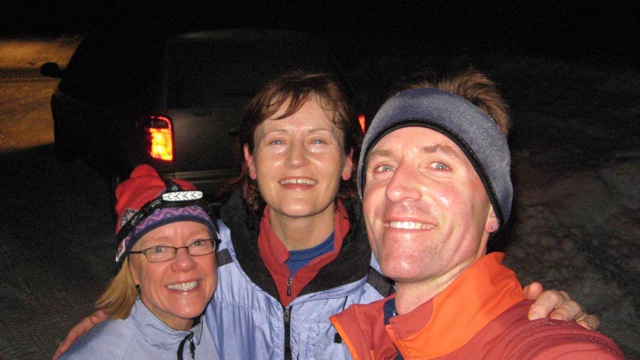
For years I have photographed dogs, from Greenland to Alaska to the tropics. I particularly like photographing dogs and their owners. There is something special that happens when you capture them in their element. The owner’s face muscles are relaxed. They usually are smiling. There is some magic that is hard to quantify and describe.

During the last few months I was able to photograph a couple of dog owners and their beautiful companions. It does not take an expert to see what kind of happiness, and all its related health benefits, that dogs bring to people.

Come a rain storm, put those running shoes on your feet

The dark and extremely gloomy days of Seattle are now settling in. For runners in this region who work normal day shifts, this signals the dark days of running that last up to five to six months, depending on what time of day one runs and how much free time one has. I find it more gloomy than Anchorage, where I lived and ran six years. I never minded running in the dark there, because the snow and clouds created very powerful ambient light that made running at night very pleasurable. But here, it is dark as a coal mine, and damp. People’s vitamin D levels are unhealthily low, and there seems to be widespread manifestations of seasonal affective disorder (SAD).

First, let’s talk about why this is such a depressing time of year and can be such a bummer place to be.

The absence of natural sunlight impacts the body’s production of two key hormones that impact the body’s sleep-wake cycles, energy, and mood: melatonin and serotonin. Research indicates that melatonin is generated in greater quantities because of longer periods of darkness. Increasing the production of melatonin leads to sleepiness and lethargy. Serotonin, whose production rises with more exposure to sunlight, falls during these shorter days. Low amounts of serotonin are also associated with depression.

Another byproduct of the darkness is a decrease in the production of vitamin D, naturally created by the body. Though researchers have not fully determined whether low vitamin D contributes to symptoms of depression or whether depression itself contributes to lower vitamin D levels, higher levels of Vitamin D are associated with decreased risks of depression. But alas, anyone living in  Canada, and the northern tier of the Lower 48 here in North America all require vitamin D supplements too to make up for the absence of sunlight come fall. Vitamin D also is critical in many key functions: enhancing the absorption of minerals in the gastrointestinal tract and kidney and thus into the blood, and it may protect against tuberculosis, gum inflammation, MS, and some cancers—at least according to my handy nutrition textbook: Understanding Normal and Clinical Nutrition. (I really love this tome – nicely written, well illustrated.) My response is to take vitamin supplements, but that is not enough.

So here I am in dark and rainy Seattle, deprived of naturally produced vitamin D, at higher risk of SAD. This is exacerbated by Seattle’s culture that seems to promote the absence of smiles and eye contact with strangers. What is a person to do?

Running is a perfect antidote to the blues that accompany the shorter days of autumn.

Easy, go running. While hitting my local running grounds (Greenlake), I heard some walkers recently comment, “This is when the real runners come out.” The observation was referring to the near absence of mobs of fair-weather walkers and runners whose numbers thin by nearly 80% the moment the rains fall and that stygian Seattle glooms settles around mid-October. Paradoxically, running is the perfect antidote to anything resembling SAD or depression or everyday stress. I have done this since I was 15, and I continue running rain or shine, but particularly when it rains.

One of the earliest blockbuster books on the health benefits of running, the Joy of Running, by Dr. Thaddeus Kostrubala, came out way back in1976. In it, Kostrubala was among the first of the self-improvement health gurus to promote using an aerobic activity, running, to help treat mental illnesses such as depression. More recently, in September 2011, the UK-based Telegraph published a typical story that is the grist for many running magazines, Running outdoors can improve mental health. The story touted how running outdoors “can both raise your spirits and give you a real buzz.” Of course there are all sorts of web sites that list evidence-based findings that point to the health benefits of running–stress relief, blood circulation to the brain, chemical releases, sharpened cognitive functions, getting outdoors, and more.

Running in the dark does not mean you can’t have fun.

There are also numerous, peer-reviewed scientific papers that highlight the mental health benefits of running, particularly in response to depression. I stumbled on one such paper doing a quick keyword search on the database PubMed, by D.I. Galper, et al., in the January 2006 edition of the journal Medicine and Science in Sports and Exercise, called “Inverse association between physical inactivity and mental health in men and women.” That study looked at the associations between measures of physical activity and mental health in a large group of more than 5,400 men and women. Galper and his colleagues found that cardio-respiratory fitness and habitual physical activity were associated with lower depressive symptoms and greater emotional well-being.

Of course I and other dark and rainy weather runners did not need this study to confirm what our bodies are telling us every time we get out of our homes and get wet while splashing outdoors. I realize that not everyone has the time to get out after busy days. They may have classes, second jobs, kids, or all of the above. But even in the rain, in the blackness of a fall day, a run or even a walk is sure to improve one’s mental outlook, boost one’s mood, and stimulate the body’s chemistry. Here’s to the days and months ahead of soggy shoes, headlamps, and hopefully a few hellos from water-logged runners. You’re a fine crew.

Secret military tests in St. Louis and other communities violated the Nuremberg Code, according to researcher

As a former St. Louis area resident, I first thought my friend was pulling a prank when he shared a story on Sept. 29, which was picked up by the Daily Mail tabloid in the United Kingdom and alleged my old home city was intentionally contaminated by U.S. military researchers during the Cold war. I nearly deleted the email suspecting it was spam.

Professor Lisa Martino-Taylor

It turns out it was not a prank story in the Onion. During the last week of September 2012, St. Louis’ major broadcast news stations (KMOX and KSDK) broke a news story on recently completed research of government documents that showed U.S. military researchers conducted human subjects testing, in violation of the Nuremberg Code, on poor and minority residents in St. Louis during the 1950s and 1960s. The bombshell that was dropped by St. Louis Community College-Meramec sociology professor Lisa Martino-Taylor, in her PhD thesis, was that  U.S. Army’s researchers sprayed an aerosol on human subjects that allegedly was laced with a fluorescent additive, a possible radiological compound, produced by U.S. Radium Corp. The company had been linked to the deaths of workers at a watch factory decades before.

The issue of the U.S. government testing on unwilling and non-consenting persons for military and medical research during the Cold War has long been established, both in St. Louis, and also in the Inner Mountain West and in Washington State. At the Hanford Nuclear Reservation, in southeastern Washington, radioactive iodine (I-131) was intentionally emitted in 1949 ( the Green Run test) to measure the impacts of exposure on human health as part of the U.S. Air Force’s efforts to better understand and track Soviet weapons testing. For its part, St. Louis was one of 33 U.S. and Canadian cities and rural areas intentionally exposed to the spray that was dispersed from airplanes, rooftops, and vehicles. A subsequent National Research Council committee, in 1997, claimed these tests did not expose residents to chemical levels considered harmful. However, promised follow-up studies may not have been conducted. Residents in St. Louis were quoted in press reports claiming planes dropped a white powder that fell on people below, which residents did not view as potentially harmful.

Photograph published in Martino-Taylor’s thesis on the U.S. Army’s aerosol spraying activities in St. Louis and other areas.

According to Martino-Taylor, thousands upon thousands of St. Louis residents likely inhaled the zinc cadmium sulfide spray. In St. Louis, where tests were conducted in 1953-54 and 1963-64 by the U.S. Army Chemical Corps, Martino-Taylor said, ”The powder was milled to a very, very fine particulate level.  This stuff travelled for up to 40 miles.  So really all of the city of St. Louis was ultimately inundated by the stuff.”  The Daily Mail reported one of the compounds sprayed unknowingly on St. Louis residents was FP2266 (radium 226), which according to the U.S. Army was made by U.S. Radium Corp. The compound was the same one that was linked to the death and of former U.S. Radium Corp. workers.

According to press coverage, the U.S. Army has admitted that it added a fluorescent substance to the “harmless” compound, but the issue of whether the additive was radioactive remains classified.

The story was immediately picked up by a number of blogs, which repeated the allegations and news coverage. Almost immediately, Missouri’s two U.S. senators, Claire McCaskill (D) and Roy Blunt (R), wrote to Army Secretary John McHugh demanding answers and to ask if follow-up studies promised in 1997 by the National Research Council were ever completed.  The full text of McCaskill’s letter and press release can be found here.

Pruitt-Igoe housing complex before it was dynamited and cleared.

According to an Oct. 3, 2012, AP story, aides to Sens. McCaskill and Blunt said they have received no response. At the time of the story, the U.S. Army declined to be interviewed by the AP. The AP’s story notes that St. Louis was chosen for reserach because it resembled some Russian cities. However, one of the primary areas that was chosen for testing was the Pruitt-Igoe public housing complex, which was razed in the 1970s as a failed national public housing experiment–and one of St. Louis’ legacies as a decaying city. At the time of the spraying by federal researchers, the complex had 10,000 mostly African-American and low-income residents, 70 percent of whom were 12 and younger.

Martino-Taylor’s thesis (The Manhattan-Rochester Coalition, research on the health effects of radioactive materials, and tests on vulnerable populations without consent in St. Louis, 1945—1970) is worth examining first-hand, as it describes how she was tipped to the improbable and almost unbelievable tales of two women, both sharing stories of having been unwilling human subjects to military spraying and suffering health consequences from that research. Surprisingly, she knew nothing about these then allegations. Thus began her effort to request information under the U.S. Freedom of Information Act from the federal government, often in severely redacted form. A point that much of the media continues to miss is that her research focuses on the researchers as well as their victims. Her thesis statement states her work looks at how a “large number of participants inside an organization will willingly participate in organizational acts that are harmful to others, and how large numbers of outsiders, who may or may not be victims of organizational activities, are unable to determine illegal or harmful activity by an organization.”

The leaders of the studies, which she calls the Manhattan-Rochester Coalition, were the researchers who conducted the human-subjects research on nuclear weapons as part of the country’s efforts to prepare for, and win, a possible nuclear confrontation with the U.S.S.R. During the tests in St. Louis and other areas, according to Martino-Taylor, the U.S. Army violated the 1947 Nuremberg Code, the standard set after trials of Nazi doctors and war criminals, which established that “voluntary consent of the human subject is absolutely essential” for any human-subjects testing. There was no such standard in these tests in St. Louis, Minneapolis, and elsewhere, Martino-Taylor maintains.

Medical experimentation room at the Terezin concentration camp in the Czech Republic.

During the 1940s, the Nazi regime’s corrupt and criminal medical and scientific community committed horrific crimes at dozens of concentration and extermination camps in Nazi-occupied Europe, including live vivisections, gassings, cold water immersion tests, high-pressure testing, lethal injections, and intentional murder for “scientific purposes.” I in fact visited many of the rooms and buildings where these crimes against humanity occurred during my tour of the camps in the summer of 2000, so it was especially painful for me to know that my own government, in my former home city, may have been breaking established international guidelines that were codified following the defeat of the Nazis and their murderous state. (See my photo documentary here.) According to Martino-Taylor, the initial congressional investigation of the spraying program included testimony from experts that claimed the experiment team “chose to ignore Nuremberg.”

In the United States, following the Tuskegee Institute’s syphilis experiments on African-American men, reforms were passed in 1979 through the Belmont Report, which theoretically was supposed to protect human subjects from harm in research. However, even as the media report on this sensational story of testing on humans in two countries (Canada and the United States) in the 1950s and 1960s, researchers at elite universities and laboratories continue to violate the principles first set out at Nuremberg. Slate.com this year reported that “marginalized groups have frequently been coerced into studies that violate their right to consent. A recent review of the bio-ethics of human research in the U.S. offers little prospect for change.”

The Slate.com story, from Jan. 22, 2012, was gloomy in its overall assessment of the failure of safeguards to prevent unethical research on humans, particularly when large corporate interests are involved. The story said the Presidential Bioethics Commission issued a report on protecting human research subjects that trumpeted the United States’s so-called “robust” protections—rules that have repeatedly permitted and legitimized breaches of informed consent. “The failure to elicit consent is not confined to the U.S. One in every three U.S. corporate medical studies is now carried out abroad, usually in places where trials can be conducted more cheaply than in the U.S. Subjects are often unaware that the treatments are experimental.”

I am pretty sure the dust from this recent controversy will settle quickly, and even in St. Louis, the community will focus more on their beloved Cardinals’ bid for another World Series title. It is likely no one involved in these unethical if not possibly illegal studies will ever be held accountable for their actions against the civilians they may have harmed.

Africa revisited through the Dark Star Safari

From the comfortable security of my modern cocoon in Seattle, Wash., I am vicariously reliving some long-ago travels I made in Africa during the summer of 1997, which already was 15 years ago. I have the often cynical but always observant and honest Paul Theroux to thank for being lifted out of my quotidian boredom and back to my brief five-week journey in central and East Africa.

Sunrise on the Serengeti, a magnificent sight indeed.

In June 1997, I travelled to Rwanda, just three years after the genocide. I arrived there, hoping to try my hand at freelance journalism and perhaps cover some of the genocide trials that were underway in the aftermath of the horrific crimes against humanity. I lacked two of the most critical elements to pull this off: connections and cash. Maybe I lacked cajones too. I also was floored by malaria once I arrived in Kigali, Rwanda, and I pulled out in two weeks, having lost a lot of weight and having determined I would not have the resources to succeed in my original plan. As to whether I would have succeeded as a freelancer if I stayed longer is hard to say, as Rwanda then was in the throes of an incredibly violent civil war that had claimed thousands of lives. That conflict, which involved the stopping of microbuses—like ones I was riding—and the slaughtering of all passengers, was pitting the Tutsi-led forces of the new post-genocide government of Rwanda against the extremist Hutu militias who had taken hold in then eastern Zaire. This was just before Zaire’s own meltdown into violent civil war, tribal violence, and foreign interventions that remains unresolved to this day.

Passing the time in Moroti, Uganda, on my way to the north of the country in 1997.

Theroux’s book, called Dark Star Safari, is typical and classic Theroux. It recounts a year-long trip he made from Cairo to Capetown in the early 2000s, mostly by land transportation, using local means such as the back of trucks, buses, microbuses, and sometimes rides in Land Rovers and overland safari trucks with the many white Westerners he sees. Theroux is unforgiving in his criticism of both Africans and of outsiders, who are mostly Westerners but occasionally Indians, Japanese, and Chinese. Theroux often savagely skewers this mostly Western crowd as if they were the marabou scavengers, the quite ugly and ubiquitous large storks seen throughout eastern Africa, which lurk about and wait for carrion to devour.

I like Theroux because he attempts to put what he sees into context, with the perspective of a man who spent two years of young adulthood as a Peace Corps volunteer in Malawi in the 1960s and later several years as a lecturer in Kampala, Uganda, before the despot Idi Amin took over and destroyed that nation. To his credit, Theroux’s comments on the failures of aid projects, for instance, are based on his first-hand encounters. He credits foreign aid organizations and Western governments for creating a culture of aid dependency in many African nations. But his biggest target is corruption by African leaders and its military and civilian rulers. Writes Theroux of the large cities he visited and detested on his trip: “Scamming is the survival mode in a city where tribal niceties do not apply and there are no sanctions except those of the police, a class of people who in Africa generally are little more than licensed thieves.“

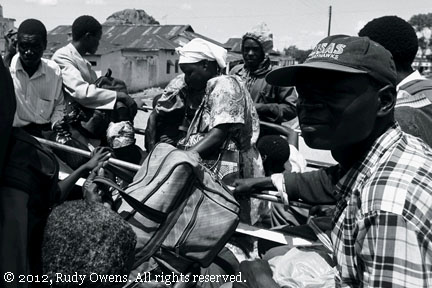
Traveling by bus in Uganda, rarely a dull moment.

I have exchanged a few emails about this book with a friend of mine who also did a Peace Corps stint in Africa and who thought Theroux was honest about what he observed. I told my friend that Theroux’s description of traveling through a inhospitable, mostly lawless area from Mega, Ethiopia, to Isiolo, Kenya, where two white Westerners refused to give him a ride in their Land Rover, brought back my own memories. Like Theroux, I saw plenty of those same Land Rovers in Kenya, Rwanda, and Uganda and also never got a lift. (Did I deserve one—no, but they could have been offered; I did refuse a ride once too because I wanted to walk, but the driver was African and a decent guy.) I too wondered who are these privileged outsiders anyway? I remember distinctly two haughty U.N. officials—an African and European—sniping like French lords at low-paid Rwandan hotel staff while wearing stylish dark shades and expensive suits, angry dust got on their suitcases, as they disembarked at Milles Colines Hotel, made famous during the genocide where Tutsis hid while surrounded by killers. The cost for a room in 1997 was about $150 a night as I recall, or about half of what a Rwandan then earned in a year. I could not afford the place and luckily found accommodation with a great aid worker I met who I thought was doing good work.

Like Theroux, I travelled by truck to some remote parts in the bush. This trip took about 12 hours and was among my most memorable.

I also remember Italian missionaries in Northern Uganda, near Karamojo, in the deep bush who ran a furniture shop and spoke the local language and seemed completely at ease and in their element — like some of the Italian missionaries Theroux met in Ethiopia and Kenya. And, like Theroux, I remember these “overlanders,” the white tourists on coverted safari trucks crossing Africa, when I stopped at Lake Naivasha, Kenya. In my case, the passengers expressed excitement about seeing mountain gorillas in Rwanda without having a clue about the raging conflict there or another violent uprising that was occurring in southwest Uganda. And one has to wonder about two female aid workers he disparaged for their peddling of a Plumpy’nut type nutritional food product to poor children in person cause they reportedly didn’t trust the mothers to deliver the aid themselves? Is that true? I believe it is. Just this spring I heard an announcement by U.S. AID that the United States is pushing corporate food aid with corporate food giant Pepsico, in Ethiopia. What’s good for Pepsico is also good for U.S. AID and Ethiopians, if I am to believe the facts in this press release.

Anyway, not everyone agrees with Theroux, and here’s one attack, by John Ryle from 2002 in the Guardian, of the book and of the writer himself. Personally, I think Theroux is smart and clearly sees the public health, economic, political, and outsider-driven problems that challenge the countries he visited. I also do not think one sells books being nice or being 100 percent true. Theroux is a strong brand, and you know what you get when you read his brand. And it remains exceptionally enjoyable.

I shot this photo near Mt. Karamojong, a mountain that is home to a rebellious group who were known to rob locals with AK 47s when they were not fighting with other cattle raising tribes in Kenya. Or maybe they are just a tribe trying to survive in a land with few resources and many threats.

My blog changes its name, and a few bits on public health blogging

On Sept. 26, 2012, I did a little behind the scene tweaking to my blog, which now celebrates its seventh month on the air. (I love it.)

I created a subdomain, which means my blog name is now tied to my web site of www.rudyfoto.com. All past links and references to my blog URL (https://rudyowensblog.wordpress.com) will now be linked by my blog URL (http://iwonderandwander.rudyfoto.com). Nothing else has changed. I wanted to link my blogging more with my web site. I also, in the next month or two, plan to reboot my web site and rebuild it to highlight my photography and multimedia in a more user-friendly format. Stay tuned for that.

On an upbeat note, the University of Washington School of Public Health has linked to this blog on its page for prospective new students. I was not expecting that, but it was very refreshing and positive to see. There are some other great bloggers listed there. Way to go public health bloggers, you are the future. For instance, here is how the University of North Carolina at Chapel Hill Gillings School of Global Public Health promotes its bloggers, including students (wow, that is a heckuva long name for a school — and I am a UNC-CH alum who took classes there back when I was studying journalism in 1991-93.)

My thinking remains that blogging and other social media tools must be embraced by the field of public health to communicate to wider audiences and to share research from behind the firewall, which prevents the public from accessing many peer-reviewed research articles, where public health traditionally seeks validation and where the field encourages its professionals to publish. To that end, I am confident it will be future graduates of schools like the UW School of Public Health who will create change and transformation in the field to make the concepts and value of public health more accessible and meaningful to the mainstream public and policy-makers.

Dogs and pets provide meaningful therapeutic benefits

A smile and a wag — the universal language of happiness.

Today I read yet another article on the healing power that dogs have for humans who have experienced trauma, in this case sexual abuse. According to a Sept. 23, 2012, story in the Seattle Times (Courthouse dogs calm victims’ fears about testifying), King County Washington’s seven-year-old practice of using assistance dogs to provide comfort to victims in a courthouse setting has been deemed legal in an appeals court ruling. I have previously written about how pets are used in prison settings, leading to better outcomes for both the state and prisoners (see my May 3, 2012, post: Cats behind bars — more proof of how pets bring out our best). I do not think it is a surprise to anyone who is familiar with the value of using therapy dogs that dogs could and should be used to assist young persons who are crime victims. They are commonly used by many people with illnesses and disabilities, like this instance with a college student who has spina bifida.

The powerful bond between humans and dogs is well-known and about as old as civilization itself.

In this particular case reported by the Seattle Times, a lab-retriever mix named Jeeter helped two female victims of molestation heal and also testify in trial, as a means to alleviate their reported fear and discomfort. The decision deemed the dog to be a neutral agent, not siding with either party in the legal process and being an equal opportunity dispenser of affection. As one of the two females victims told the Seattle Times, “What we want people to know is that they can have a dog to help them, too. We’re not ashamed about what happened. We didn’t do anything wrong.” In fact, the Seattle Times reported the National District Attorneys Association passed a resolution last year supporting the use of courthouse dogs.

Another famous instance of therapy dogs being used to assist crime victims was at the campus of Northern Illinois University, where a murderous gunman killed five students and injured nearly two dozen others in 2008.

As the final report on that gun-related massacre from NIU highlighted, in addition to more than 500 counselors who assisted victims and the campus community, there were dozens of volunteers who assisted by bringing “comfort dogs” to the NIU campus in DeKalb, Ill., after the shootings. The report noted, “many of our students hugged those wonderful dogs and wept openly, some for the first time since the tragedy.”

A wonderful book that I read this summer on the powerful bond between humans and other species called Kindred Spirits: How the Remarkable Bond Between Humans and Animals Can Change the Way We Live, by DMV Allen Schoen, highlights how powerful this connection is, including on the health of humans and the species with whom they interact. Schoen has attracted attention for research and efforts exploring the ways science and larger culture understand how humans interact with their many animal friends. His description of his former golden retriever, who he rescued and who then became his assistant caring for his animal patients, is wonderfully touching. He eventually had to put his beloved assistant down. When I shared this book with a member of my family, she broke down into tears, thinking about her former dog.

My former grad school experience vastly improved when I moved into my new apartment and made friends my always cheery neighbor, Balloo.

Schoen has his own web site and a blog here: http://www.drschoen.com/. His web site notes that he continues to practice what he calls integrative veterinary healthcare, which brings together holistic and natural techniques such as acupuncture and homeopathy along with the best of conventional veterinary medicine to provide animal healthcare services.

There are peer-reviewed journal articles being published about the power of animals, including in the work setting, where an abundance of anecdotal reporting and research has occurred. An Associated Press story from Feb. 9, 2012, described the “growing phenomenon” of dogs in the workplace in America, according to Rebecca Johnson, director of the Research Center for Human-Animal Interaction at the University of Missouri’s College of Veterinary Medicine, in Columbia. “People are realizing we need to do things to reduce stress in the workplace,” Johnson told the AP. She said dogs can build connections among co-workers and create healthy diversions from work. People interacting with dogs have a hormonal reaction that causes them to “feel more relaxed and more positive.”

All I can say is that nothing beats a dog or purr on a bad day. Even the worst day improves the moment there is that amazing interspecies contact.

A primer on the futility of buying health insurance in the open market

On Sept. 19, my University of Washington graduate student health insurance plan expires. I paid $607 a quarter last year, four quarters a year, for two years for this plan. It was OK. I never really “used” it for anything. I did have my knee looked at, and a finger was inspected once that got dislocated that I actually fixed, but no real “medical care” was ever provided except consultation. Only one visit really required a specialist’s expert analysis, but I actually deduced a similar conclusion from online research. Short of a medical test, even that expert opinion was just that, an opinion. So I am left wondering what this investment served. It did not cover in-house physical therapy, massage, or chiropractic care—all forms of medical care that I truly believe promote health and wellness without expensive, harmful pharmaceuticals and that use non-invasive techniques to promote healing through touch and manipulation of the body’s muscles and skeletal system.

Massage should be covered at higher levels by all insurance plans, as it provides excellent health outcomes with few negative effects and no medication.

I was supposed to cover those expenses “out of network” at 60%. As a former graduate student, I had to weigh medical care versus, well, paying for food and rent, and I simply put off the care I needed the most and used to get when I had a plan with my former employer in Alaska – chiropractic care and massage therapy. There were times I was in excruciating pain that simply had to be ignored because my insurance did not cover it, and those problems could have been addressed if I paid for much of it, after my deductible.

So now I am in the open market of insurance again. This is that wonderful place where the “invisible hand” of Adam Smith is supposed to provide solutions without “government interference.” Well that is not the case. The market is somewhat regulated by the Washington State Insurance Commissioner. They put together a good web site to help consumers understand the nine companies that offer health insurance plans in this state and the types of plans available to them. I think they did a good job.

Such communication for consumers is critical, as insurance companies prefer to communicate in “insurance speak” language involving legalese and jargon such as “co-pays,” “deductibles,”  and let’s not forget “pre-existing conditions.” Here’s just a taste of one clause from one plan on how they try to limit coverage for a “pre-existing condition”:  “Pre-existing conditions: these plans contain a nine-month pre-existing condition clause that excludes coverage for any condition for which there has been diagnosis, treatment (including prescribed drugs), or medical advice within the six-month period prior to the effective date of coverage, for which a prudent person would have sought advice or treatment. Section 6 of the application for our individual and family plans will help us determine whether you have creditable coverage, which would allow [COMPANY NAME REMOVED BY AUTHOR] to waive pre-existing conditions/exclusions for you and/or your dependent(s).

No, choosing insurance is never easy because the language is often confusing and many non-experts cannot decipher the fine print of the  brochures with happy, smiling people used to lure in customers.

Such language is not simple or easy to understand, and in theory, the Patient Protection and Affordability Care Act (health insurance reform passed by Congress recently) will make it impossible for insurance companies to deny persons health insurance in the future because of a pre-existing condition. It is not clear if non-English speakers can understand this information at all. While many people have fought with insurance companies, many lower-income or less-educated persons may not have significant experience navigating complex legal documents that, quite frankly, I think people with MBAs or law degrees do not fully understand. Here are two companies’ plans that offer health insurance to individuals in the state of Washington (there are exactly nine corporate players in this limited market): LifeWise, Group Health.

I chose LifeWise. I am waiting for them to approve my plan. I will have to have proven I actually had coverage before (I did as my UW plan was owned by them) and am likely not a deadbeat. I am sure they are probing my legal, credit, even personal records as I write this to determine if I have been an actuarial risk to providers, if I have some terrible health condition that would harm their profit margins, and if I am generally on the up and up as a possible customer to help them make a “reasonable rate of return,” which is really all a company can hope to do. This all is, of course, unlike other developed democracies, because our country continues to refuse to adopt a single payer plan that other countries like Canada and France have taken up with better population health outcomes for their citizens and less gauging of consumers.

So what will I get if I am approved? I signed up for the basic catastrophic plan called “Wise Simplicity”. I would pay $160 month as a nonsmoker, and have a $10,000 deductible (compared to an $1,880 deductible that would cost me about $370 a month). So if I am hit by a car, I pick up the first $10,000 out of pocket? Great, eh?

So what do I get with the barebones plan? Well, basically a plan that tells me not to get sick and certainly don’t have an accident that costs $9,999.

I simply cannot afford another plan now. And this deeply worries me, until I get a job with coverage (and that is coming soon – yeah!). Two people I know in my immediate circle of friends just had enormous medical bills. One friend had elective knee replacement surgery. I cannot imagine that is less than $50,000 to $100,000 in costs (surgeon, anesthesiologist, several nurses, equipment, rehab, etc.). Another friend had a horrible and likely allergic reaction to a standard immunization and developed a syndrome that sent them to the hospital, where the same issue ensued with specialists, etc. My friend guessed the bills before insurance will be at least $100,000. So as I bike down Seattle’s dangerous roads, avoiding cars that do not know I am there as the driver texts a message about whatever, I contemplate just how flimsy my health care coverage really will be come Sept. 20. I guess the answer is what some running for office suggest – just don’t get sick. You know what I really do not have a choice. Adam Smith’s invisible hand I guess is making that possible, but why do I feel more like the hand is choking off my air supply and giving me a sucker punch when I am not looking.