The power of perseverance, as told by Michael Caine

One of the qualities I respect the most in successful people is grit. Another term to describe that wonderful trait is “stickwithitness.” By many measurements this characteristic, more than intelligence, may be a greater indicator of a person’s long-term success.

The other night I was discussing with a friend a characteristic I admire about Confucian cultures–the inner discipline, which is valued culturally. That inner self-control and single-mindedness are things that I see as attributes to address weaknesses all of us have. That can be eating bad food like too much chocolate (my vice, I admit), or not sticking with a healthy eating regime that can be so easy when we are busy or stressed, or watching too much TV–all things that can lead us to have less desirable health outcomes.

I do not think that “stickwithitness” is Confucian or the property of any culture, outright. It is frequently associated with people who many of us admire. That can be the musician who trains and trains, or great persons who have that indomitable will to overcome great odds, like an Abe Lincoln rising from poverty to the presidency.
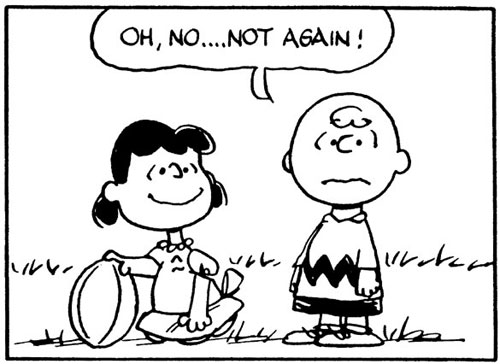
Charlie Brown–he never ever ever ever gave up, just like Michael Caine, and just like folks we admire for sticking with it.

This is a story I heard last fall during an interview with one of my favorite actors, Michael Caine. It is such a happy story, I am going to risk getting in trouble with NPR by reprinting Michael’s full statement here about how he met his best and lifelong friend (you have to read below). And guess what folks–they did live happily ever after, and how often do you hear stories like that? Michael was sure of what he wanted. He did not give up.

“Mr. CAINE: Oh my God, yeah. That was the greatest day of my life and, you know, like all great days of your life, you don’t realize it. What happened was is I had my best friend – his name was Paul. We were both single and we were out, obviously, six days in the discotheques, right, girls, dancing and everything. I said to Paul, I said we’ll do something we’ve not done before. We’ll stay in and we’ll watching television.

And a commercial came on for coffee and this girl was in it with these maracas. And I fell in love with this girl instantly – absolutely instantly. And then I got all excited. And I said, oh, I said, we’re going to Brazil tomorrow to find her. And then I went – I said, well, let’s go out and have a drink. So, I went down to discotheque and we’re sitting there, Paul and me, and a guy came in we knew.

He said, no girls tonight? I said, no. I said, I’m love with a girl I saw on the television. I’m going to Brazil to find her tomorrow.

So he said, I’ve been watching television all evening. He said, I didn’t see any beautiful girls on television. I said, she wasn’t in a show. I said, she was in a commercial for coffee. He said, we make that commercial. I said, well, I’m going to Brazil to find that girl. He says, shes not in Brazil, Michael. She lives in the Fulham(ph) Road in London. And she’s not, shes not Brazilian, she’s Indian. Her name’s Shakira Baksh. He gave me her number and I called her.

And I called every night for two weeks and she wouldn’t go out with me. And on the 10th or 11th – whatever it was – time I found her, evening, one after another, keep getting refused, I said to myself if she doesn’t come out with me tonight, I’m never phoning her again. And she said that night she would come. I’ve had the happiest 40 years of my life with this lady. And if she’d have said no that night, that would’ve been the end of it.

But anyway, it wasn’t and it’s been fantastic.”

Being SMART about feel-good social media sensations

Like many people, I have very mixed feelings about the media phenomenon that is the super viral video known as Kony 2012. It has a sexy opening line: “Nothing is more powerful than an idea”–something that is a two-edged sword.  This can be terribly awful if applied by those promoting “evil agendas” (explained below). The video is produced by a group called Invisible Children, itself a major recipient of corporate giving (JP Chase Morgan Bank is a huge supporter of this group, according to the company’s web site). This itself gives one pause.

The moment I saw it, I was screaming out loud: “manipulative,” “scam,” “cliche,” “heroic white saviors,” “powerless Africans with only one name,” “exploitative.” I actually have followed this story for more than a decade, and I have been to northern Uganda in 1997, where the Lord’s Resistance Army wrought havoc on innocent Ugandans. This is a long, complex story involving several African nations, ethnic groups, geopolitics, and more. This video, while bringing a horrible human rights offender to the attention of the public, disregarded many historic realities that I found deeply troubling as a former journalist. For instance, the main villain, Joseph Kony, is no longer in Uganda committing crimes; he reportedly was last seen in the Democratic Republic of Congo.

So what are we to do when we see how emotionally manipulative media products can gain one instant notoriety and fame, itself a goal of many scraping to make it in media production, photography, and storytelling.  (Recall “performance artist,” but definitely not a journalist, Mike Daisy and the factually inaccurate story he pushed about Apple’s suppliers in China that compromised his career and brought disgrace to the radio show This American Life.)

I can never disassociate the message from the person. Remember Leni Riefenstahl and her hypnotically seductive Triumph of the Will, a  scary masterpiece of fascist propaganda released in 1935 (when concentration camps were not quite operationalized) that helped the cause of one of the greatest murdering madmen of human history, Adolf Hitler? Riefenstahl latter downplayed her Nazi sympathies and attempted to justify her work as merely the output of an artist doing a job, without moral consideration for the outcome. And she was a brilliant photographer and filmmaker, who even after being associated with a genocidal regime, revitalized her career with images of Sudan (The Last of the Nuba) that many would think of today as “progressive” in its orientation. (See the stunning photo below.)

Leni Riefenstahl’s photos of the Nuba, seen here, are brilliant images in their own right, but should they be viewed as distinct from her ties to a genocidal regime from her more youthful days?

I just stumbled on a promotional page for a group called International League of Conservation Photographers. I immediately smelled the conflict between huge egos involved in their media/photographic work and their worthwhile “cause.” The video creates an image of heroic warriors, backed by their own orchestral score. Or, are they just talented photographers trying to make a living too as photographers. What do you all think?

I am always going to suspect self-promotion if I do not see a clearly defined goal that accompanies the promotion. This organization states what many would believe to be a worthy goal: “The ILCP seeks to empower conservation photographers by creating an organizational structure that allows them to focus on the creative aspects of their work while at the same time finding venues that allow their images to make a significant contribution to the understanding and caring of the environment.” But is this truly a clear roadmap?

In public health, they teach us that the best interventions have SMART objectives because they provide the clearest guidelines for developing measurable, achievable actions. SMART stands for:
-Specific
-Measurable
-Attainable
-Relevant
-Time Bound

Whether SMART objectives actually lead to change, or themselves become watered down by their clever wording, is another topic. But in general, I believe this is a relevant way for looking at groups who promote social change. Is what they are offering SMART, or is something more akin to Triumph of the Will, dressed in clever social media marketing. That really is the job of the viewer, but also those who can also use social media to call attention to Triumph of the Will’s and Kony 2012’s viral step-children.

Photographing leprosy in the Philippines

In 2003, I visited two leprosy clinics in the Philippines, run by the Philippine Leprosy Mission. One is located near the capital, Manilla, the other operates outside of the second largest city, Cebu City.

Leprosy is not considered a major global health priority, relative to much more serious infectious diseases, such as tuberculosis and HIV/AIDS, or mosquito-borne malaria. Still the World Health Organization (WHO) estimates that more than 200,000 persons, mostly in Africa and Asia, are infected. It’s a bacterial disease, and has been reported well before the time of Christ. The disease mainly affects the skin, the peripheral nerves, mucosa of the upper respiratory tract, and also the eyes. Leprosy is curable and treatment provided in the early stages averts lifelong disability. If it is not caught, it can cause progressive and permanent damage to the skin, nerves, limbs, and eyes. That is the leprosy in the popular imagination. It is the disease that causes deep fear because it is misunderstood.

My photographs were shared with the American Leprosy Mission, which supports these two missions. These were the final product of my trip. The project grew out of a relationship I developed with a Seattle-area physician, working to raise funds to help permanently eliminate the disease, in conjunction with the American Leprosy Mission and supporters in the Philippines.

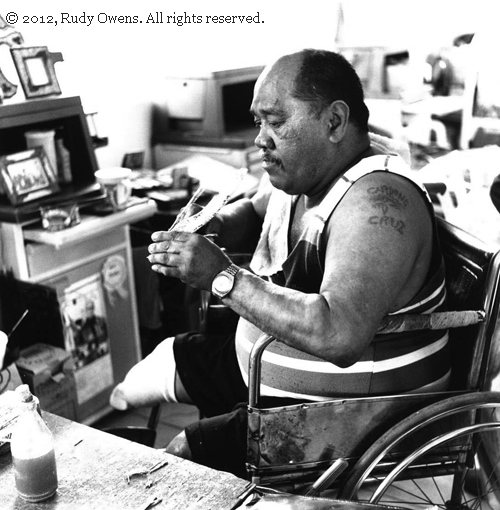
The two photographs shown here were taken at the Eversly Childs Sanitarium, near Cebu City, on the island of Cebu. The facility is home to patients suffering from leprosy, and their children, like the young girls laughing below. Patients served by the Philippines Leprosy Mission are engaged in a variety of activities, including trades that help them earn a living, including this man. This was not my greatest work, and wish I had spent more time getting to meet the residents. This was parachute documentary work, and it shows. However, I think the photos presented residents as themselves, living their lives to their fullest. While outside support is critical to this mission, the place is ably run by Filipino professionals. I remember these smiling young ladies the most. Wonderful people.

Good food is not expensive or hard to cook, and tastes delicious

Pasta and vegetarian red sauce: nutritious and delicious, and not expensive
Lentils can taste yummy with curry, garlic, and turmeric--and they are super duper cheap and easy to cook too
Lentils can taste yummy with curry, garlic, and turmeric–and they are super duper cheap and easy to cook too

During my two years of public health studies at the University of Washington School of Public Health, I and all students in the programs have been exposed to our growing public health crises concerning chronic disease, the obesity epidemic in the United States, and our apparent inability to turn the tanker on these problems.

A fundamental debate to these problems is whether individuals or systems are responsible, and to what degree. A lot depends on your political point of view. Many persons who could be classified as liberals or progressive and perhaps Democratic attribute problems to complex processes, like the role of the Farm Bill in creating subsidies that have led to the overproduction of unhealthy processed foods. Those who might be considered conservative and Republican frequently point to the responsibility of individuals in making food choice decisions and controlling their level of physical activity.

I’m a firm believer that our built environment plays perhaps one of the largest roles, along with cheap energy (measured by pump and meter prices) and the ill effects of our corporate food production system. However, I also believe that people are capable of making smart food choices, and do not do that. When we have discussed “behavior change theories” in my class, I am led to believe that people must go through many stages of change before they can succeed, in say not eating junk food or in cooking food. I have challenged these ideas in my classes, and my peers in my program literally laughed at my face when I criticized this model and suggested that, yes, individuals actually can choose to eat good food, if they wanted to.

While I think the behavior change model has validity, I do not think that wipes clean the responsibility of individuals to turn off their TV for 4-6 hours a day (the average in the U.S. according to research), get out and take a 40 minute walk, and spend an hour cooking something cheap, healthy, and nutritious, like lentils and vegetarian red sauce with pasta. In many ways, I think such ideas are anathema to current public health models and thinking at respected institutions like the UW SPH (my school). I find myself swimming against the current as I am being taught how we can turn the tide on the health crises that are bankrupting our country and that are transforming us into a nation of unhealthy, overweight, gasoline-addicted citizens who apparently can do nothing to control the destinies of their own bodies.

Even though many poor persons cannot access completely healthy food, nearly everyone can likely get the following food items, even at bad food stores: red sauce, dry lentils, pasta, and perhaps a few vegetables (onions, carrots, maybe even a green pepper) and garlic. Spices cost extra. I have priced out what it costs me to make a large batch of red sauce and pasta for 10 meals: usually from $12 to $15. A batch of lentils, cooked into a soup or thicker stew, will cost less, perhaps at most $10 to $12, figuring the cost of rice or tortillas, which is what I eat them with. These prices can vary by location. Both dishes take no more than one hour to cook, if you soak the lentils for 24 hours or longer. My thesis completely contradicts arguments of respected faculty at my school, who suggest that lower-income persons eat high-calorie, low-nutrition food because it is a better dollar value per calorie (I  reject this idea).

And what do you get when you cook them? Healthy food. Lentils are high in fiber (prevents coronary disease,) vitamin B6 (highest in any plant food), protein, and iron. And they help with digestion. Lentils also are practically fat free. As for vegetarian red sauce (I do not use meat), it is a staple of the so-called Mediterranean food pyramid, which is associated with much less risk of coronary disease, longevity, and good health. Yes, you can eat well, eat cheaply, and live better . But that requires you first to turn off your TV, take the time to cook, and realize that, yes, you are in control of what you put in your mouth.

Why we love pets, and why it is healthy for us

One of the benefits of paying tuition to a research university (in my case the University of Washington) is that you get access to otherwise off-limits articles. I am not allowed to share a full copy of this 1997 article by John Archer on why humans love pets, but I’ll include the abstract and some key findings:

-Compared to nonowners, pet owners are found to show significantly reduced physiological risk factors for cardiovascular disease, such as plasma cholesterol and triglyceride levels, and systolic blood pressure (Anderson 1992; Anderson et al. 1992). These differences could not be attributable to confounding variables such as socioeconomic status, body weight, or smoking habits (Anderson 1992).

-Among patients who had been treated for myocardial infarction or angina pectoris, pet ownership was significantly associated with lower mortality 1 year later (Friedman et al. 1980); this association remained even when dog owners were removed, to control for their additional exercise. Pet owners also show less intense reactions to stress (Bergler 1992), fewer psychosomatic symptoms (Bergler 1992), and fewer visits to medical practitioners than nonowners (Siegel 1992), a finding that was attributed to the stress-buffering effect of pet ownership.

-Other studies show the direct effects of interacting with a pet (e.g., stroking it) on physiological measures indicative of relaxation, such as heart rate and blood pressure (Lysons 1992).

-A sample of children in an experimental situation where they were asked to read aloud showed comparable lowered blood pressure and heart rates when a friendly dog was present (Friedmann et al. 1983).

-A 10-month prospective study (Serpell 1991) examined changes in health and behavior following acquisition of a dog or cat and in a control group without pets. Pet owners showed a highly significant reduction in minor health problems and improved scores on a standardized questionnaire, the General Health Questionnaire (Goldberg and Williams 1978). These effects were more prolonged among dog than cat owners.

CITATION:
Why Do People Love Their Pets?
John Archer, Department of Psychology, University of Central Lancashire, Preston, United Kingdom
Evolution and Human Behavior 18:237-259 (1997)

Abstract: The evidence that people form strong attachments with their pets is briefly reviewed before identifying the characteristics of such relationships, which include pets being a source of security as well as the objects of caregiving. In evolutionary terms, pet ownership poses a problem, since attachment and devoting resources to another species are, in theory, fitness-reducing. Three attempts to account for pet keeping are discussed, as are the problems with these views. Pet keeping is placed into the context of other forms of interspecific associations. From this, an alternative Darwinian explanation is proposed: pets are viewed as manipulating human responses that had evolved to facilitate human relationships, primarily (but not exclusively) those between parent and child. The precise mechanisms that enable pets to elicit caregiving from humans are elaborated. They involve features that provide the initial attraction, such as neotenous characteristics, and those that enable the human owner to derive continuing satisfaction from interacting with the pet, such as the attribution of mental processes to human-like organisms. These mechanisms can, in some circumstances, cause pet owners to derive more satisfaction from their pet relationship than those with humans, because they supply a type of unconditional relationship that is usually absent from those with other human beings.

For those with access to such databases, you may wish to find the full article, or there is a chance Google Scholar may have it somewhere in the “gray literature” area online.

And this is one of many pieces of peer reviewed research that highlights the many health benefits of pets and the incredibly strong emotion attachments humans have with them. (Go to the Delta Society web site for other research published online).

Ending journeys and celebration rituals

On March 27, 2012, I submitted my capstone research project for my master of public health program at the University of Washington School of Public Health (UW SPH). (My program is called Community Oriented Public Health Practice.) My research focusses on the effectiveness of Seattle emergency preparedness communications, what residents know about emergency preparedness, who they trust, and how well these outreach efforts are reaching vulnerable residents. I really enjoyed this project and enjoyed the many professional relationships I developed during the course of my research. I also greatly enjoyed sharing my research findings with the emergency preparedness community of greater King County on Feb. 16, 2012.

From what I was told, my research project was the earliest any project had been submitted ever (a full quarter early) to COPHP. And it was a project well received by the City of Seattle, with whom I worked and who have already published my reports to them on their web site (look for  SNAP Research – “Owens Report 1” and “Owens Report 2” at www.seattle.gov/emergency/publications/#s). I also have published copies of nearly all of my original research and papers submitted to the UW SPH. You can review and download my finished work.

However, being early means you can’t celebrate. It is “out of place,” as some rituals are tied closely to shared experiences, not individual ones. At my undergraduate school, Reed College, the culmination of the undergraduate thesis (required for all students) was a thesis thermometer in the hallway of the main administrative building that marked every thesis turned in. The ritual culminated in a massive parade and a fun weekend called Renn Fayre. I always thought the thesis was a somewhat onerous burden with little practical real-world applications (for me at least), but at least the school “got it” when it came to marking the end of a long and arduous journey in academia. I have my own ritual in mind for when I get my next diploma. It will be very very fun. I’ll do it somewhere in the woods, and I look forward to that event.