Are Swedes more beautiful, or do they just have a better public health system?

I have always thought about what makes some people look better than others — at the individual, ethnic, and national level. Having travelled on six continents, I have been able to test ideas and stereotypes—including my own—through personal observations.

Is "Jenny," who I saw on a YouTube video teaching yoga-type exercises, good looking because she is Swedish, and if so, what does that mean?
Is “Jenny,” who I saw on a YouTube video teaching yoga-type exercises, good looking because she is Swedish, and if so, what does that mean?

This all came back to me last night while I was surfing YouTube for a video on ski waxing, where I, yes, got distracted by what looked like a very healthy and attractive woman doing yoga. Instead of it being a yoga tutorial, it was a video published by two young Swedish women that is mostly a product of personal vanity and that natural desire to express one’s self. I believe their names are Jenny and Andrea, and they appear to have a preoccupation with their admittedly very good looks. I cannot fault them for that.

Yes, these two are very physically attractive. But I again thought about why? Why are many Swedish and other Scandinavian women I have met so attractive?

First, I do not ascribe to the idea of “national beauty” or the national ranking systems that have little scientific validity. Social and popular media are obsessed with the idea that Swedish women are among the world’s most beautiful. A dubious online source called Traveller’s Digest claims Sweden tops their list of countries with the hottest looking women. (The country’s men also rank No. 1). Such rankings amount to Internet silliness.

I traveled to Sweden in 1990 for about a week, staying with friends I met in India (Eva and Eva — yes the real names). I found many people I met there to be healthy and attractive, but not to an extreme. I did find an excessive amount of out of control binge drinking in the social circles my generous hosts ran with, particularly among college-age and slightly older Swedes. In fact, globally, I have found few places that matched the excessive drinking I saw all over Sweden.

I also have seen Swedes globally, and in general many do appear more fit and healthier than the typical American, who rightly has earned a reputation as being overweight and thus unhealthy, and therefore unattractive in the eyes of many. Such data is borne out by national health statistics, as America is the fattest country on the planet, and because of that, my country does not have the reputation as Sweden does for the hottest men and hottest women, I think.

One of the most ubiquitous stereotypes of nationalities is that of "hot" Swedish women--perpetuated by photos like this one.
One of the most ubiquitous stereotypes of nationalities is that of “hot” Swedish women–perpetuated by photos like this one.

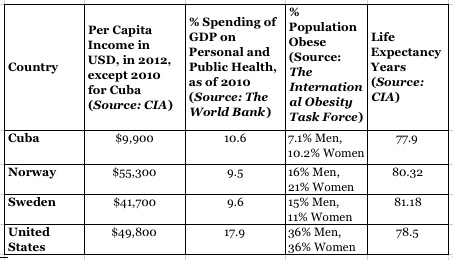
Globally, Sweden does very well in terms of health rankings and public health investments. Sweden scores highly in terms of life expectancy from birth, ranking No. 16 among all countries (81.8 years). Its Nordic neighbor, Norway, ranks 25th (80.32 years). The United States fares worse than both, and Jordan, and New Zealand, and, well, 50 other countries, at 78.5 years. By comparison the much poorer Cuba, with a vastly lower standard of living (less than 20% of the United States per capita), ranks No. 60, with a life expectancy of 77.9 years.

In 2010, according to the World Bank, Sweden spent 9.6% of its GDP on public and private health, including preventive and curative services, family planning activities, nutrition activities, and emergency aid designated for health but not water and sanitation. Norway spent nearly the same amount, or 9.5%, while the United States was staggeringly inefficient, spending 17.9% of its GDP, and the trend is getting worse.

The socialist and undemocratic Cuba, which invests heavily in public health for its population, spent a mere 10.6% of its GDP, but had nearly the same life expectancy per person as its mighty northern neighbor, America. So even though the United States spends nearly twice as much as these three countries, it does not have results to show for it.stats for four countries income health obesity
Such discrepancies are frequently cited highlighting how grossly inefficient U.S. health care is compared to countries with strong government-backed and financed health systems.

But do such investments have anything to do with physical appearance, and thus beauty?

Well, expanding waist lines and bulging bottoms, which nearly most people globally do not view as physically attractive, seem to indicate that Americans are likely to be less attractive than Cubans, Norwegians, and those stereotypically “hot” Swedes.

The International Obesity Task Force estimates that, globally, 1 billion adults are overweight (BMI 25-29.9 kg/m2) and 475 million are obese. In the United States, two-thirds of all residents are obese or overweight. The United States is the world’s heaviest country per person–a dismal and frighteningly scary statistic for our healthcare system and for future incidence of many of our top killers (cancer, heart disease, as well as diabetes, though further down the list).

So why, say, is Sweden doing better than many countries and the United States.

For starters, everyone in Sweden has equal access to health care services under a decentralized, taxpayer system. The Swedish Institute reports that every city council “must work to promote good health for the entire population.” Again, this is a vastly different value system than the United States’, where taxes are viewed with increasing hostility by the political right and where individuals are still, for the most part, considered responsible for their health.

This photo published by the Swedish Institute highlights a view of health, from youth to old age, and by most measures, Swedes are healthier and live longer than Americans.

In Sweden the responsibility for health and medical care is a shared responsibility of the central government, county councils, and municipalities. The country’s Health and Medical Service Act regulates the roles of county councils and municipalities, and it gives local governments freedom in this area, while the central government sets principles and guidelines for health and medical care.

What’s more, Sweden’s maternal mortality, another key public health indicator, is among the world’s lowest: 2.74 in 1,000 babies and less than than 1 woman out of 100,000 die in birth. “Swedish maternal care is often highlighted as a success story in international contexts,” boasts the Swedish Institute. By comparison, the United States infant mortality rate is 6 per 1,000 (bested by Cuba’s 4.73 per 1,000).

So in the end, you have a country that invests more in its people and in the health of its people, who likely have a good chance of being active and also avoiding stigma associated with excessive weight. It’s not so much that Swedish women, like Jenny in the exercise video, is anything extraordinary, though she is very attractive because she is healthy. She is, perhaps without her full awareness, the recipient of extensive investments in her education, her health from cradle to grave, and a social contract that values the well-being of the population.

The International Obesity Task Force published this map of obesity rates globally; some data likely is missing for African nations.

And how do we react when we see Swedes, on YouTube or traveling abroad, or in business or education settings? We react positively.

An August 2012 story published in Psychology Today (“I’m Successful Because I’m Beautiful”– How we Discriminate in Favor of Attractive People) highlighted some frequently cited studies on how specific physical traits are rewarded.

The article quotes Dr. Gordon Patzer, who reportedly conducted three decades of research on the topic and found that human beings are “hard-wired” to respond more favorably to those who are attractive: “Good-looking men and women are generally regarded to be more talented, kind, honest, and intelligent than their less attractive counterparts.”

Still, obesity is afflicting even the Nordic countries, which has universal health care and strong safety nets. A 2010 study by Kirsti Matlerud and Kjersti Ulrisken in the journal Patient Education and Counseling (“Norwegians fear fatness more than anything else”–A qualitative study of normative newspaper message on obesity and health) looked at how newspapers in that affluent country sent messages on body weight. They found in a public survey, when people were asked what health problems they would like the health authorities to give priority to, obesity ranked highest, and then followed by care for the elderly, cancer, psychiatry, and cardiovascular disease. They also reported a general attitude of fatness being associated with being lazy and irresponsible.

So yes, they do care about their looks in Nordic nations and discriminate against overweight persons, much the way we do in the United States. They just do a better job of ensuring their population stays healthier. Jenny and Andrea have reaped the benefits and get the added benefits of being viewed as  attractive and being seen more favorably than those who have not had a national health system ensuring its population has the best possible chance of being healthy.

Rally to ban assault weapons lays out strategy for Washington State activists

I attended a rally today (Jan. 13, 2013) in Seattle that included a march through downtown to the Seattle Center. The event called for an immediate ban on assault weapons and better laws to require background checks on all weapons sales. The march was organized by the non-profit called Washington Ceasefire, a state-based group founded in 1983 and dedicated to reducing violence from guns in the United States. (See my photo essay below.)

The event attracted somewhat lukewarm media coverage as of this evening, with stories picked up by most of Seattle’s major broadcast media, including the major TV news stations. The event was competing with the story that mattered most to Seattle–the playoff game that saw the Seattle Seahawks fall in a heart-breaker to the Atlanta Falcons. Still, approximately 400-500 participants attended the rally that marched about a half mile from Westlake Center to the Seattle Center.

The event began with a speech by mayoral candidate and current City Councilman Tim Burgess, a former Seattle police officer who called for attendees to focus their advocacy on immediate actions that could be taken by the Washington State Legislature. No specific state-level legislation or bills were identified, and Burgess’ rallying cry noticeably did not call for any specific federal action, perhaps because such proposals are still being formulated by the Obama White House.

Nor were any of the state’s congressional members referenced in public remarks or acknowledged in any event promotional material I am aware of. (Note I left the rally before it ended.) To my knowledge, no member of the state’s congressional delegation officially participated in the speaking activities, nor did their staff. I found that omission intentional and noteworthy. I am sure many attending noticed this also.

Washington Ceasefire President Ralph Fascitelli specifically called on an outright ban on assault weapons and sensible gun legislation. The web site created to promote the event quoted the group’s executive director, Beth Flynn: “We want to send a clear message to our legislators that we want to ban semi-automatic assault weapons.”

It was refreshing to me, as a public health professional, to hear Councilman Burgess make reference to the public health threat posed by firearms in his remarks. I spotted at least one retired University of Washington School of Public Health faculty member in attendance and holding a sign, which was very encouraging. I also met other public health professionals in the audience. Again, nice to see.

A list of the dignitaries who were invited to speak can be found here. I spied Seattle Mayor Mike McGinn, Councilman Nick Lacata, Councilmember Jean GoddenState Rep. Reuven Carlyle (D-Seattle), and other civic and religious leaders on the Mural Amphitheater stage at the Seattle Center, where remarks were made.

Also noteworthy was the presence of gun-rights activists. I saw two men wearing handguns in their holsters at the Westlake Center. So, I took their photographs. No doubt groups opposed to firearms legislation were monitoring the event and were mixing with the crowd. I observed very peaceful exchanges between those for greater legislation and those opposed to it. I included a photograph of the two men who were armed below to highlight how they communicated their views–at least through a visible display of their guns for the TV cameras and for those seeking legislation to control firearms violence.

Photographs of the StandUp Washington rally, January 13, 2013 (click on each thumbnail for a larger image)

How research on gun violence is muffled, and who refuses to shut up

On the first day in the new year, I read one of what will become thousands of similar stories that will be published this year in the United States about how firearms were involved in completely senseless and preventable violence.

To understand why we have so many shootings, one may wish to buy this book: Armed America: Portraits of Gun Owners in Their Homes by Kyle Cassidy. Go to http://www.armedamerica.org/. The cover photo provides a shockingly good insight into the national crisis over gun related violence.
To understand why the United States has so many shootings, one may wish to buy this book, Armed America: Portraits of Gun Owners in Their Homes, by Kyle Cassidy. Go to http://www.armedamerica.org/. This book cover photo offers one perspective on the national crisis over the nation’s gun-related violence.

In this particular instance, a 54-year-old woman reportedly shot a  24-year-old man in the thigh over a dispute that he was shooting fireworks at her property in rural Lake Stevens, Wash. No, I am not making this up.

While no one died in this New Year’s eve confrontation, the story barely received three paragraphs of news coverage, as it lacked the dramatic horror that the media exploit when mass homicides occur involving often-legally purchased weapons. There were no dead children or mentally deranged men in military gear loaded with weaponry. Were this story to occur in Canada, or say Japan, it would have received much different coverage.

While we may assume this seemingly “bland” shooting will be counted in national data, that is not guaranteed. It likely could be ignored.

In response to uncertainty over national data, Slate Magazine, on Jan. 1, 2013,  published a story called How Many People Have Been Killed by Guns Since Newtown?. The article alleges guns statistics are “surprisingly hard to come by.” Slate claims it will track the toll of gun related killings with an an anonymous publisher with the Twitter feed @GunsDeath to create an interactive tracking feature. The articles asks readers  who know about gun deaths in their community that are not counted on its interactive map  to tweet @GunDeaths with a citation, and it will be added to the feed.

brady center stat count
The Brady Center keeps a daily tab on gun violence–go to the right corner of the center’s home page for the shooting count, based on CDC data.

The Brady Center, the best known nonprofit that is working to pass legislative fixes to issues such as the sale of semi-automatic weapons and closing loopholes that allow for guns sales without background checks, uses data from the Centers for Disease Control (CDC) (2008-09 estimates). It then makes an estimate of the number of killings a day that may not correspond to the most recent trends. The source data is captured by the CDC National Center for Injury Prevention and Control, reported and accessible through the web-based Injury Statistics Query and Reporting System.

A lesson in how to silence public health researchers, and yes it is about the money

Slate’s professed shock at the lack of poor tracking of gun-related fatalities should actually surprise no one who has monitored the muzzling of research on gun-related violence since the 1990s by the National Rifle Association (NRA), the gun industry’s lobby, and its allies in Congress.

According to a newly published article by Dr. Arthur L. Kellermann and Dr. Frederick P. Rivara (both of whom have MPH degrees), in the Dec. 21, 2012, edition of the Journal of the American Medical Association, gun research at research universities that is funded by the federal government has been systematically quieted by pro-gun forces since a ban was enacted on the CDC in 1996, mainly through budget language. Pulling funding, in effect, silenced the nation’s public health agency on a critical public health issue.

The budget language, which remains in effect today, stated “none of the funds made available for injury prevention and control at the Centers for Disease Control and Prevention may be used to advocate or promote gun control.” While it is not clear why individual CDC officials or even highly paid medical and public health professionals have not more publicly risked their professional standing to challenge this language, the authors of the study note, “Extramural support for firearm injury prevention research quickly dried up. Even today, 17 years after this legislative action, the CDC’s website lacks specific links to information about preventing firearm-related violence.”

Rivara and Kellermann further state that the language restricting such research was expanded after a 2009 study that was federally funded, this time by the National Institute on Alcohol Abuse and Alcoholism, if a gun increases or reduces the risk of firearm assault. Congress, in 2011, during the Obama administration and amid the Tea Party insurgency of 2010, “extended the restrictive language it had previously applied to the CDC to all Department of Health and Human Services agencies, including the National Institutes of Health.”

The two authors highlight other efforts taking place national to stifle medical professionals from speaking out, such as Florida’s law (HB 155), which put health care practitioners at risk of penalties, including the loss of their licenses, “‘if they discuss or record information about firearm safety that a medical board later determines was not ‘relevant’ or was ‘unnecessarily harassing.'”

How silencing plays out at research universities, quietly and likely without intent

This blog has reported that the silence within the research community can be found at major public health research programs, such as the University of Washington School of Public Health, which  I attended from 2010 to 2012. I was unable to find any faculty actively teaching future public health leaders–my classmates–about firearms safety research or gun violence in the school’s public health curricula.

It should be noted Dr. Rivara is an adjunct faculty member of the UW School of Public Health, and Dr. Kellermann and he are also graduates of the same school (for their MPH degrees). Dr. Kellerman was in fact my graduation commencement speaker, and proved to be a passionate scientist and advocate to all of us. However, my review of courses did not reveal any classes focussing on gun violence as a public health issue; this does not mean Dr. Rivara and other faculty did not cover this topic in their classes. (It should also be noted that a keyword search for “guns” on the UW SPH web site today, Jan. 2, 2013, yielded only three pages, one focussing on Dr. Rivara and another focussing on Dr. Kellerman.)

During my studies there, I repeatedly raised this anomaly to my professors and during seminars in front of as many faculty as possible–often to the point of becoming an annoyance to those who had heard me ask the same questions repeatedly. But short of actually sitting in on faculty strategy sessions or having any survey data, it is impossible for me to know the reasons why my former school choose not to include this topic in its curricula. There were and remain classes on issues that do receive federal funding: tobacco cessation, obesity and nutrition, maternal and child health, and much more. All are worthy topics, but these were the winners, guns was a loser.

My guess remains it was purely a matter of funding, or lack of funding, and the intense internal pressure on junior faculty to pursue research dollars highly coveted by all departments that were not tied to this pariah topic. Thus the silencing of research continued, without any alarm bells raised from a larger community of researchers, who should be the most active and who should have been leaders, locally and nationally. That is how it works.

Dr. Rivara’s primary role is as a faculty member at the UW School of Medicine, Department of Pediatrics. To his credit, he has shown continued national leadership on gun violence. He and Dr. Kellerman deserve great praise for their lifelong service and work on this topic. Hopefully their article also will shame and embarrass their distinguished academic peers–locally and nationally–into either creating endowed teaching positions or a campaign drive to fund research that can shed light on this national public health crisis that has seized the nation’s attention since the massacre of 20 children and six faculty in a public school in Newtown, Conn. in December. MPH students also can lobby for change too, despite the hazards of confronting faculty who grade and often employ them as assistants.

Given that many faculty at these institutions can earn salaries well above $200,000 annually, some may be reluctant to jeopardize their professional careers or positions in the name of public-minded research on a topic that is at the center of one of the nation’s greatest moral debates since the Civil Rights movement and perhaps since the violent ending of slavery during the Civil War.

Gun researchers who have not been silenced by budget threats

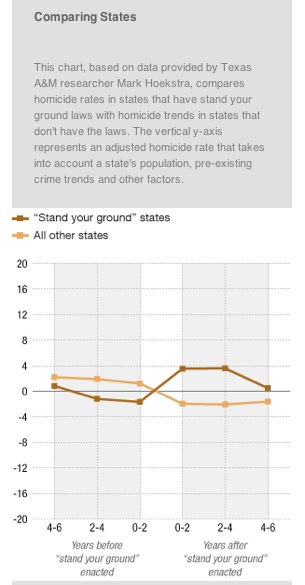
Researchers not blocked by the ban on the CDC and NIH have shown that a prized policy goal of the NRA and gun makers, expanding “standing your ground laws,” have lead to more homicides.Researchers have found that states with a stand your ground law record more homicides than states without such laws.

Data from the study by Hoestra and Cheng, as published on the NPR.org web site (Jan. 2, 2013).
Data from the study by Hoekstra and Cheng, as published on the NPR.org web site (Jan. 2, 2013).

Two economics researchers at Texas A&M University, Mark Hoekstra and Cheng Cheng, found that the laws “do not deter burglary, robbery, or aggravated assault. In contrast, they lead to a statistically significant 8 percent net increase in the number of reported murders and non-negligent manslaughters.” The findings run counter to the argument of the primary proponent of such legislation, the NRA.

On average, there are about 500-700 more homicides a year among the 23 states with stand your ground laws because of these laws: “One possibility for the increase in homicide is that perhaps [in cases where] there would have been a fistfight … now, because of stand your ground laws, it’s possible that those escalate into something much more violent and lethal,” says Hoekstra.

The Newtown massacre and musings on guns, morality, and public health

The brutal massacre of 20 young children and six public school employees in Newtown, Conn., on Dec. 14, brought to mind one of the greatest speeches in U.S. history, President Abraham Lincoln’s Second Inaugural Address. On March 4, 1865, well into the fifth year of the bloodiest U.S. conflict, to resolve the criminal institution of slavery, Lincoln evoked unusually strong biblical and moral language that he normally avoided.

This FaceBook Post generated comments that said, this is why this country is so great and also why it is is so “f’d up” (https://www.facebook.com/photo.php?fbid=314047015290064&set=o.113895238664965&type=1&theater)
This facebook post generated comments that said, this is why this country is so great and also why it is so “f’d up” (https://www.facebook.com/photo.php?fbid=314047015290064&set=o.113895238664965&type=1&theater)

He first stated that the continuing expansion of slavery was the goal of the South. “All knew that [slavery] was, somehow, the cause of the war. To strengthen, perpetuate, and extend this interest was the object for which the insurgents would rend the Union … .” Then Lincoln, in language well understood by his countrymen, further noted the sins and injustice of slavery had brought the wrath of an Old Testament God upon the nation: “Fondly do we hope–fervently do we pray–that this mighty scourge of war may speedily pass away. Yet, if God wills that it continue, until all the wealth piled by the bondsman’s two hundred and fifty years of unrequited toil shall be sunk, and until every drop of blood drawn with the lash, shall be paid by another drawn with the sword, as was said three thousand years ago, so still it must be said the judgments of the Lord, are true and righteous altogether.”

A moral issue?

In short, Lincoln held his country morally accountable for that “peculiar institution.” He used moral language, much the way Dr. Martin Luther King, Jr., a century later, used similar language to address the injustices of discrimination and racism in the Jim Crow South and throughout the country. Such language by elected officials, however, has been mostly absent from the national debate over firearms violence that is involved in the death of more than 11,000 U.S. residents annually (homicides alone).

But the debate over the regulation or expansion of guns and automatic weaponry on the open market may have turned a page with Newtown shooter Adam Lanza’s killing spree. He used at least three guns (Glock 10 mm and a Sig Sauer 9 mm handguns and a Bushmaster .223-caliber) that were first obtained legally. He stole all of them from his well-to-do mother after killing her.

This Bushmaster .223, as of Dec. 16, was being advertised for sale on the Internet.

The availability of such lethal weaponry is far from an aberration. The Bushmaster .223 can easily be purchased now. Here’s one ad I found on Dec. 16; the weapon is described as intended for military combat.

In response to this mass murder of mostly kids, Peter Drier, professor of politics and chair of the Urban & Environmental Policy Department at Occidental College, posted a piece on Dec. 15, on the Alternet web site titled “The NRA’s Wayne LaPierre Has Blood on His Hands: The Brady Campaign to Prevent Gun Violence has a 62-page list of mass shootings in America since 2005. It is Wayne LaPierre’s resume.” Drier asserts that “the long list of killings is due in large measure to the political influence of the [National Rifle Association] NRA—and the campaign finance system that allows the gun lobby to exercise so much power.” In short, the NRA, the gun industry it lobbies for,  the NRA’s alleged 4 million members, and officials in elected office are all morally accountable for downstream effects of firearms proliferation.

Who is morally accountable for mass gun shootings like Newtown's? Just the shooter or weapons industry promoters like NRA CEO Wayne LaPierre,
Who is morally accountable for mass gun shootings like Newtown’s? Just the shooter or weapons industry promoters like NRA CEO Wayne LaPierre.

The NRA’s influence

The NRA, of course, alleges that the Second Amendment to the Bill of Rights gives individual Americans the right to possess guns, even combat weapons designed for the mass killing of people. The NRA also, in my opinion, falsely alleges that regulating gun sales and ownership is an attack on our constitutional freedoms–even our “civil rights.” Such language is devoid of both logic and rationality, and absent any moral foundation. I continue to find “literalist” interpretations of the U.S. Constitution, which also legitimized slavery for decades, as irrelevant to the complexities of a public health crisis that weapons-related violence has become in this country.

But, the NRA is more than a gun lobby. Its annual budget exceeds more than $250 million. It donates generously to political campaigns. It runs a non-profit foundation that boasts having raised $160 million. It runs a multimedia operation to promote its extremist views. It is, at the state level, aggressively promoting gun rights such as “stand your ground” laws. In the U.S. Senate, John Thune (R-S.D.) introduced a measure that would force all states that issue concealed carry permits to recognize the permits from other states. More importantly, the NRA promotes both the culture of weapons proliferation and a social media ecosystem that enables extremist views to proliferate, both inside its ecosystem and in the blogosphere, where many NRA talking points pepper the comments section of news stories on gun violence.

Using a public health lens to debate gun violence

In addition to embracing moral language, the national debate should also use a public health lens and the widely available data at all times to bury the completely false NRA propaganda that “guns don’t kill people, people kill people.” For example, the Harvard School of Public Health’s Injury Injury Control Research Center examined peer-reviewed research and reported three main findings that point to the association between gun proliferation and homicides, including in the United States:

1. Where there are more guns there is more homicide.
2. Across high-income nations, more guns = more homicide.
3. Across states, more guns = more homicide.

A public health approach involves looking at the data, having a population focus (rather than focusing on the motives of a mentally disturbed killer), examining the policies and systems that enable guns to continue impacting the public’s health, and focusing on forces that develop dangerous personal behaviors—even the embracing of ideas that promote harmful activities such as owning guns. The conservative-leaning Seattle Times, which has not called for any legislative action to address firearms violence this past week (following two mass killings), pulled together some data from public sources on Dec. 15, regarding mass murders involving firearms (my comments in italics):

  • Shooting sprees are not rare in the United States.
  • Eleven of the 20 worst mass shootings in the past 50 years took place in the United States.
  • Of the 12 deadliest shootings in the United States, six have happened from 2007 onward.
  • America is an unusually violent country. But we’re not as violent as we used to be. (See the graph below.)
  • The South is the most violent region in the United States.
  • Gun ownership in the United States is declining overall. (However, we have more than 300 million guns in the U.S.–a staggering figure.)
  • States with stricter gun-control laws have fewer deaths from gun-related violence.
  • Gun control, in general, has not been politically popular. (This fact  overlooks how campaign funding impacts local and national races.)
  • But particular policies to control guns often are.
  • Shootings don’t tend to substantially affect views on gun control.
Duke University sociology professor Kieran Healy complied OECD data on violence in developed countries (excluding Estonia and Mexico) and concluded “America is a violent country.” Such data points to both a pathology toward violence and how aassults in the U.S. end up with lethal consequences (his data does not distinguish cause of death from say guns to knives.) Go to: http://www.kieranhealy.org/blog/archives/2012/07/20/america-is-a-violent-country/
Duke University sociology professor Kieran Healy compiled OECD data on violence in developed countries (excluding Estonia and Mexico) and concluded “America is a violent country.” Such data points to both a pathology toward violence and how assaults in the U.S. end up with lethal consequences (his data do not distinguish cause of death from say guns to knives). Go to: http://www.kieranhealy.org/blog/archives/2012/07/20/america-is-a-violent-country/

A 2003 study by EG Richardson and D Hemenway  (called “Homicide, suicide, and unintentional firearm fatality: comparing the United States with other high-income countries, 2003”) found that he United States has “far higher rates of firearm deaths-firearm homicides, firearm suicides, and unintentional firearm deaths compared with other high-income countries” and that the “United States is an outlier in terms of our overall homicide rate.”

Referencing this study, the Brady Campaign concludes that “the United States has more firearms per capita than the other countries, more handguns per capita, and has the most permissive gun control laws of all the countries.” The Brady Campaign further notes that “of the 23 countries studied, 80% of all firearm deaths occurred in the United States; 86% of women killed by firearms were U.S. women, and 87% of all children aged 0 to 14 killed by firearms were U.S. children.”

More blood from the sword … for the lash?

What remains to be seen is if the preponderance of data and the moral outrage that may have been generated by the Newtown shootings will create change.

President Obama, the day of the shootings, held a press conference and said, “We’re going to have to come together and take meaningful action to prevent more tragedies like this, regardless of the politics.” Gun control advocate and billionaire New York City Mayor Michael Bloomberg dismissed such talk immediately:  “Not enough,” Bloomberg said. “We have heard all the rhetoric before. What we have not seen is leadership — not from the White House and not from Congress. That must end today.” To date Obama has not used his office to promote any national legislation or even national dialogue on gun policy.

One thing is certain: there will be more mass murders in the United States involving legally obtained and legally sold firearms. And I am left paraphrasing Lincoln and wondering: how much more blood from such gun-related killings will have to be spilled to atone for our nation’s continued shortcomings to control what other developed nations have managed to do, and do for decades?

Taking the pulse–do exercise programs get kids in shape?

New York Times blogger Gretchen Reynolds, in her Oct. 3, 2012, piece, Do Exercise Programs Help Children Stay Fit?, profiled a recent British journal article that shows such weight-reducing and health-promoting efforts from the past two decades have flopped. (Scroll below to take a quick one-question pool on this very question.)

Citing the study published by Brad Metcalf and colleagues in the August 2012 edition of the journal BMJ (a journal accessible to all users), Reynolds reports that the authors found that “programs almost never increase overall daily physical activity. The youngsters run around during the intervention period, then remain stubbornly sedentary during the rest of the day.”

Two decades of interventions to help kids move more and weigh less may be failing.

The British team of researchers from the Peninsula College of Medicine and Dentistry in England found 30 acceptable studies that met their criteria for examining if exercise interventions for kids work. The articles reviewed were published between January 1990 and March 2012. According to Reynolds, the programs simply failed to do what they were supposed to do: get young people to move more.

The article said their data covered 14,326 participants–6,153 with accelerometers that measured physical activity. The authors concluded that interventions “had only a small effect (approximately 4 minutes more walking or running per day) on children’s overall activity levels. This finding may explain, in part, why such interventions have had limited success in reducing the body mass index or body fat of children.”

An accompanying editorial  by Sally and Richard Greenhill notes that current United Kingdom guidelines state that all children and adolescents should have 60 minutes of moderate to vigorous exercise a day. And in the United Kingdom, only a third of boys and a fifth of boys are meeting those guidelines. In the United States matters are worse, and kids’ levels of inactivity now ranks as harried parents’ No. 1 concern, according to an August 22, 2012, USA Today story. Yet, parents appear to be a big part of the problem, too, along with ubiquitous and highly, highly, highly addictive technology. Nearly six out of 10 children spend less than four days a week playing outside because “parents find it more convenient to spend time in front of a television or computer.”

Times writer/blogger Reynolds quoted Frank Booth, a professor of physiology at the University of Missouri-Columbia, who worked on the meta-analsysis in the BMJ: “So if structured classes and programs are not getting children to move more, what, if anything, can be done to increase physical activity in the young? It’s a really difficult problem.”

Such a finding begs the question: Do interventions to promote physical activity work, or are they a waste of time and resources?

Maine’s Efforts: Cutting Edge or a Good Idea Needing a Makeover?

The Let's Go program in Maine is one of many in the United States trying to get kids to exercise for an hour daily.
The Let’s Go program in Maine is one of many in the United States trying to get kids to exercise for an hour daily.

One influential program, that combines exercise with nutrition and is being duplicated across the country, is the Let’s Go! 5-2-1-0 program from Maine. This stands for:

5 – fruits and veggies,
2 – hours or less of recreational screen time,
1 – hour or more of physical activity, and
0 – sugary drinks, more water, and low-fat milk [editorial note, I find the promotion of milk as a drink for kids questionable, given the inordinate influence of big agri-business on the U.S. Department of Agriculture and the availability of other fortified, non-dairy drinks].

Let’s Go! founders claim the program is successful and is grounded in three principles: 1) changing environments and policies; 2) consistent messaging across sectors–like “5-2-1-0”; and 3) approaches that use science and are recommended by the medical community.

Places as diverse as Kentucky and Hawaii are attempting to duplicate this program, despite apparently non-conclusive evidence of its efficacy.

Maine launched the program in response to the obesity epidemic (as of 2005, more than 60% of all adults in Maine reported being either overweight and 36% of kindergarten students, 26% of 6th-8th graders, and 29% of 9th-12th grade youth were reported being overweight or at-risk for overweight).

According to the program’s own evaluation of its efficacy tackling issues such as weight, the prevalence of overweight and obesity among children decreased from 33% in 2006 to just 31% in 2009 and was not statistically significant. However, among females, between 3 and 5 years, a smaller proportion were overweight and obese in 2009 compared to 2006 (25% vs. 31%). In short, this confirmed the findings from the BMJ study.

But what do you think?

Bloomberg spends millions on candidates supporting firearms legislation

Democratic U.S. Rep. Joe Baca, of California’s 43rd Congressional District, lost in a race for the redrawn 35th Congressional District to fellow Democrat, state Sen. Gloria Negrete McLeod, thanks mostly to funding by Mayor Michael Bloomberg’s super PAC focussing on gun control issues.

During the November general elections, few candidates running for national office chose to stake out policy positions advocating for legislation attempting to address the proliferation of firearms and the public health risks they pose to the country. But a few did, and their sugar daddy, New York City Mayor Michael Bloomberg, chose to invest some of his small fortune in a handful of political races that put the long-smothered issue into the national spotlight.

One six-term congressional veteran, U.S. Rep. Joe Baca from southern California, lost thanks to campaign spending by the Independence USA PAC, created by Bloomberg late in the fall campaign. According to a Nov. 23, 2012, story on the race by National Public Radio (NPR), Bloomberg’s PAC was looking for “the right race and the right set of circumstances.”

According to the NPR Story, the first thing Bloomberg’s new super PAC wanted was a clear contrast between the candidates on an issue of real concern, such as guns, and Baca, a Blue Dog Democrat, previously had gotten high ratings from the National Rifle Association (NRA). Columnist Dan Bernstein, with The Press-Enterprise newspaper in the “Inland Empire” area east of Los Angeles, said, “There’s probably one man in America, in this campaign, who cared about gun control. And it’s Mayor Bloomberg.”

For reasons still not clear to me, NPR’s report focussed on how super PACs can defeat local candidates, but ignored the bigger issue of why Bloomberg joined the fray–to address the issue of gun violence in the country. NPR continues to be a media outlet that fails to report national statistics on firearms violence, namely easily accessible public health data on murders and suicides linked to guns.

Mayor Michael Bloomberg of New York City is a billionaire who has staked out policy interventions to promote public health, targeting obesity/nutrition and firearms.

Bloomberg’s super PAC made late entry in key races

When Bloomberg made his announcement on Oct. 17, 2012, he stated, “It’s critically important that we have elected officials in Washington, Albany, and around the nation who are willing to work across party lines to achieve real results. I’ve always believed in the need for more independent leadership, and this new effort will support candidates and causes that will help protect Americans from the scourge of gun violence, improve our schools, and advance our freedoms.”

Bloomberg’s decision had an immediate and symbolic impact. The Press Enterprise newspaper noted that Baca lost his re-election bid to a come-from-behind finish by state Sen. Gloria Negrete McLeod, D-Chino, thanks mostly to a last-minute cash infusion from Bloomberg’s PAC. Baca also reportedly blamed Bloomberg’s spending for his loss in the race for the redrawn 35th Congressional District.

Bloomberg’s super PAC came late in the race. The Washington Post only reported the PAC’s existence the day Bloomberg made it public, and all just three weeks before the Nov. 6, general elections. A New York Times blog had initially reported that Bloomberg’s top issues were abortion and gun control before the super PAC was made public.

Bloomberg’s actions were entirely consistent with his statement following the horrific mass murder in Aurora, Colo., on July 20, 2012, when a gunman wounded 59 civilians and killed 12 others at a theater. Bloomberg, after the shooting and the media spectacle that ensued, lambasted Republican presidential candidate Mitt Romney and Democratic President Barack Obama for failing to mention the issue of how unrestricted firearms was a major factor in such mass murders of U.S. citizens.

“Soothing words are nice,” said Bloomberg, “But maybe it’s time the two people who want to be president of the United States stand up and tell us what they’re going to do about it, because this is obviously a problem across the country.” Both candidates failed to discuss any serious policy approach to stemming gun-related violence in the United States, notably during the three presidential debates.

As this blog has reported before, the Centers for Disease Control and Prevention (CDC) reports that the number of firearm homicides in 2010 in the United States was 11,493, while the role of firearms in suicides was nearly twice that rate, or 18,735 persons. All told firearms were linked to 30,228 deaths annually at last count–a fact that Democrats have decided to avoid as they put together their national coalition that includes many center and right of center candidates in the U.S. House of Representatives the U.S. Senate.

Bloomberg’s super PAC picked Pennsylvania race winner

Bloomberg’s PAC also supported Pennsylvania Attorney General Democratic candidate, Kathleen Kane. An ad paid by the super PAC said: “Kathleen Kane: close the [Florida] loophole and keep guns out of the wrong hands. Track stolen guns to choke of supply to criminals. Background checks for all gun sales.” (See the ad here.)

Independence USA, Michael Bloomberg’s new super PAC, ran this issue ad supporting candidate Kathleen Kane prior to the Nov. 6, 2012 election.

Kane, in a rare move for a Democrat running for a state or higher office, publicly came out in favor of legislation favoring firearms control. She said she wanted to close the so-called “Florida loophole,” which lets someone denied a concealed-carry gun permit in Pennsylvania to get one in another state and then transfer that permit to Pennsylvania. Kane went on to win her race handily.

While Kane is a rarity, few if no politicians have the pockets of Bloomberg, an independent who can spend $10 million to $15 million of his own fortune on an issue that has seen no legitimate political discourse at the state or federal level for years, thanks mainly to the work of the NRA, the gun industry lobby.

All told, Bloomberg’s spending was directed at seven races nationally, of which his picks won four races, costing the billionaire roughly $8 million. Public health advocates who champion addressing firearms violence in the country likely will be following how Bloomberg’s super PAC will continue to wade into strategic races and confront the silence over firearms violence, which has become the acceptable new normal in political discourse by both major parties.

Leadership likely will remain with big city mayors, who as managers overseeing jurisdictions that carry out day to day criminal justice activities, see all facets of firearms violence most closely. The Brady Center also will continue to lobby for legislative changes to address the proliferation of firearms in the United States, as well.

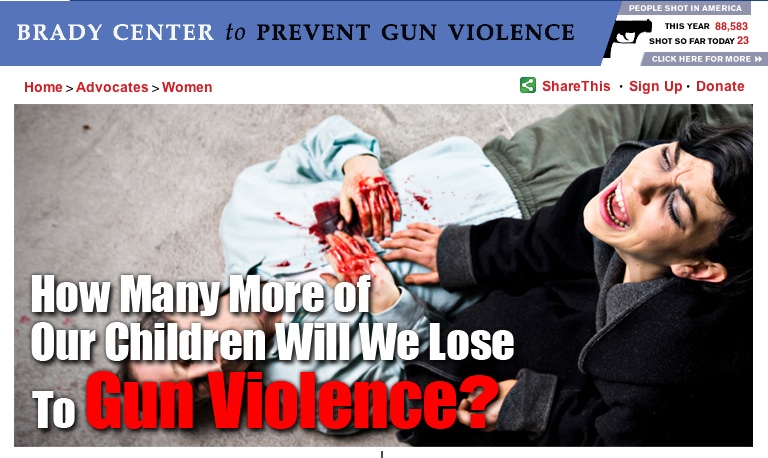
The Brady Center featured this image on its web site to advocate for firearms policy reform here: http://bradycenter.com/advocates/women.

Two milestones put the Oglala Sioux back on the global stage

This 2002 file photo by the Denver Post shows alcohol being sold in Whiteclay, Neb., adjacent to the Pine Ridge Reservation.

October was a huge month for the Oglala Sioux Tribe of South Dakota. The Lakotan band made the national spotlight, perhaps in ways not seen since the historic and bloody siege at Wounded Knee in 1973.

On Oct. 1, 2012, the tribe lost a $500 million lawsuit it filed against a group of multinational beer manufacturers and four stores in neighboring Nebraska that the tribe claimed were liable for bootlegging and the widespread destruction of alcoholism that has plagued the Pine Ridge Reservation for decades. The 3.5 million-acre reservation, about the size of Connecticut, is officially dry. However, 5 million 12-ounce beers were sold in 2010 at the Nebraskan stores immediately adjacent to Pine Ridge. That means about 13,000 cans a day were purchased for consumption at a reservation with just 45,000 residents—a simply staggering figure.

The litigation represents a legal and public health strategy that seeks to hold the companies and retailers/distributors culpable for downstream effects of the health hazard for a legal drug, in this case, alcohol. It also demonstrates the tribe’s proven ability to use symbolic and media tactics that capture global interest, in order to highlight glaring, historic, and shocking injustices that are not tolerated elsewhere in the United States. I actually first heard about this story not from U.S. news sources, but while listening to the BBC World Service in February this year.

Oglala Sioux tribal attorney Tom White holds a press conference after filing the tribe’s lawsuit in Lincoln, Neb.

The second major but not disconnected story last month was the death on Oct. 22, 2012, of famous Oglala Sioux activist Russell Means, a major figure in the American Indian Movement (AIM). The so-called “radical” group galvanized Native Americans and many tribes in the early 1970s by first occupying Alcatraz Island in 1969. The New York Times, in a fit of what can best be called sanctimonious arrogance and historic ignorance, was dismissive of Means’ lasting significance to Native activism of the 20th and 21st century.

The obituary/editorial referenced Mean’s alleged proclivity to guns and brawls. However, the editorial noted Means galvanized global attention of the plight of Native Americans during the  siege at Wounded Knee, at the height of the Vietnam War and amidst President Nixon’s growing Watergate scandal. The Gray Lady begrudgingly states in its judgmental obituary: “Pine Ridge and other reservations have not escaped plagues of poverty and alcohol. Governmental neglect remains a scandal.” Today, Shannon County, S.D., where the reservation is located, is the nation’s third poorest, where more than half of all residents live in poverty.

Oglala Sioux tribal member Russell Means died on Oct. 22, 2012.

By comparison, the Oglala Sioux Tribe, which itself was divided violently before and after the 71-day siege at Wounded Knee, immediately proclaimed Means’ birthday (June 26) as Russell Means Day on the Pine Ridge Reservation. The tribe acknowledges his contributions to helping improve his impoverished tribe’s status. A web site paying tribute to Means’ lasting role to Native Americans called him the most important Native American since Sitting Bull and Crazy Horse.

Means seemed to capture the Oglala’s Sioux defiance and resilience. National Geographic’s August 2012 profile of that resilience  highlighted 60-year-old activist Alex White Plume.  He summed up the injustices brought upon his people by the federal government and others. The tribe is one of seven Sioux bands whose once far-ranging ancestral lands of the Northern Plains and Inner Mountain West were literally taken by the expanding U.S. nation in the mid- and late 1800s. “They tried extermination, they tried assimilation, they broke every single treaty they ever made with us. They took away our horses. They outlawed our language. Our ceremonies were forbidden.”

The most egregious crime was the U.S. Calvary’s massacre in 1890 at Wounded Knee of 146 Sioux members, of whom 44 were women and 18 children. The mass murder was a fearful reaction to the Ghost Dance that was sweeping the Sioux people, a deeply spiritual religious revival that promised a rebirth and paradise on earth. Another 200 Native Americans were killed in related incidents shortly after.

Nearly a century later, starting in February 1973, the AIM movement again focused the attention of the globe on the impoverished Pine Ridge Reservation in what became known as the siege at Wounded Knee.

About 200 AIM members occupied the site of the Wounded Knee massacre. They protested broken treaties and the corrupt tribal governance of then tribal head Dick Wilson. At the time, the tribal government ran its own private militia called Guardians of the Oglala Nation, or GOONS, who were made infamous in the 1992 film Thunder Heart, which was based loosely on the Pine Ridge incidents. The GOONS, National Guard troops, and FBI agents surrounded the activists.

During the siege, 130,000 rounds were fired, two FBA agents were killed, and 1,200 arrests had been made. Ian Frazier, who writes about the incident in his 2000 travelogue and profile of the Oglala Sioux called On the Rez, interviewed Le War Lance, a participant in the siege. Le claims to have snuck in out of the siege 18 times and to have observed the presence of U.S. military forces (82nd Airborne), armored personnel carriers, and helicopter and reconnaissance flights. (A summary of the FBI’s files is here.)

The problems at Pine Ridge did not end with the siege. AIM activists and their sympathizers note that between March 1, 1973, and March 1, 1976, the murder rate on the Pine Ridge Reservation was more than 17 times the national average. Activists attempting to free Leonard Peltier, who was sentenced to life in prison for the killing of two FBI agents during the siege, have counted 61 unsolved homicides during that time. Some of those killings are now being re-investigated.

While AIM may not have created lasting change on the Pine Ridge Reservation, it did demonstrate what Frazier called a real flair “for the defiant gesture in the face of authority.” Frazier says that, along with AIM’s strong historic self-identity, made it both conservative and radical all at once. That same flair and sense of historic injustice is clearly visible in the unsuccessful lawsuit that was brought in February 2012 by the Oglala Sioux in Nebraska’s U.S. district court.

The suit alleged that one in four children born on the reservation has fetal alcohol syndrome or fetal alcohol spectrum disorder. The tribe’s average life expectancy ranges from 45 and 52 years, shorter than anywhere else in the Northern Hemisphere outside for Haiti. By comparison, the average life expectancy in the United States is 77.5 years. The suit sought rewards to cover cost of health care, social services, law enforcement, and child rehabilitation that it claims are caused by chronic alcoholism on the reservation. “The devastating and horrible effects of alcohol on the (Oglala Sioux Tribe) and the Lakota people cannot be overstated,” the lawsuit stated.

In terms of negative health outcomes, Native Americans and Alaskan Natives (AI/AN) fare much poorer than their fellow countrymen by all standard public health measures. The Centers for Disease Control and Prevention (CDC) notes that “rural and urban AI/AN alike experience greater poverty, lower levels of education, and poorer housing conditions than does the general U.S. population.” And, of course, such conditions lead to a range of health issues, including the alcoholism and the despair prevalent on the Pine Ridge Reservation.

The CDC, while trying to present unfiltered data, bizarrely and disparagingly states, “Geographic isolation, economic factors, and suspicion toward traditional spiritual beliefs are some of the reasons why health among AI/ANs is poorer than other groups.” Remarkably, the CDC summary of health data, at least in this source, does not account for the systemic and historic racism, political persecution, coordinated and clearly documented efforts to destroy Native American cultures and languages, and economic exploitation as potential contributors to current health disparities. While the top two killers of AI/NA are heart disease and cancer (both greatly influenced by the social determinants of health), the No. 3 killer is “unintentional injuries,” which can include car accidents, and the No. 8 killer is suicides. For those not familiar with the social determinants of health, these two types of deaths are easier to link to the deep socioeconomic disparities experienced throughout Indian country.

Today, Pine Ridge is the only reservation in South Dakota that bans alcohol. The booze is supplied by nearby Whiteclay, Neb., population 12. For its part, the state of Nebraska split hairs and postured it could do nothing to ban alcohol sales that tribal leaders alleged were tantamount to genocide. The Denver Post reported that Nebraska’s  Attorney General, Jon Bruning, said he “despised” Whiteclay’s beer sellers, “but feared shutting down Whiteclay would cause patrons to travel to other Nebraska towns.” Such statements almost defy logic and demonstrate that state’s leaders still willfully ignore staggering data  that show the state has a legal and moral obligation to solve a public health crisis originating inside its state borders.

The major beer makers singled out by the lawsuit were Anheuser-Busch, Molson Coors Brewing Company, MIllerCoors LLC, and Pabst Brewing Company. Given the historic settlement by 46 states attorney generals against tobacco manufacturers in 1998, it is all but certain that these titans of American suds have mapped out a legal strategy to stem all future efforts to hold them liable for downstream impacts of alcohol consumption. Fetal alcohol syndrome and DUI-related fatalities are two of the more well-known and symbolically rich health impacts of alcohol that capture the media’s interest and harness the public’s collective disgust with the harmful impacts of the drug.

Tribal leaders are now discussing whether to legalize the sale of alcohol on the reservation. A previous effort failed in 2004. Though the tribe lost, the lawsuit may spark future public-health framed legal challenges to the sellers and manufacturers of alcoholic beverages. It should be noted that trial attorneys repeatedly failed over 50 years to hold tobacco companies liable for the deaths and illnesses of former cigarette smokers. That does not mean other tribes and trial attorneys will not continue to explore legal challenges to the commercial reality of alcohol “on the rez.”

As for the continuing omnipresence of alcohol on the Pine Ridge Reservation, or any of the other more than 560 reservations in the United States, that is nearly certain. The socioeconomic conditions that have made reservations fertile ground for America’s No. 1 drug of choice remain unchanged. As the most famous contemporary Native American writer, Sherman Alexie, writes, “Well, I mean, I’m an alcoholic, that’s what, you know, my family is filled with alcoholics. My tribe is filled with alcoholics. The whole race is filled with alcoholics. For those Indians who try to pretend it’s a stereotype, they’re in deep, deep denial.“

Secret military tests in St. Louis and other communities violated the Nuremberg Code, according to researcher

As a former St. Louis area resident, I first thought my friend was pulling a prank when he shared a story on Sept. 29, which was picked up by the Daily Mail tabloid in the United Kingdom and alleged my old home city was intentionally contaminated by U.S. military researchers during the Cold war. I nearly deleted the email suspecting it was spam.

Professor Lisa Martino-Taylor

It turns out it was not a prank story in the Onion. During the last week of September 2012, St. Louis’ major broadcast news stations (KMOX and KSDK) broke a news story on recently completed research of government documents that showed U.S. military researchers conducted human subjects testing, in violation of the Nuremberg Code, on poor and minority residents in St. Louis during the 1950s and 1960s. The bombshell that was dropped by St. Louis Community College-Meramec sociology professor Lisa Martino-Taylor, in her PhD thesis, was that  U.S. Army’s researchers sprayed an aerosol on human subjects that allegedly was laced with a fluorescent additive, a possible radiological compound, produced by U.S. Radium Corp. The company had been linked to the deaths of workers at a watch factory decades before.

The issue of the U.S. government testing on unwilling and non-consenting persons for military and medical research during the Cold War has long been established, both in St. Louis, and also in the Inner Mountain West and in Washington State. At the Hanford Nuclear Reservation, in southeastern Washington, radioactive iodine (I-131) was intentionally emitted in 1949 ( the Green Run test) to measure the impacts of exposure on human health as part of the U.S. Air Force’s efforts to better understand and track Soviet weapons testing. For its part, St. Louis was one of 33 U.S. and Canadian cities and rural areas intentionally exposed to the spray that was dispersed from airplanes, rooftops, and vehicles. A subsequent National Research Council committee, in 1997, claimed these tests did not expose residents to chemical levels considered harmful. However, promised follow-up studies may not have been conducted. Residents in St. Louis were quoted in press reports claiming planes dropped a white powder that fell on people below, which residents did not view as potentially harmful.

Photograph published in Martino-Taylor’s thesis on the U.S. Army’s aerosol spraying activities in St. Louis and other areas.

According to Martino-Taylor, thousands upon thousands of St. Louis residents likely inhaled the zinc cadmium sulfide spray. In St. Louis, where tests were conducted in 1953-54 and 1963-64 by the U.S. Army Chemical Corps, Martino-Taylor said, ”The powder was milled to a very, very fine particulate level.  This stuff travelled for up to 40 miles.  So really all of the city of St. Louis was ultimately inundated by the stuff.”  The Daily Mail reported one of the compounds sprayed unknowingly on St. Louis residents was FP2266 (radium 226), which according to the U.S. Army was made by U.S. Radium Corp. The compound was the same one that was linked to the death and of former U.S. Radium Corp. workers.

According to press coverage, the U.S. Army has admitted that it added a fluorescent substance to the “harmless” compound, but the issue of whether the additive was radioactive remains classified.

The story was immediately picked up by a number of blogs, which repeated the allegations and news coverage. Almost immediately, Missouri’s two U.S. senators, Claire McCaskill (D) and Roy Blunt (R), wrote to Army Secretary John McHugh demanding answers and to ask if follow-up studies promised in 1997 by the National Research Council were ever completed.  The full text of McCaskill’s letter and press release can be found here.

Pruitt-Igoe housing complex before it was dynamited and cleared.

According to an Oct. 3, 2012, AP story, aides to Sens. McCaskill and Blunt said they have received no response. At the time of the story, the U.S. Army declined to be interviewed by the AP. The AP’s story notes that St. Louis was chosen for reserach because it resembled some Russian cities. However, one of the primary areas that was chosen for testing was the Pruitt-Igoe public housing complex, which was razed in the 1970s as a failed national public housing experiment–and one of St. Louis’ legacies as a decaying city. At the time of the spraying by federal researchers, the complex had 10,000 mostly African-American and low-income residents, 70 percent of whom were 12 and younger.

Martino-Taylor’s thesis (The Manhattan-Rochester Coalition, research on the health effects of radioactive materials, and tests on vulnerable populations without consent in St. Louis, 1945—1970) is worth examining first-hand, as it describes how she was tipped to the improbable and almost unbelievable tales of two women, both sharing stories of having been unwilling human subjects to military spraying and suffering health consequences from that research. Surprisingly, she knew nothing about these then allegations. Thus began her effort to request information under the U.S. Freedom of Information Act from the federal government, often in severely redacted form. A point that much of the media continues to miss is that her research focuses on the researchers as well as their victims. Her thesis statement states her work looks at how a “large number of participants inside an organization will willingly participate in organizational acts that are harmful to others, and how large numbers of outsiders, who may or may not be victims of organizational activities, are unable to determine illegal or harmful activity by an organization.”

The leaders of the studies, which she calls the Manhattan-Rochester Coalition, were the researchers who conducted the human-subjects research on nuclear weapons as part of the country’s efforts to prepare for, and win, a possible nuclear confrontation with the U.S.S.R. During the tests in St. Louis and other areas, according to Martino-Taylor, the U.S. Army violated the 1947 Nuremberg Code, the standard set after trials of Nazi doctors and war criminals, which established that “voluntary consent of the human subject is absolutely essential” for any human-subjects testing. There was no such standard in these tests in St. Louis, Minneapolis, and elsewhere, Martino-Taylor maintains.

Medical experimentation room at the Terezin concentration camp in the Czech Republic.

During the 1940s, the Nazi regime’s corrupt and criminal medical and scientific community committed horrific crimes at dozens of concentration and extermination camps in Nazi-occupied Europe, including live vivisections, gassings, cold water immersion tests, high-pressure testing, lethal injections, and intentional murder for “scientific purposes.” I in fact visited many of the rooms and buildings where these crimes against humanity occurred during my tour of the camps in the summer of 2000, so it was especially painful for me to know that my own government, in my former home city, may have been breaking established international guidelines that were codified following the defeat of the Nazis and their murderous state. (See my photo documentary here.) According to Martino-Taylor, the initial congressional investigation of the spraying program included testimony from experts that claimed the experiment team “chose to ignore Nuremberg.”

In the United States, following the Tuskegee Institute’s syphilis experiments on African-American men, reforms were passed in 1979 through the Belmont Report, which theoretically was supposed to protect human subjects from harm in research. However, even as the media report on this sensational story of testing on humans in two countries (Canada and the United States) in the 1950s and 1960s, researchers at elite universities and laboratories continue to violate the principles first set out at Nuremberg. Slate.com this year reported that “marginalized groups have frequently been coerced into studies that violate their right to consent. A recent review of the bio-ethics of human research in the U.S. offers little prospect for change.”

The Slate.com story, from Jan. 22, 2012, was gloomy in its overall assessment of the failure of safeguards to prevent unethical research on humans, particularly when large corporate interests are involved. The story said the Presidential Bioethics Commission issued a report on protecting human research subjects that trumpeted the United States’s so-called “robust” protections—rules that have repeatedly permitted and legitimized breaches of informed consent. “The failure to elicit consent is not confined to the U.S. One in every three U.S. corporate medical studies is now carried out abroad, usually in places where trials can be conducted more cheaply than in the U.S. Subjects are often unaware that the treatments are experimental.”

I am pretty sure the dust from this recent controversy will settle quickly, and even in St. Louis, the community will focus more on their beloved Cardinals’ bid for another World Series title. It is likely no one involved in these unethical if not possibly illegal studies will ever be held accountable for their actions against the civilians they may have harmed.

My blog changes its name, and a few bits on public health blogging

On Sept. 26, 2012, I did a little behind the scene tweaking to my blog, which now celebrates its seventh month on the air. (I love it.)

I created a subdomain, which means my blog name is now tied to my web site of www.rudyfoto.com. All past links and references to my blog URL (https://rudyowensblog.wordpress.com) will now be linked by my blog URL (http://iwonderandwander.rudyfoto.com). Nothing else has changed. I wanted to link my blogging more with my web site. I also, in the next month or two, plan to reboot my web site and rebuild it to highlight my photography and multimedia in a more user-friendly format. Stay tuned for that.

On an upbeat note, the University of Washington School of Public Health has linked to this blog on its page for prospective new students. I was not expecting that, but it was very refreshing and positive to see. There are some other great bloggers listed there. Way to go public health bloggers, you are the future. For instance, here is how the University of North Carolina at Chapel Hill Gillings School of Global Public Health promotes its bloggers, including students (wow, that is a heckuva long name for a school — and I am a UNC-CH alum who took classes there back when I was studying journalism in 1991-93.)

My thinking remains that blogging and other social media tools must be embraced by the field of public health to communicate to wider audiences and to share research from behind the firewall, which prevents the public from accessing many peer-reviewed research articles, where public health traditionally seeks validation and where the field encourages its professionals to publish. To that end, I am confident it will be future graduates of schools like the UW School of Public Health who will create change and transformation in the field to make the concepts and value of public health more accessible and meaningful to the mainstream public and policy-makers.

A primer on the futility of buying health insurance in the open market

On Sept. 19, my University of Washington graduate student health insurance plan expires. I paid $607 a quarter last year, four quarters a year, for two years for this plan. It was OK. I never really “used” it for anything. I did have my knee looked at, and a finger was inspected once that got dislocated that I actually fixed, but no real “medical care” was ever provided except consultation. Only one visit really required a specialist’s expert analysis, but I actually deduced a similar conclusion from online research. Short of a medical test, even that expert opinion was just that, an opinion. So I am left wondering what this investment served. It did not cover in-house physical therapy, massage, or chiropractic care—all forms of medical care that I truly believe promote health and wellness without expensive, harmful pharmaceuticals and that use non-invasive techniques to promote healing through touch and manipulation of the body’s muscles and skeletal system.

Massage should be covered at higher levels by all insurance plans, as it provides excellent health outcomes with few negative effects and no medication.

I was supposed to cover those expenses “out of network” at 60%. As a former graduate student, I had to weigh medical care versus, well, paying for food and rent, and I simply put off the care I needed the most and used to get when I had a plan with my former employer in Alaska – chiropractic care and massage therapy. There were times I was in excruciating pain that simply had to be ignored because my insurance did not cover it, and those problems could have been addressed if I paid for much of it, after my deductible.

So now I am in the open market of insurance again. This is that wonderful place where the “invisible hand” of Adam Smith is supposed to provide solutions without “government interference.” Well that is not the case. The market is somewhat regulated by the Washington State Insurance Commissioner. They put together a good web site to help consumers understand the nine companies that offer health insurance plans in this state and the types of plans available to them. I think they did a good job.

Such communication for consumers is critical, as insurance companies prefer to communicate in “insurance speak” language involving legalese and jargon such as “co-pays,” “deductibles,”  and let’s not forget “pre-existing conditions.” Here’s just a taste of one clause from one plan on how they try to limit coverage for a “pre-existing condition”:  “Pre-existing conditions: these plans contain a nine-month pre-existing condition clause that excludes coverage for any condition for which there has been diagnosis, treatment (including prescribed drugs), or medical advice within the six-month period prior to the effective date of coverage, for which a prudent person would have sought advice or treatment. Section 6 of the application for our individual and family plans will help us determine whether you have creditable coverage, which would allow [COMPANY NAME REMOVED BY AUTHOR] to waive pre-existing conditions/exclusions for you and/or your dependent(s).

No, choosing insurance is never easy because the language is often confusing and many non-experts cannot decipher the fine print of the  brochures with happy, smiling people used to lure in customers.

Such language is not simple or easy to understand, and in theory, the Patient Protection and Affordability Care Act (health insurance reform passed by Congress recently) will make it impossible for insurance companies to deny persons health insurance in the future because of a pre-existing condition. It is not clear if non-English speakers can understand this information at all. While many people have fought with insurance companies, many lower-income or less-educated persons may not have significant experience navigating complex legal documents that, quite frankly, I think people with MBAs or law degrees do not fully understand. Here are two companies’ plans that offer health insurance to individuals in the state of Washington (there are exactly nine corporate players in this limited market): LifeWise, Group Health.

I chose LifeWise. I am waiting for them to approve my plan. I will have to have proven I actually had coverage before (I did as my UW plan was owned by them) and am likely not a deadbeat. I am sure they are probing my legal, credit, even personal records as I write this to determine if I have been an actuarial risk to providers, if I have some terrible health condition that would harm their profit margins, and if I am generally on the up and up as a possible customer to help them make a “reasonable rate of return,” which is really all a company can hope to do. This all is, of course, unlike other developed democracies, because our country continues to refuse to adopt a single payer plan that other countries like Canada and France have taken up with better population health outcomes for their citizens and less gauging of consumers.

So what will I get if I am approved? I signed up for the basic catastrophic plan called “Wise Simplicity”. I would pay $160 month as a nonsmoker, and have a $10,000 deductible (compared to an $1,880 deductible that would cost me about $370 a month). So if I am hit by a car, I pick up the first $10,000 out of pocket? Great, eh?

So what do I get with the barebones plan? Well, basically a plan that tells me not to get sick and certainly don’t have an accident that costs $9,999.

I simply cannot afford another plan now. And this deeply worries me, until I get a job with coverage (and that is coming soon – yeah!). Two people I know in my immediate circle of friends just had enormous medical bills. One friend had elective knee replacement surgery. I cannot imagine that is less than $50,000 to $100,000 in costs (surgeon, anesthesiologist, several nurses, equipment, rehab, etc.). Another friend had a horrible and likely allergic reaction to a standard immunization and developed a syndrome that sent them to the hospital, where the same issue ensued with specialists, etc. My friend guessed the bills before insurance will be at least $100,000. So as I bike down Seattle’s dangerous roads, avoiding cars that do not know I am there as the driver texts a message about whatever, I contemplate just how flimsy my health care coverage really will be come Sept. 20. I guess the answer is what some running for office suggest – just don’t get sick. You know what I really do not have a choice. Adam Smith’s invisible hand I guess is making that possible, but why do I feel more like the hand is choking off my air supply and giving me a sucker punch when I am not looking.