Health interventions, the positive face of geopolitical engagement

On June 14, Tom Paulson’s insightful blog, Humanosphere, put the spotlight on U.S. military initiatives underway in Africa as part of a grander strategic focus the U.S. Government is placing on Africa, through the U.S. Africa Command called Africom. He raised concerns about the dual efforts of the U.S. Government. On one hand, it was expanding its covert operations, purportedly to root out so-called terrorism networks and promote and training activities in Africa by building bases stretching from Djibouti to Ouagadougou, Burkina Faso, while at the same time trying to stomp out malaria, which kills about 600,000 Africans a year. According to a U.S. Department of Defense (U.S. DOD) press release, “Africom incorporates malaria prevention into much of its theater engagement, distributing mosquito nets and teaching new diagnostic techniques during training events throughout Africa.”

I think few could argue with the humanitarian goals of this type of health intervention, at least with some basic metrics. But in reality, health-related assistance usually has a broader function. Combining “hard” and “soft” power  is nothing new to geopolitics or the U.S. Government and its diplomatic, development, and military branches. The two often go hand in hand. Closer to home for most Americans, but still far away in the U.S. Arctic in communities along coastal Alaska, the U.S. Coast Guard has spent four years expanding its training activities and capacities in the Arctic to prepare for offshore oil drilling by Shell Oil Co. Production is scheduled to begin in the summer of 2012 in the U.S. portions of the Beaufort Sea, just north of one of America’s largest oilfield, Prudhoe Bay. Oil would then be shipped down the aging and half-empty Trans-Alaska Pipeline System (TAPS).

The Prudhoe Bay oildfield is one of United States richest oil producing areas, but its production is declining leading to offshore development.

The Coast Guard preceded its Arctic ramp-up with a much heralded health and logistics outreach, called Operation Arctic Crossroads, starting in 2009, to Alaska’s western coastal communities, such as Barrow and Kivalina. These were welcomed by the mostly Native residents and received high marks from nearly all quarters in Alaska. The Coast Guard is perhaps one of the most celebrated institutions in Alaska because of its humanitarian work saving countless lives and vessels, year after year, and because of the stellar reputation it has earned, demonstrated by its outstanding safety and rescue record. (I am a huge fan of the Coast Guard, if you cannot tell, having reported on their helicopter rescues numerous times as a reporter in Sitka, Ak., in 1993.) But the Coast Guard also has noted these outreach events in Alaska have been ultimately tied to the much larger issue of energy security and defense. The U.S. DOD reported “the Arctic has economic, energy and environmental implications for national security. Coast Guard missions there are increasing because Shell Oil Co. has permits to drill in Alaska’s Chukchi and Beaufort seas beginning this summer.” The U.S. DOD further notes, “Shell will move 33 ships and 500 people to Alaska’s North Slope, and will helicopter some 250 people a week to drilling platforms.”

Deadhorse is the main landing area for the North Slope oil and gas production facilities in Alaska.
The coast of the Beaufort Sea holds significant oil reserves that Shell Oil Co. will begin tapping in the summer of 2012.

All told, Shell spent some $2.2 billion for offshore leases alone, not to mention millions in legal wrangling, government relations, PR, advocacy in Alaska and in DC, and much more since the mid-2000s. The New York Times estimates Shell spent $4 billion in its quest for one of the biggest oil prizes in North America outside of the Athabascan oil sands of Alberta and shale oil finds in North Dakota. (Shell also is drilling for natural gas in the Chukchi Sea this summer also.) The issues framing a stronger U.S. commitment in the Arctic are natural gas and oil resources and a so-called “race for resources,” as it has been described by some, which concerns rights to those resources on the Arctic Ocean seabed floor.

The U.S. Energy Information Agency claims that nearly a quarter of untapped oil and natural gas resources are in the Arctic basin, which explains the significant interest by the major multinational oil exploration companies in the shallow Arctic waters off Alaska’s North Slope. Companies like Shell and ConocoPhillips and others have been staking out their claims for years by buying controversial offshore drilling leases that have been sharply contested in protracted legal fights with environmental groups and Native Alaskan residents of the North Slope Borough (the Inupiat). The Inupiat residents,  who, while mostly supporting onshore development, are concerned about the threat an oil spill or blowout in pristine Arctic waters, similar to BP’s spill in the Gulf of Mexico in 2010. Some Inupiat resident say that would harm their subsistence hunting of migratory bowhead whales, which have been hunted and eaten by these historic Arctic residents for thousands of years.

A whaling ship rests in the Arctic summer sun in Barrow, on the coast of the Beaufort Sea.

What is clear is that interventions premised on health care will likely be part of a larger strategic framework of  nations as powerful as the United States. Those actions, no matter how well-intentioned to improve health care from Kivalina to Kenya, must be understood in a much larger context of any nation’s political and economic interests. This is particularly true regarding access to and the development of natural resources, wherever those resources may be.
Every day can be bike to (fill in the blank) day

Here in the United States, promoters of biking and various groups attempt to rally public awareness around the health, environmental, cost, and multiple other benefits of biking by having “bike to work month” and “bike to work day.” This is important, because these activities can turn the attention of a chaotic media landscape for a brief moment on the incredible versatility and value of biking.

The down side is, once the day, week, or month passes, the next worthwhile cause takes the spotlight, and the public’s attention quickly turns away from biking, and without sustained interest, meaningful policy work and political momentum fizzles. Luckily, I live in a Seattle that at least has a critical mass of cyclists and some more “advanced” infrastructure to help keep cyclists somewhat safe from the perils of sharing roads with vehicles. To Seattle’s credit, it is getting ready to update its bicycle master plan. (For anyone who is from Seattle and who has not taken the survey, please do so.) And nationally, many advocates are working hard to sustain a national movement one community at a time.

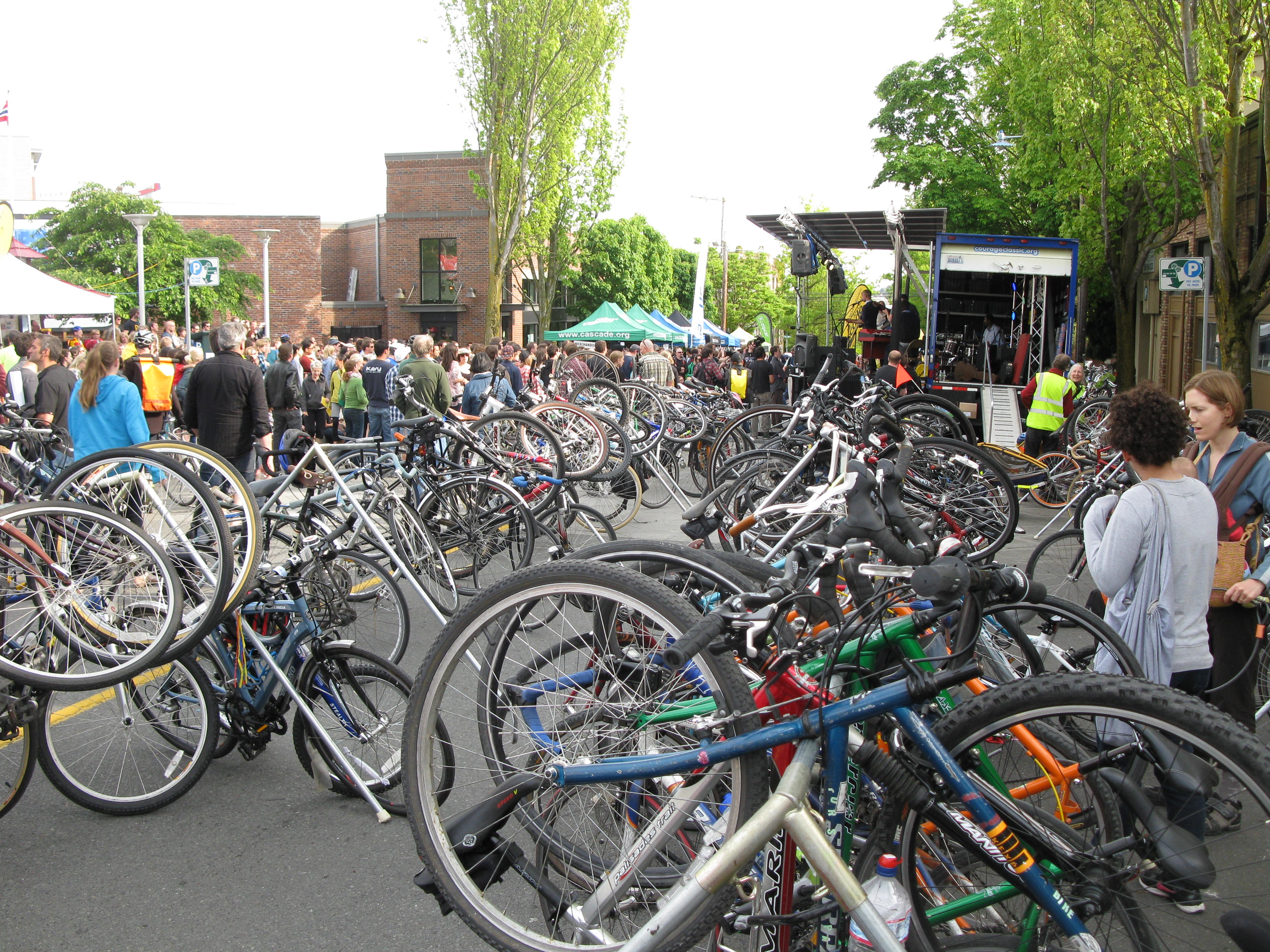
As a highlight of “bike to work day” on May 18 in Seattle, a portion of the Ballard neighborhood was closed to vehicle traffic. Bikers were able to lock their bikes to makeshift bike locks. This is a scene we seldom see in this country because too few businesses and governments support and pay for basic infrastructure to make cycling more doable — such as having secure areas to lock bikes and accommodate them. (This is not the case in every community, and cycling advocates throughout the country are working to ensure new developments accommodate bikes with the right bike racks.)
Celebrating Bike to Work Day in Seattle’s Ballard neighborhood, May 18, 2012.

I remembered my travels to Germany. Even back in the 1980s, I found hundreds of bikes locked outside, in large bike parking areas, that were used during every month of the year, including winter months. I long for the day when bike racks are common in front of every building, and every rack is occupied by a locked bike.

A sea of bikes in in Heidelberg, Germany, December 1985 — winter did not scare these cyclists, and they had a place to park their bikes.

Denmark, a place I could call home

I love Denmark, reportedly the world’s “happiest country.” I could live there. I could die there. In fact, for years I had truly hoped to marry a Danish woman and become part of the extended Danish family.

Well, not all of these happened. I clearly have not died, and I have not married a Danish woman, though I have known many amazing Danish women who impress me by their linguistic abilities, intelligence, dry sense of humor, warmth, and worldliness. They have good schools in Denmark, and Danes have some other quality I cannot fully explain that always has charmed me. They also are very humble despite, overall, being extremely capable (take for example the promotion of wind energy). They also like cozy, or “hygge,” which can mean enjoying each other’s company over an after-dinner coffee and sitting in a living room without any hurry to dash off anywhere. I felt it there, particularly with my friends in Copenhagen and Aarhus.

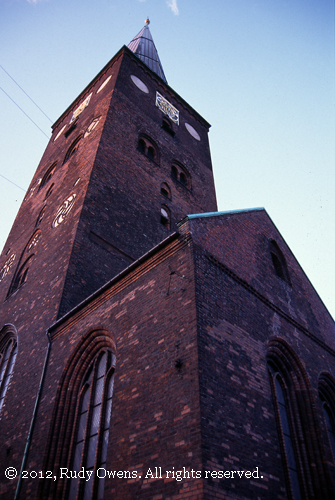
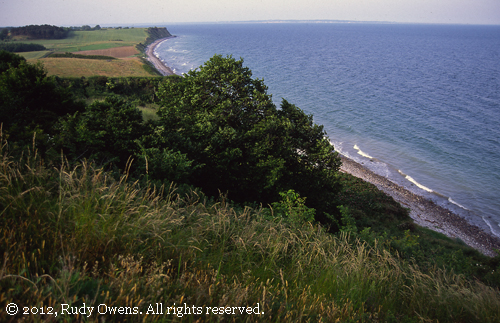
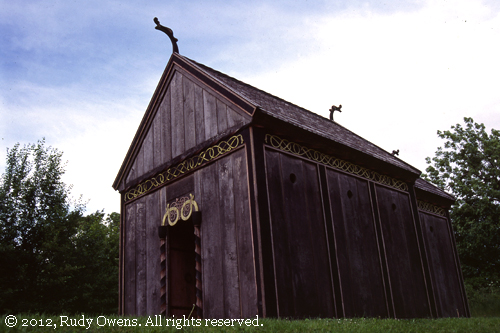
I was very fortunate to have spent about a month in the summer of 2000 living in Aarhus, the second largest city of Denmark, on the Jutland. It is a lovely city, with a world-class university, a great transportation system, great white sand beaches north of the city, and generally very friendly residents. (I just discovered they have published a plan to turn Aarhus into a world-class biking city, with a strong local investment in public spending and planning.) My host, a wonderful Danish pediatrician I had met in Greenland in 1999, took me to some very out of the way places and gave me a place to call home base while I worked on photography projects that summer in Greenland and on the European continent. After 12 long years, I am finally publishing some of those photos here. Hej hej.

What Denmark can teach Snohomish County and other Puget Sound areas

For my current class on management in my public health program at the University of Washington, we are examining the Snohomish County Health District’s strategic plan. Snohomish, just north of Seattle, has nearly 720,000 people. The two top killers in the county are chronic diseases (cancer and heart disease).  The county’s health profile largely mirrors the rest of the nation’s—residents are suffering from obesity and being overweight, they rely heavily on personal vehicle use to travel, and their built environment has been created mostly to facilitate personal vehicle use. (There were 449 vehicular deaths in the county from 2002-08; deaths from unintentional injuries rank as 4th leading killer in the county.)

In short, the county is premised on sprawl development, which encouraged real-estate speculation, all collapsing with a bang when the housing bubble burst in 2008. Such sprawl, subsidized by taxpayer funded infrastructure (i.e., roads to serve the automobile) and extremely cheaply priced energy (gasoline), of course is one of the major factors leading to this nation’s ever-worsening health indicators, such as a rise in type 2 diabetes and bulging waist lines.

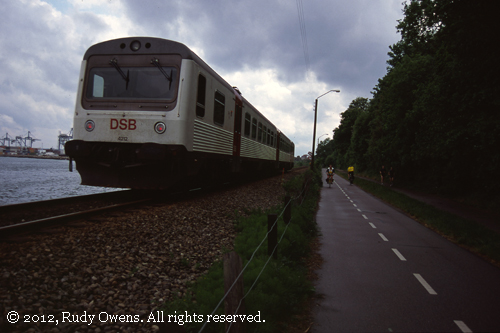
By comparison, Denmark, where I visited for more than a month in 2000, has a robust public health system and a healthier population than the United States’, and it spends about half per capita on health care than the extremely inefficient U.S. system. The country has strict land use and planning regulations, and nationally and locally they have a heavily subsidized public transportation system that enables residents to commute to work and their homes by bike, bus, and light rail.

I lived in Riis Skov, just north of Aarhus, the country’s second largest city. Aarhus, even back in 2000, had an incredibly well-designed multi-modal transportation system that encouraged “active transportation” (biking, walking). Today, one can find free bikes in the city.  The downtown area, site of the historic cathedral and main square, by the port, was pedestrian only. Bike paths in all directions from the city were designated in blue painted paths on the streets and with bike charettes or with clear white lines. People rode their low-tech, three-speed bikes everywhere, even in the rain (many did not use bike helmets, interestingly).

Multimodal planning in Aarhus, Denmark--making it safe for bikes in the city center

Here in Seattle, where I live, we have nowhere near as safe or robust a multi-modal transportation system. There are no blue-painted bike lanes. We have bike lanes painted onto dangerous busy streets, and we lack the sophistication in planning that Aarhus had achieved years before Seattle could build a light rail. We have a lot to learn from our Danish friends. Go Aarhus, go Denmark!

Rails and trails--how residents commute to and from Aarhus, Denmark

Being SMART about feel-good social media sensations

Like many people, I have very mixed feelings about the media phenomenon that is the super viral video known as Kony 2012. It has a sexy opening line: “Nothing is more powerful than an idea”–something that is a two-edged sword.  This can be terribly awful if applied by those promoting “evil agendas” (explained below). The video is produced by a group called Invisible Children, itself a major recipient of corporate giving (JP Chase Morgan Bank is a huge supporter of this group, according to the company’s web site). This itself gives one pause.

The moment I saw it, I was screaming out loud: “manipulative,” “scam,” “cliche,” “heroic white saviors,” “powerless Africans with only one name,” “exploitative.” I actually have followed this story for more than a decade, and I have been to northern Uganda in 1997, where the Lord’s Resistance Army wrought havoc on innocent Ugandans. This is a long, complex story involving several African nations, ethnic groups, geopolitics, and more. This video, while bringing a horrible human rights offender to the attention of the public, disregarded many historic realities that I found deeply troubling as a former journalist. For instance, the main villain, Joseph Kony, is no longer in Uganda committing crimes; he reportedly was last seen in the Democratic Republic of Congo.

So what are we to do when we see how emotionally manipulative media products can gain one instant notoriety and fame, itself a goal of many scraping to make it in media production, photography, and storytelling.  (Recall “performance artist,” but definitely not a journalist, Mike Daisy and the factually inaccurate story he pushed about Apple’s suppliers in China that compromised his career and brought disgrace to the radio show This American Life.)

I can never disassociate the message from the person. Remember Leni Riefenstahl and her hypnotically seductive Triumph of the Will, a  scary masterpiece of fascist propaganda released in 1935 (when concentration camps were not quite operationalized) that helped the cause of one of the greatest murdering madmen of human history, Adolf Hitler? Riefenstahl latter downplayed her Nazi sympathies and attempted to justify her work as merely the output of an artist doing a job, without moral consideration for the outcome. And she was a brilliant photographer and filmmaker, who even after being associated with a genocidal regime, revitalized her career with images of Sudan (The Last of the Nuba) that many would think of today as “progressive” in its orientation. (See the stunning photo below.)

Leni Riefenstahl’s photos of the Nuba, seen here, are brilliant images in their own right, but should they be viewed as distinct from her ties to a genocidal regime from her more youthful days?

I just stumbled on a promotional page for a group called International League of Conservation Photographers. I immediately smelled the conflict between huge egos involved in their media/photographic work and their worthwhile “cause.” The video creates an image of heroic warriors, backed by their own orchestral score. Or, are they just talented photographers trying to make a living too as photographers. What do you all think?

I am always going to suspect self-promotion if I do not see a clearly defined goal that accompanies the promotion. This organization states what many would believe to be a worthy goal: “The ILCP seeks to empower conservation photographers by creating an organizational structure that allows them to focus on the creative aspects of their work while at the same time finding venues that allow their images to make a significant contribution to the understanding and caring of the environment.” But is this truly a clear roadmap?

In public health, they teach us that the best interventions have SMART objectives because they provide the clearest guidelines for developing measurable, achievable actions. SMART stands for:
-Specific
-Measurable
-Attainable
-Relevant
-Time Bound

Whether SMART objectives actually lead to change, or themselves become watered down by their clever wording, is another topic. But in general, I believe this is a relevant way for looking at groups who promote social change. Is what they are offering SMART, or is something more akin to Triumph of the Will, dressed in clever social media marketing. That really is the job of the viewer, but also those who can also use social media to call attention to Triumph of the Will’s and Kony 2012’s viral step-children.

Australia, what I saw, and so much more to see

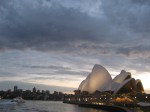
I watched the 2008 old-fashion movie epic Australia last night, a film surprisingly about historic racism Down Under. The film evoked part of my imagination that Australia always filled ever since I read Bruce Chatwin’s travelogue called Songlines. That book profiled the aboriginal concept of Dreamtime. To the subsistence based first Australians, the landscape has special meaning, revealed in songs, transmitted over generations, creating a powerful bond between the people and their land. While living six years in Alaska, I encountered a similar perspective learning about Native Alaskans’ subsistence culture, in which they conceived of their harsh land through cycles of hunting and fishing, a cyclical view and distinctly non-linear.

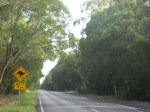
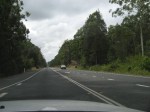
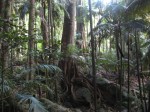
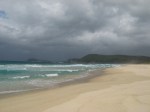
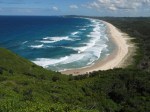
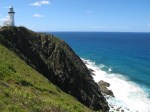
I only saw a sliver of Australia, from Sydney to Brisbane. It would the equivalent of driving from Los Angeles to San Francisco. There is so much more to see. One day I hope to see more.

Memories of Kalaallit Nunaat (Greenland)

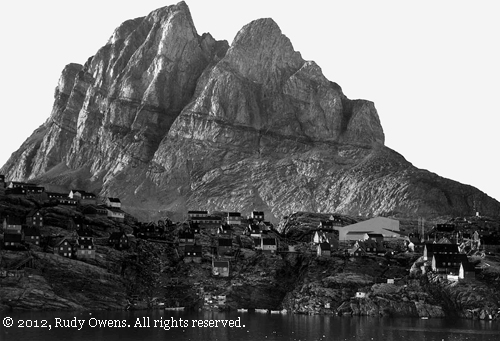
Come next month, it will be 14 years since I first traveled to Greenland, perhaps my favorite destination I have ever been lucky to enjoy. (A summary of my first two visits can be found on my web site here.) I actually visited Greenland on three occasions, last during the late spring/early summer of 2000. That was an incredible trip. I visited with my Greenlandic friends in several communities, including one of the world’s most remote and northernmost cities, Uummannaq (see the rocky island photo below).

This small sample of my images also include young residents of Sisimiut, the second largest Greenlandic city, and on Ericsfjord, in the small community of Qassiarsuk, across the fjord from the small hub city of Narsasuaq, where visitors can land and explore the country’s rich Inuit and Norse cultural traditions. There’s nothing quite like the light, cleanliness, and wide-openness of Greenland, nor the friendliness of its residents.

Arriving at night by ferry at Uummannaq, west coast of Greenland
Young men at fishing camp, near Sisimiut, Greenland
Ericsfjord from Qassiarsuk, Greenland

A few reasons why I loved Italy, its culture, and its history

I travelled to Italy for 10 days in October and November 2006. I loved every minute of my time there, from simple pleasures like drinking cappuccino every morning (and I am not a coffee drinker), to soaking up the country’s warm, lush light in the morning and at sunsets. It does make one think that Rome once ruled from Iraq to the Atlas Mountains of North Africa to northern England to the Black Forest of Germany and to the upper Nile of Egypt. And then, it collapsed. I hope to go back to Italy again.

Four images of the Holy Lands and empty, contemplative places

I took these four images on two separate trips, to Israel and Jordan, and later to Egypt, all in 2004. They all are special, quiet, and mostly out of the way places that speak to a deep, spiritual place inside.

Avdat ruins, Israel
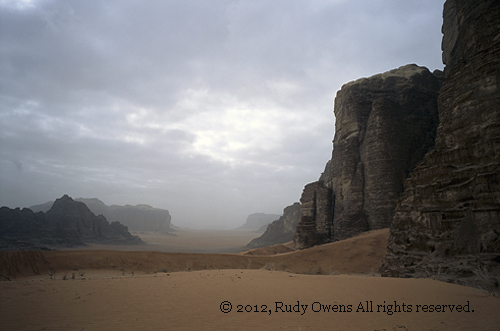
The Wadi Rum, Hashemite Kingdom of Jordan
Mary's Tomb, Jerusalem
Bishoi Monastery, Egypt

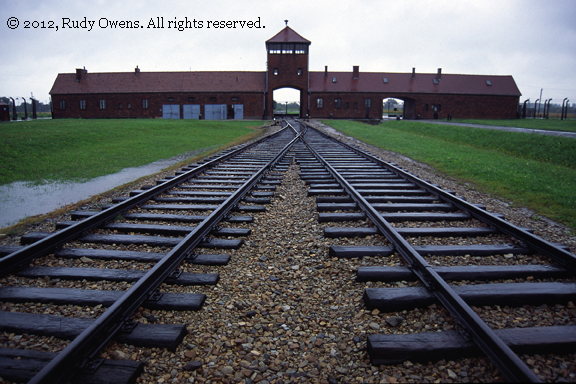
A look back at an uncomfortable photo: Birkenau

In March, I licensed a photo to the University of Texas at Dallas that I took in July 2000 of Birkenau, the largest Nazi death camp that is known to most people as Auschwitz. The image will be used by the university’s Holocaust studies center, which is a good thing. I don’t enjoy looking at these photos, but I do think this is one of the better ones I took from my documentary project I did throughout Europe of Nazi camps and places linked to that regime’s terrible crimes.

I remember the day I took this photo well too. It was pouring rain, in late July. I awoke at 5 a.m. to catch the train from Krakow to Auschwitz. I was the first one at the gate that morning. I met a death camp survivor right by that entranceway. He was at one of the subcamps, Gurtz. He was an elderly Israeli man, but fit and vital. We exchanged some words. He was tough and he hated being there, but he was there all the same. I then toured the whole camp. During the tour, I met a survivor and his colleagues and heard personal stories. I took a lot of pictures that day and learned a great deal about things that still disturb me. I remember the survivor shaking my hand as I left saying he was glad I had come. As I look back, I am glad I came, but some days I am not.